Metaverse Economy: US Industries Projecting 20% Growth by 2026
The Metaverse Economy: How 5 Emerging U.S. Industries Are Projecting 20% Growth by Late 2026
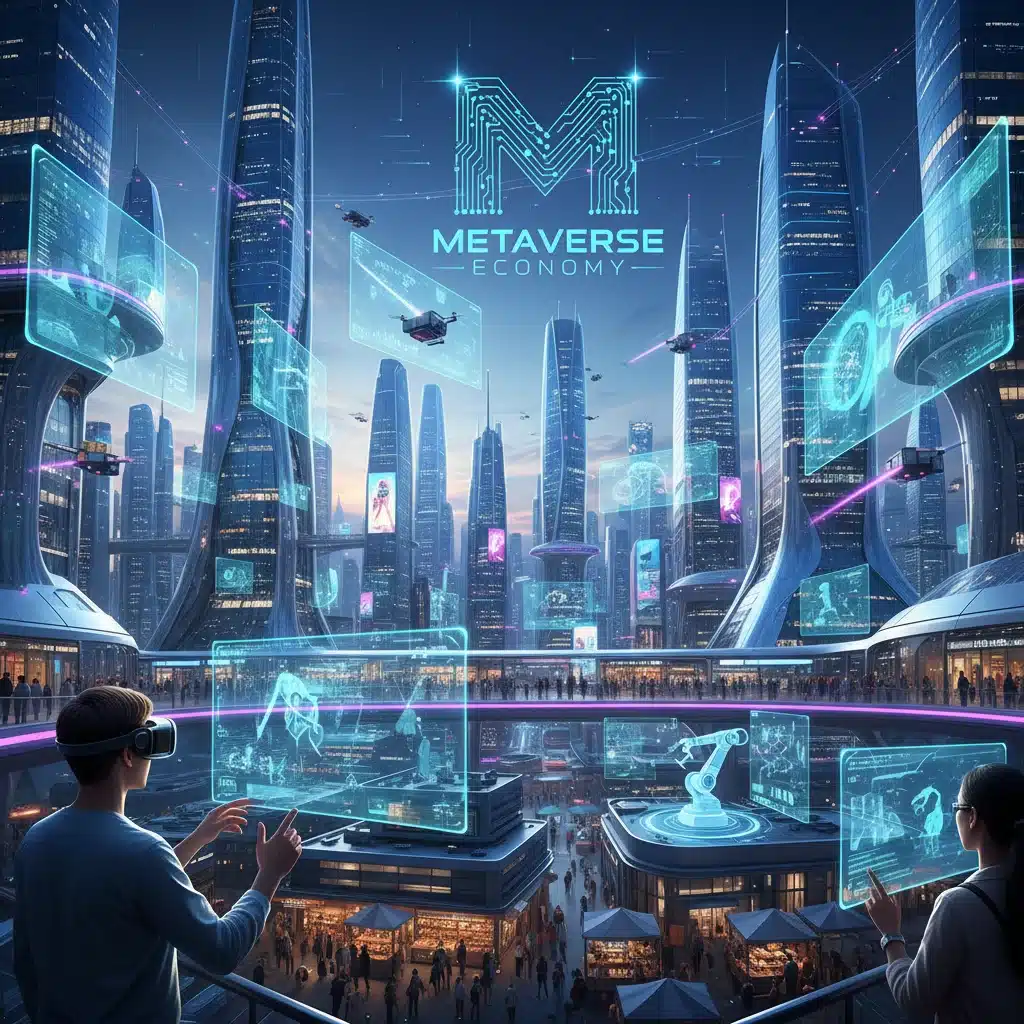
The concept of the metaverse, once confined to the realms of science fiction, is rapidly transforming into a tangible economic force. As technology advances and virtual worlds become more sophisticated, the Metaverse Economy US is poised for unprecedented expansion. Projections indicate that by late 2026, five key U.S. industries are expected to witness a remarkable 20% growth, driven primarily by innovations and investments within the metaverse. This article delves into the transformative power of the metaverse, exploring the industries at the forefront of this digital revolution, the underlying technologies fueling their growth, and the strategic implications for businesses and consumers alike. Understanding the nuances of this burgeoning economy is crucial for anyone looking to navigate the future of digital interaction and commerce.
The metaverse represents a persistent, interconnected set of virtual spaces where users can interact with each other, digital objects, and AI-driven entities in real-time. It’s not just about gaming; it encompasses virtual reality (VR), augmented reality (AR), blockchain technology, artificial intelligence (AI), and a myriad of other innovations that are creating new avenues for social interaction, entertainment, commerce, education, and work. The sheer scale of this potential has captured the attention of investors, tech giants, and startups, all vying for a piece of this next-generation internet. The growth trajectory for the Metaverse Economy US is steep, reflecting a widespread belief in its long-term viability and disruptive potential across various sectors.
What makes the metaverse so compelling is its ability to blur the lines between the physical and digital. It offers immersive experiences that go beyond traditional 2D screens, creating a sense of presence and ownership within virtual environments. This immersion opens up new possibilities for businesses to engage with customers, for educators to create interactive learning experiences, and for professionals to collaborate in novel ways. The economic implications are vast, ranging from the creation of new digital assets and currencies to the emergence of entirely new job roles and industries. As we explore the specific sectors poised for significant growth, it becomes clear that the metaverse is not just an upgrade to the internet; it’s a fundamental shift in how we perceive and interact with digital space.
The Foundations of the Metaverse Economy US: Technology and Infrastructure
At the heart of the burgeoning Metaverse Economy US are several foundational technologies that enable its existence and expansion. Virtual Reality (VR) and Augmented Reality (AR) hardware and software are critical for creating immersive experiences. VR headsets transport users entirely into virtual worlds, while AR overlays digital information onto the real world. These technologies are becoming more accessible and sophisticated, driving consumer adoption and enterprise applications. The advancements in haptic feedback, spatial audio, and high-resolution displays contribute to a more realistic and engaging metaverse experience, making it more appealing for prolonged use across various activities.
Blockchain technology is another cornerstone, particularly for establishing digital ownership, scarcity, and interoperability within the metaverse. Non-Fungible Tokens (NFTs) play a pivotal role in enabling users to own unique digital assets, such as virtual land, avatars, clothing, and artwork. Cryptocurrencies facilitate transactions within these virtual economies, allowing for the buying, selling, and trading of digital goods and services. The decentralized nature of blockchain also fosters trust and transparency, which are essential for building a robust and secure metaverse ecosystem. This technological stack ensures that the digital assets created and exchanged have real value and verifiable ownership, a crucial factor for sustained economic activity.
Beyond VR/AR and blockchain, robust networking infrastructure, including 5G and future 6G technologies, is vital for supporting the massive data transfer and low latency required for seamless metaverse experiences. Cloud computing provides the necessary processing power and storage for these complex virtual environments. Artificial intelligence (AI) enhances the metaverse by powering intelligent non-player characters (NPCs), personalizing user experiences, and optimizing content delivery. Together, these technologies form a powerful synergy that underpins the growth and innovation within the Metaverse Economy US, making it a fertile ground for businesses and developers.
Industry 1: Immersive Entertainment and Gaming
The entertainment and gaming sector is arguably the most recognizable and rapidly expanding segment of the Metaverse Economy US. Gaming platforms like Roblox, Fortnite, and Decentraland have already demonstrated the immense potential of virtual worlds for social interaction, creative expression, and commerce. These platforms allow users to not only play games but also create their own content, host events, and build entire virtual economies. The projected 20% growth in this sector by late 2026 is fueled by increasing user adoption, monetization strategies involving in-game purchases, NFTs, and virtual advertising, and the continuous innovation in game development and virtual experiences.
Beyond traditional gaming, immersive entertainment extends to virtual concerts, sports events, and interactive storytelling experiences. Artists are hosting virtual performances that draw millions of attendees, offering unique fan engagement opportunities that transcend geographical boundaries. Sports leagues are exploring ways to bring fans closer to the action through VR broadcasts and interactive virtual stadiums. These new forms of entertainment create entirely new revenue streams and redefine how people consume media, making it a critical driver for the overall Metaverse Economy US. The integration of haptic feedback suits and advanced VR headsets further enhances the immersive quality, drawing more users into these digital realms.
Investment in this area is skyrocketing, with major studios and independent developers pouring resources into creating next-generation metaverse experiences. The convergence of gaming with social media and e-commerce within these virtual spaces is creating a powerful ecosystem. As the technology matures, we can expect even more sophisticated and personalized entertainment options, driving continuous user engagement and economic activity. This sector’s innovation will likely set the pace for other industries entering the metaverse, showcasing best practices for user retention and monetization.
Industry 2: Digital Fashion and Retail
The digital fashion and retail industry is emerging as a significant player in the Metaverse Economy US, with brands recognizing the immense potential of virtual storefronts and digital wearables. Consumers are increasingly willing to spend real money on virtual clothing, accessories, and skins for their avatars, reflecting a desire for self-expression in digital spaces. High-end fashion brands are launching virtual collections, hosting metaverse fashion shows, and collaborating with digital artists to create unique, limited-edition NFTs that can be worn by avatars or collected as digital art. This trend is not just about aesthetics; it’s about identity and status within virtual communities.
The projected 20% growth in this sector is driven by several factors: the increasing sophistication of avatar customization options, the rise of NFT marketplaces for digital fashion, and the growing integration of virtual and physical retail experiences. Brands are experimenting with ‘phygital’ products, where purchasing a digital item in the metaverse grants access to a physical counterpart, or vice versa. This blend creates a seamless customer journey and enhances brand loyalty. The ability to try on virtual clothes in AR before purchasing physical ones is also gaining traction, reducing returns and improving customer satisfaction.
For retailers, the metaverse offers an opportunity to create highly immersive and interactive shopping experiences that go beyond traditional e-commerce websites. Virtual stores can be designed to offer personalized recommendations, interactive product displays, and social shopping experiences where friends can browse together. This innovative approach to retail is attracting a new generation of consumers who prioritize experiential shopping and digital ownership. The Metaverse Economy US is thus fostering a new era of commerce where digital assets hold tangible value and influence consumer behavior.
Industry 3: Virtual Real Estate and Digital Assets
The concept of owning virtual land and digital assets within the metaverse has exploded in popularity, making virtual real estate a booming segment of the Metaverse Economy US. Platforms like Decentraland, The Sandbox, and Somnium Space allow users to buy, sell, and develop virtual plots of land. These digital properties can be used for various purposes, including hosting events, building virtual stores, displaying NFT art galleries, or simply as a speculative investment. The value of virtual land has seen exponential growth, with some plots selling for millions of dollars, reflecting strong investor confidence in the future of the metaverse.

The projected 20% growth in this sector is fueled by the increasing demand for virtual spaces from businesses, individuals, and content creators. Companies are purchasing virtual land to establish their presence in the metaverse, launch marketing campaigns, and connect with their audience in immersive ways. The scarcity of prime virtual locations, coupled with the potential for passive income through renting or developing these properties, makes virtual real estate an attractive investment. This trend is not just limited to land; it extends to other digital assets such as unique avatar components, virtual vehicles, and exclusive digital experiences, all traded as NFTs.
The legal and financial frameworks supporting virtual real estate are also evolving, with new platforms and services emerging to facilitate secure transactions and ownership. Decentralized autonomous organizations (DAOs) are playing a role in governing these virtual worlds, giving users a say in their development and future. As the Metaverse Economy US matures, the infrastructure for digital asset management and virtual property development will become more sophisticated, attracting even more institutional investors and individual speculators. This sector highlights the profound shift towards a digital-first economy where virtual assets have real-world financial implications.
Industry 4: Education and Training in Virtual Environments
The education and training sector is poised for significant transformation within the Metaverse Economy US. Virtual environments offer unparalleled opportunities for immersive learning experiences that go beyond traditional classrooms and online courses. Imagine medical students practicing complex surgeries in a realistic virtual operating room, engineers designing and testing prototypes in a collaborative virtual workspace, or history students exploring ancient civilizations through interactive 3D reconstructions. These experiences can significantly enhance engagement, retention, and practical skill development.
The projected 20% growth in this area is driven by the increasing demand for innovative learning solutions, particularly in professional development and higher education. Companies are investing in VR/AR training modules to simulate real-world scenarios, improve employee performance, and reduce training costs. For instance, manufacturing companies can train workers on complex machinery without the risks and expenses associated with physical equipment. The ability to create personalized learning paths and provide immediate feedback in a safe, virtual environment makes the metaverse an ideal platform for education and training.
Furthermore, the metaverse can democratize access to quality education by allowing students from anywhere in the world to attend virtual lectures, participate in workshops, and collaborate on projects. Virtual campuses are emerging, offering a sense of community and interaction that traditional online learning often lacks. As the technology becomes more widespread and affordable, the Metaverse Economy US will see a proliferation of educational content creators, virtual tutors, and immersive learning platforms, reshaping the future of schooling and professional development. This sector has the potential to address disparities in educational access and revolutionize pedagogical approaches.
Industry 5: Virtual Workspaces and Collaboration Tools
The shift towards remote and hybrid work models has accelerated the adoption of virtual workspaces and collaboration tools, making this industry a critical component of the Metaverse Economy US. Traditional video conferencing platforms are being augmented and, in some cases, replaced by immersive virtual meeting rooms where colleagues can interact as avatars, share 3D models, and brainstorm on virtual whiteboards. These environments aim to replicate the spontaneity and non-verbal cues often lost in 2D video calls, fostering a stronger sense of presence and team cohesion.
The projected 20% growth in virtual workspaces is fueled by the ongoing evolution of work culture and the technological advancements in VR/AR collaboration platforms. Companies are investing in these tools to improve productivity, facilitate global team collaboration, and create more engaging remote work experiences. Imagine architects walking clients through a virtual 3D model of a building, or product designers collaboratively refining a new product prototype in a shared virtual space. The ability to visualize and interact with complex data in three dimensions can significantly enhance decision-making and creativity.

Beyond meetings, the metaverse offers opportunities for virtual offices where employees can have persistent digital workspaces, personalize their environments, and engage in casual interactions that mimic an office setting. This can help combat feelings of isolation often associated with remote work and build a stronger company culture. As the Metaverse Economy US expands, we will see more sophisticated virtual office solutions, integrating AI-powered assistants, advanced analytics, and seamless integration with existing enterprise tools. This sector is not just about replicating physical offices; it’s about creating entirely new paradigms for how work gets done.
Challenges and Opportunities in the Metaverse Economy US
While the growth projections for the Metaverse Economy US are exciting, there are significant challenges that need to be addressed. Interoperability between different metaverse platforms is a major hurdle. Currently, assets and avatars often cannot be easily transferred from one virtual world to another, fragmenting the user experience and limiting the true potential of a unified metaverse. Standards and protocols are needed to ensure seamless transitions and a more cohesive digital ecosystem. Addressing these technical limitations is crucial for sustained growth and wider adoption.
Security and privacy concerns are also paramount. As users spend more time and conduct more transactions in the metaverse, protecting their data, digital assets, and personal information becomes increasingly important. Robust cybersecurity measures, clear privacy policies, and ethical guidelines for data collection and usage are essential to build trust and ensure a safe environment for all participants. Regulatory frameworks will also need to evolve to address issues such as digital ownership rights, intellectual property, and virtual taxation within the metaverse.
Despite these challenges, the opportunities presented by the Metaverse Economy US are immense. For businesses, it’s a chance to innovate, reach new audiences, and create entirely new product and service offerings. For individuals, it offers new avenues for creativity, social connection, learning, and economic empowerment. Early adopters and innovators who strategically invest in metaverse technologies and experiences are likely to reap significant rewards. The projected 20% growth by late 2026 is a strong indicator of the confidence in its transformative power.
Strategic Implications for Businesses and Investors
For businesses looking to capitalize on the Metaverse Economy US, a clear strategy is essential. This involves not only understanding the technological landscape but also identifying how their core offerings can be translated or enhanced within virtual environments. Investing in research and development, partnering with metaverse platforms and developers, and experimenting with virtual marketing and customer engagement strategies are crucial first steps. Companies need to think beyond simply creating a virtual presence; they must consider how to create meaningful and valuable experiences for users in these new digital spaces.
Investors, both institutional and individual, are increasingly looking at the metaverse as a long-term growth opportunity. This includes investing in companies developing core metaverse technologies (VR/AR hardware, blockchain infrastructure), content creators (game studios, digital fashion houses), and platforms that facilitate virtual economies (metaverse platforms, NFT marketplaces). Diversifying investments across different segments of the Metaverse Economy US can help mitigate risks while maximizing potential returns. Understanding the underlying tokenomics and governance models of decentralized metaverse projects is also key for informed investment decisions.
Furthermore, the metaverse is fostering a new wave of entrepreneurship. Startups are emerging to address specific needs within this ecosystem, from building avatar customization tools to developing interoperability solutions and creating specialized virtual services. Governments and policymakers also have a role to play in fostering an environment conducive to innovation while addressing regulatory challenges. The collaborative effort across technology providers, content creators, businesses, and users will ultimately shape the trajectory and success of the Metaverse Economy US.
Conclusion: The Future is Immersive and Interconnected
The Metaverse Economy US is not a fleeting trend but a fundamental evolution of the internet, poised to reshape industries and redefine digital interaction. The projected 20% growth by late 2026 in immersive entertainment, digital fashion and retail, virtual real estate, education and training, and virtual workspaces underscores the profound impact this technology will have. As VR/AR hardware becomes more sophisticated, blockchain technology matures, and network infrastructure expands, the metaverse will become an increasingly integral part of our daily lives.
The opportunities for innovation, economic growth, and societal transformation are vast. While challenges related to interoperability, security, and regulation remain, the collective drive to build a more immersive and interconnected digital future is undeniable. Businesses, investors, and individuals who recognize the potential of the Metaverse Economy US and strategically position themselves within this evolving landscape will be at the forefront of this exciting new era. The journey into the metaverse is just beginning, and its impact will resonate across every facet of our digital and physical worlds for decades to come.