The Latest in Home Entertainment: 4 Immersive Technologies Transforming US Living Rooms by 2026
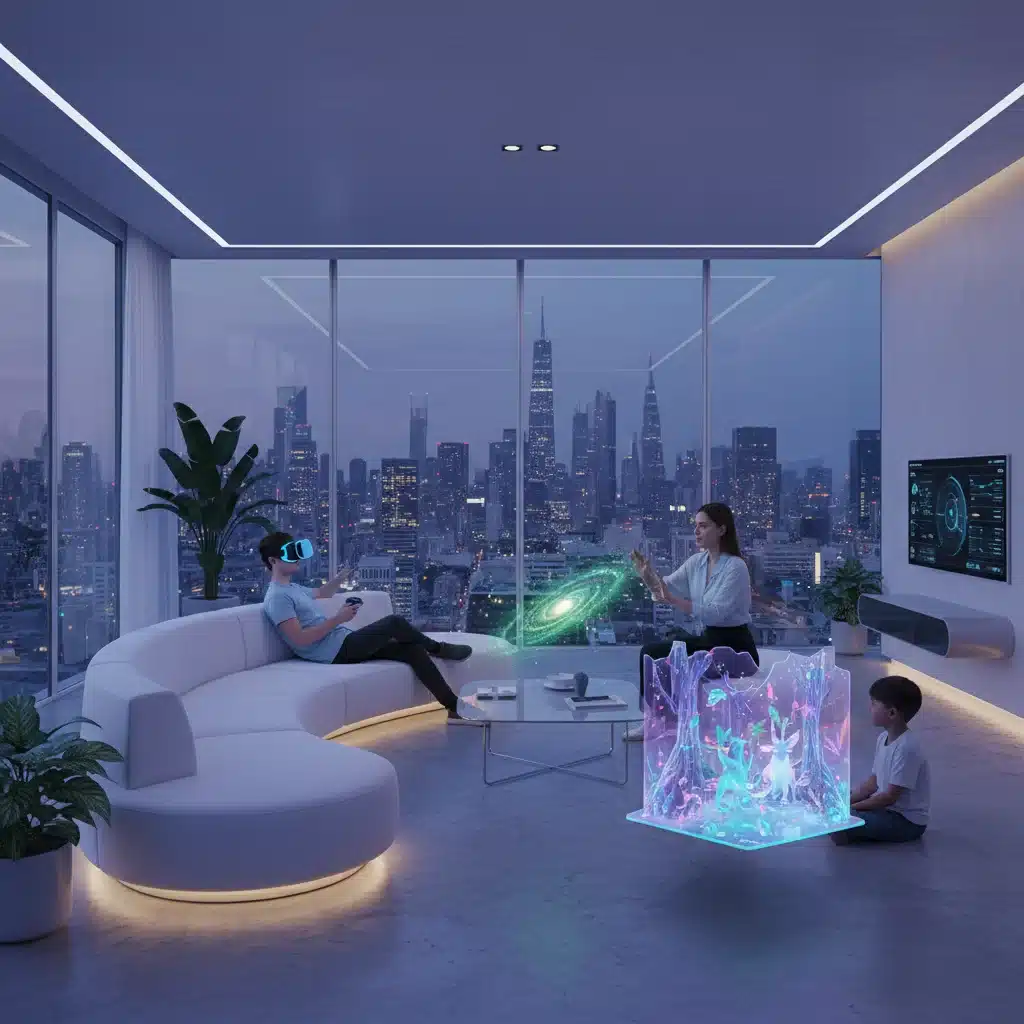
The landscape of home entertainment is undergoing a seismic shift, moving beyond traditional screens and passive viewing. As we hurtle towards 2026, US living rooms are poised to become epicenters of truly immersive home entertainment, offering experiences that blur the lines between the digital and physical worlds. Forget simply watching a movie or playing a game; imagine stepping into the narrative, feeling the action, and interacting with content in ways previously confined to science fiction. This article delves into the four groundbreaking immersive technologies that are set to redefine how we experience entertainment at home.
The Dawn of a New Era: Why Immersive Home Entertainment is the Future
For decades, home entertainment evolved primarily through improvements in visual and audio fidelity. From black and white to color, standard definition to 4K, and mono sound to surround sound, the goal was always clearer pictures and richer audio. While these advancements were significant, they largely maintained a passive consumption model. The next frontier, however, is active engagement. This shift is driven by several factors:
- Technological Maturation: Key components for immersive experiences, such as high-resolution displays, powerful processors, and sophisticated sensors, are becoming more affordable and widely available.
- Consumer Demand for Novelty: Audiences are constantly seeking fresh, engaging ways to interact with media. The novelty of immersive experiences offers a powerful draw.
- Bridging Distances: Immersive technologies can connect people across geographical boundaries, enabling shared experiences that feel remarkably real.
- Personalization: These technologies allow for highly personalized experiences, adapting to individual preferences and interactions.
The concept of immersive home entertainment isn’t just about bigger screens or louder speakers; it’s about fundamentally altering our perception and interaction with digital content. It’s about creating environments that transport us, engage our senses, and offer a level of presence previously unimaginable outside of physical reality. By 2026, these advancements will be commonplace in many US households, transforming the very definition of a ‘night in’.
1. Virtual Reality (VR): Stepping Into New Worlds
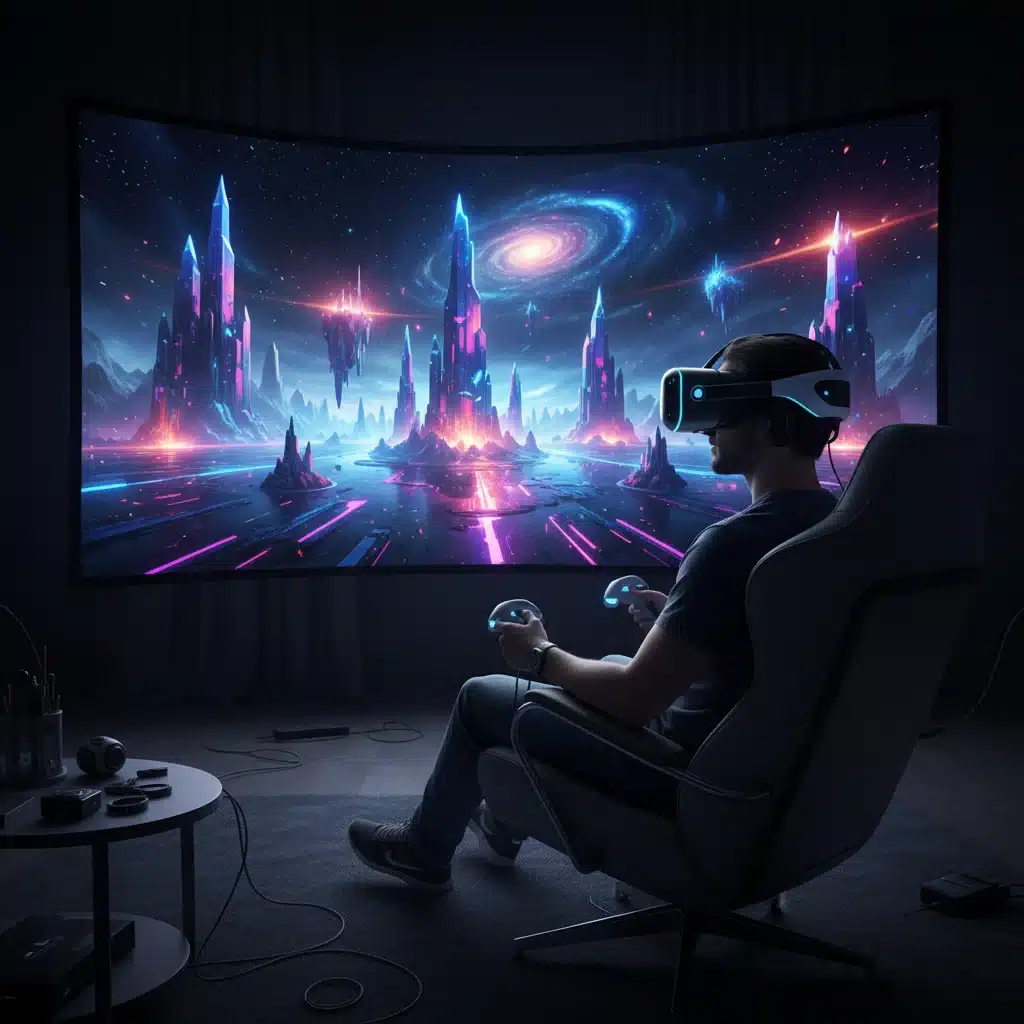
Virtual Reality has been a buzzword for years, but its true potential for immersive home entertainment is only now beginning to be fully realized. No longer just a niche for hardcore gamers, VR is evolving into a versatile platform for a wide array of experiences, from cinematic narratives to interactive educational content and even virtual travel. By 2026, VR headsets will be lighter, more comfortable, and boast significantly higher resolutions, making prolonged use a genuinely pleasant experience.
Key Advancements in VR by 2026:
- Standalone Headsets with Advanced Processing: The need for powerful PCs will diminish as standalone VR headsets become self-sufficient, offering console-quality graphics and performance.
- Wider Fields of View and Varifocal Displays: These improvements will reduce motion sickness and enhance realism, allowing users to focus on objects at different depths naturally.
- Eye Tracking and Foveated Rendering: Eye tracking will enable foveated rendering, where only the area the user is directly looking at is rendered in full resolution, significantly boosting performance and visual fidelity.
- Improved Haptics Integration: While discussed more broadly below, haptic feedback will be increasingly integrated into VR controllers and full-body suits, adding a tactile dimension to virtual interactions.
- Social VR Experiences: The metaverse concept will gain traction, offering virtual spaces for friends and family to gather, play games, watch movies, and even attend events together, regardless of physical location.
Imagine donning a lightweight headset and instantly being transported to the ancient pyramids of Egypt, exploring a fictional alien planet, or sitting courtside at a live NBA game. VR’s ability to create a sense of presence is unparalleled, making it a cornerstone of future immersive home entertainment. Content creators are already pushing boundaries, developing VR films that allow viewers to influence the narrative and interactive documentaries that offer unprecedented perspectives.
The accessibility of VR will also improve dramatically. As major tech companies continue to invest heavily in the technology, prices will become more competitive, and user interfaces will become more intuitive. Setup will be plug-and-play, removing barriers to entry and making VR a staple in many US households. The integration with smart home ecosystems will also allow for seamless transitions between real-world and virtual environments, enhancing the overall user experience.
2. Augmented Reality (AR): Blending Digital with Reality
While VR transports you entirely to another world, Augmented Reality overlays digital information onto your real-world view. This technology, often experienced today through smartphone apps, is poised for a significant leap forward by 2026, primarily through advanced AR glasses. These devices will be sleek, fashionable, and powerful enough to seamlessly integrate virtual objects into your physical environment, enriching your immersive home entertainment experiences without isolating you from your surroundings.
How AR Will Transform Your Living Room:
- Interactive Gaming: Imagine a virtual opponent battling you in your living room, or a digital board game unfolding on your coffee table. AR will bring game worlds directly into your personal space.
- Enhanced Viewing Experiences: Watch a sporting event with real-time stats and player information projected around your screen, or have virtual characters from a movie appear to walk through your room.
- Virtual Decor and Customization: Experiment with virtual furniture before buying, or redecorate your living room with digital art that changes with your mood.
- Educational and Creative Tools: Learn to play a new instrument with virtual instructors guiding your hands, or design 3D models that you can manipulate in your physical space.
- Social Interaction: Share AR experiences with friends and family, with everyone seeing the same digital overlays in their own physical environments, fostering a new form of collaborative entertainment.
The subtlety of AR is its strength. Unlike VR, which demands your full attention, AR enhances your existing reality. This makes it ideal for communal immersive home entertainment, where individuals can share digital content while still being aware of and interacting with each another. By 2026, AR glasses could replace traditional screens for many tasks, allowing for dynamic, scalable displays that appear wherever you need them, from a small pop-up window for messaging to a massive virtual cinema screen on your wall.
The development of sophisticated spatial mapping and persistent AR anchors will ensure that virtual objects remain stable and believable within your physical space, even as you move around. This level of integration will make AR a natural and intuitive part of daily life, extending far beyond entertainment into productivity and communication. The ability to pull up information, interact with digital assistants, or even conduct virtual meetings with holographic representations of colleagues, all while maintaining awareness of your physical surroundings, will be transformative.
3. Holographic Displays: Bringing 3D to Life Without Glasses
Perhaps the most futuristic vision of immersive home entertainment involves holographic displays. While true volumetric holography (like in Star Wars) is still some way off, significant strides are being made in glasses-free 3D and light-field displays that create incredibly convincing three-dimensional images visible from multiple angles without the need for any headgear. By 2026, we could see consumer-grade holographic displays emerging, offering a new paradigm for visual content.
The Impact of Holographic Displays:
- Truly 3D Movies and TV: Imagine watching a film where characters appear to float in your living room, with depth and presence that no 2D screen can replicate.
- Interactive 3D Content: Manipulate 3D models, view products from every angle, or engage with educational content that comes alive in your space.
- Virtual Companions and Avatars: Project realistic avatars of friends, family, or even AI companions into your living room for more engaging interactions.
- Gaming with a New Dimension: Play games where the battlefield or characters are physically present in your room, reacting to your movements and environment.
- Art and Decoration: Display dynamic, ever-changing holographic art pieces that add a unique aesthetic to your home.
These displays could revolutionize how we consume visual media, moving beyond the flat panel to a world where content has genuine depth and presence. Early versions might be smaller, perhaps tabletop devices, but as the technology matures, larger, wall-mounted or even room-filling holographic projections could become a reality. This would represent a fundamental shift in how we perceive and interact with visual information, making content feel more tangible and immediate.
The development of holographic displays are considerable, including achieving high resolution across wide viewing angles and managing computational power. However, with ongoing research and investment, particularly from companies aiming to create next-generation displays, the trajectory towards consumer-ready holographic solutions by 2026 is becoming increasingly clear. The appeal of glasses-free 3D, especially for communal viewing, is immense, promising a truly shared and immersive home entertainment experience.

4. Advanced Haptic Feedback: Feeling the Digital World
Visuals and audio immerse our eyes and ears, but true immersive home entertainment engages all our senses. Haptic feedback, which provides tactile sensations, is the missing piece of this puzzle. Current haptics are relatively basic (think vibrating game controllers), but by 2026, advanced haptic technologies will offer a much richer and more nuanced range of sensations, making digital interactions feel incredibly real.
The Future of Tactile Immersion:
- Full-Body Haptic Suits and Vests: These garments will allow users to feel impacts, environmental sensations (like rain or wind), and the texture of virtual objects across their entire body, enhancing VR and AR experiences dramatically.
- High-Fidelity Hand and Finger Haptics: Gloves and specialized controllers will provide precise tactile feedback, allowing users to ‘feel’ the weight, texture, and resistance of virtual objects they interact with. Imagine feeling the rough bark of a virtual tree or the smooth surface of a digital sculpture.
- Ultrasonic Haptics: These systems use focused ultrasound waves to create sensations on bare skin without direct contact, allowing for mid-air tactile feedback. This could enable users to ‘feel’ holographic projections or interact with touchless interfaces.
- Environmental Haptics: Beyond wearables, integrated haptic systems in furniture or flooring could simulate tremors, vibrations, or even the subtle rumble of an approaching vehicle in a game or movie, further blurring the lines between the digital and physical.
The integration of advanced haptics will elevate gaming, virtual tourism, and even remote communication. Imagine a VR game where you not only see and hear an explosion but also feel the concussive force, or a virtual concert where you feel the bass vibrating through your seat. This adds an entirely new layer of realism and engagement, making experiences far more memorable and impactful. The emotional response elicited by tactile feedback is powerful, and its sophisticated application will be a game-changer for immersive home entertainment.
The development of haptic technologies is progressing rapidly, with researchers exploring various methods to create realistic sensations, from micro-actuators to electro-tactile stimulation. The challenge lies in making these technologies comfortable, unobtrusive, and affordable for the consumer market. However, the benefits in terms of immersion are so profound that significant investment is driving rapid innovation, making advanced haptics a certainty for enriching home entertainment by 2026.
The Convergence: A Holistic Immersive Home Entertainment Ecosystem
While each of these technologies is powerful on its own, their true transformative potential lies in their convergence. By 2026, we can expect to see integrated systems where VR headsets, AR glasses, holographic displays, and advanced haptic feedback devices work in concert to create a seamless, multi-sensory immersive home entertainment ecosystem. Imagine a scenario:
- You start a VR game, and your haptic suit provides full-body feedback.
- Your AR glasses project game stats and communications onto your real-world coffee table.
- A holographic display shows a spectator view of the game for others in the room, creating a shared experience.
This level of integration will not only enhance individual experiences but also foster new forms of social interaction and collaborative entertainment within the home. The living room will become a dynamic, adaptable space, capable of transforming into a virtual battlefield, a holographic concert hall, or a collaborative design studio at a moment’s notice. The lines between passive consumption and active participation will vanish, replaced by a fluid, engaging, and deeply personal experience.
The challenges ahead include standardization across platforms, ensuring interoperability between different devices, and addressing potential issues like digital fatigue or sensory overload. However, the industry is keenly aware of these hurdles and is actively working towards solutions that prioritize user comfort and accessibility. The goal is not just to create impressive technology, but to create technology that genuinely enhances quality of life and enriches the home entertainment experience.
Ethical Considerations and the Future of Connection
As immersive home entertainment becomes more pervasive, it’s crucial to consider the ethical implications. Questions around data privacy, digital well-being, and the potential for increased social isolation will need careful navigation. Developers and policymakers will have a responsibility to ensure these technologies are used to enhance, rather than detract from, human connection and well-being.
However, the potential for positive impact is enormous. Immersive technologies can connect families separated by distance, provide therapeutic experiences, offer unprecedented educational opportunities, and foster creativity in ways we are just beginning to understand. By 2026, the careful balance between technological advancement and human-centric design will be paramount in shaping a future where immersive home entertainment truly enriches our lives.
Conclusion: Your Living Room, Reimagined by 2026
The future of home entertainment is not just about bigger or brighter screens; it’s about deeper engagement, richer sensations, and a seamless blend of the digital and physical. By 2026, Virtual Reality, Augmented Reality, Holographic Displays, and Advanced Haptic Feedback will collectively redefine what it means to be entertained at home. These technologies promise to transform our living rooms into dynamic portals to new worlds, interactive playgrounds, and shared experiences that are as memorable as they are groundbreaking.
Prepare for a future where your home is not just a place to live, but a gateway to boundless immersive home entertainment possibilities. The revolution is coming, and it will be spectacular.