Metaverse Economics: 6 Critical Strategies for U.S. Brands to Capture a 25% Market Share by 2027

The metaverse is no longer a distant sci-fi concept; it’s a rapidly evolving digital frontier poised to redefine how consumers interact with brands, products, and each other. For U.S. brands, the opportunity to establish a significant presence and capture a substantial market share in this burgeoning economy is immense. Industry analysts project that the metaverse market could reach trillions of dollars in the coming years, with a significant portion of that value being generated by brand engagement and virtual commerce. To seize this opportunity, U.S. brands must adopt a proactive and strategic approach. This comprehensive guide will delve into six critical strategies designed to help U.S. brands not only enter the metaverse but thrive within it, aiming for an ambitious 25% market share by 2027. Understanding and implementing these strategies will be paramount for any brand looking to future-proof its business model and tap into the next generation of consumer engagement.
The digital transformation accelerated by the pandemic has primed consumers for immersive online experiences. The metaverse, with its promise of persistent, shared, 3D virtual spaces, represents the natural evolution of this trend. For brands, this isn’t just about creating a virtual storefront; it’s about building entire ecosystems of engagement, fostering communities, and delivering unique value propositions that transcend physical limitations. The race to dominate this new digital realm is on, and early movers with well-defined strategies will undoubtedly reap the greatest rewards. Let’s explore how U.S. brands can position themselves at the forefront of this exciting revolution.
Understanding the Metaverse Landscape for U.S. Brands
Before diving into specific strategies, it’s crucial for U.S. brands to grasp the multifaceted nature of the metaverse. It’s not a single platform but a collection of interconnected virtual worlds, augmented reality (AR) experiences, and digital ecosystems. These environments are powered by technologies such as blockchain, NFTs (Non-Fungible Tokens), AI, and advanced 3D graphics. The economic potential stems from various avenues: virtual goods and services, advertising, events, digital real estate, and brand-sponsored experiences. For U.S. brands, this means a diverse array of opportunities to create value and engage consumers in novel ways. The key is to identify which aspects of the metaverse align best with your brand’s identity, target audience, and business objectives. Early adoption and experimentation, coupled with a deep understanding of the underlying technologies, will be crucial for establishing a strong foundation in this new digital frontier.
The metaverse represents a paradigm shift from traditional e-commerce and social media. It offers a much higher degree of immersion and interactivity, allowing consumers to ‘live’ within a brand’s world rather than just observe it. This immersive quality fosters deeper connections and brand loyalty. Moreover, the decentralized nature of many metaverse platforms, facilitated by Web3 technologies, offers new models of ownership and participation, where consumers can become co-creators and stakeholders in brand experiences. U.S. brands that embrace this collaborative spirit will find themselves at a significant advantage. The economic models within the metaverse are also evolving, moving beyond simple transactions to include play-to-earn, create-to-earn, and even own-to-earn mechanisms, presenting innovative ways for brands to generate revenue and reward their communities.
Strategy 1: Cultivating Authentic Digital Identity and Presence
The first and perhaps most fundamental strategy for U.S. brands in the metaverse is to cultivate an authentic and compelling digital identity. This goes far beyond simply replicating your physical brand in a virtual space. It involves reimagining your brand’s essence for a 3D, interactive environment. What does your brand look, feel, and sound like in the metaverse? How do your values translate into virtual experiences? This requires a deep understanding of your brand’s core identity and a creative approach to its digital manifestation. Developing unique avatars, virtual spaces, and digital assets that resonate with your target audience is paramount. Authenticity is key; consumers in the metaverse are highly discerning and can quickly spot inauthentic or opportunistic brand activations. A strong Metaverse Brand Strategy begins with a clear, consistent, and engaging digital identity.
Consider the aesthetic of your virtual presence. Is it a hyper-realistic representation, a stylized fantasy, or something entirely new? The choice should reflect your brand’s personality and appeal to your demographic. Beyond visuals, consider the interactive elements. How can users engage with your brand in meaningful ways within the metaverse? This could involve virtual events, games, educational experiences, or even co-creation opportunities. Brands like Nike and Gucci have already begun exploring this by creating virtual sneakers and digital fashion, allowing users to express their identity within the metaverse through branded items. The goal is to create a memorable and valuable experience that encourages repeated interaction and builds a loyal virtual community. This initial investment in digital identity will serve as the foundation for all subsequent metaverse endeavors.
Strategy 2: Innovative Virtual Product and Service Development
To capture a significant market share, U.S. brands must innovate beyond traditional offerings. The metaverse opens up a universe of possibilities for virtual products and services that may not have a physical counterpart. Think digital fashion, virtual real estate, unique NFT collectibles, immersive educational courses, or even virtual consulting services. The innovation lies in leveraging the unique capabilities of the metaverse to deliver value. For instance, a fashion brand could offer exclusive digital outfits that can be worn by avatars across multiple platforms, or a gaming company could sell in-game assets that are truly owned by players as NFTs. This strategy requires a shift in mindset from tangible goods to experiential and digital assets.
Developing these virtual products and services necessitates a cross-functional approach, bringing together designers, developers, marketers, and legal experts. Brands must consider the utility, scarcity, and aesthetic appeal of their digital offerings. How will these products enhance the user experience in the metaverse? What unique benefits do they provide? Furthermore, U.S. brands should explore opportunities for interoperability, allowing their virtual assets to be used across different metaverse platforms, thereby increasing their value and reach. This focus on innovative virtual product development is a cornerstone of a successful Metaverse Brand Strategy, enabling brands to tap into entirely new revenue streams and consumer segments. Early movers in this space are defining the categories and setting the standards for future virtual commerce.

Strategy 3: Building Engaged Virtual Communities
The metaverse is inherently social. Success for U.S. brands will heavily depend on their ability to build and nurture engaged virtual communities. This means moving beyond transactional relationships to fostering genuine connections and a sense of belonging among users. Brands can achieve this through hosting virtual events, creating dedicated social hubs within the metaverse, sponsoring user-generated content, and implementing loyalty programs that reward active participation. Empowering users to co-create and contribute to the brand’s virtual world can significantly enhance engagement and ownership.
Think of your metaverse presence not as a billboard, but as a dynamic town square where your community gathers. Brands should facilitate interactions, provide platforms for user expression, and listen to feedback from their virtual community. This could involve creating exclusive access to new digital products for community members, hosting Q&A sessions with brand representatives, or even organizing virtual concerts and festivals. The power of Web3 technologies, particularly DAOs (Decentralized Autonomous Organizations), can also be leveraged to give community members a voice in brand decisions, further deepening their connection and investment. A thriving virtual community is a powerful engine for organic growth and sustained success in the metaverse, making it a crucial component of any effective Metaverse Brand Strategy.
Strategy 4: Strategic Partnerships and Interoperability
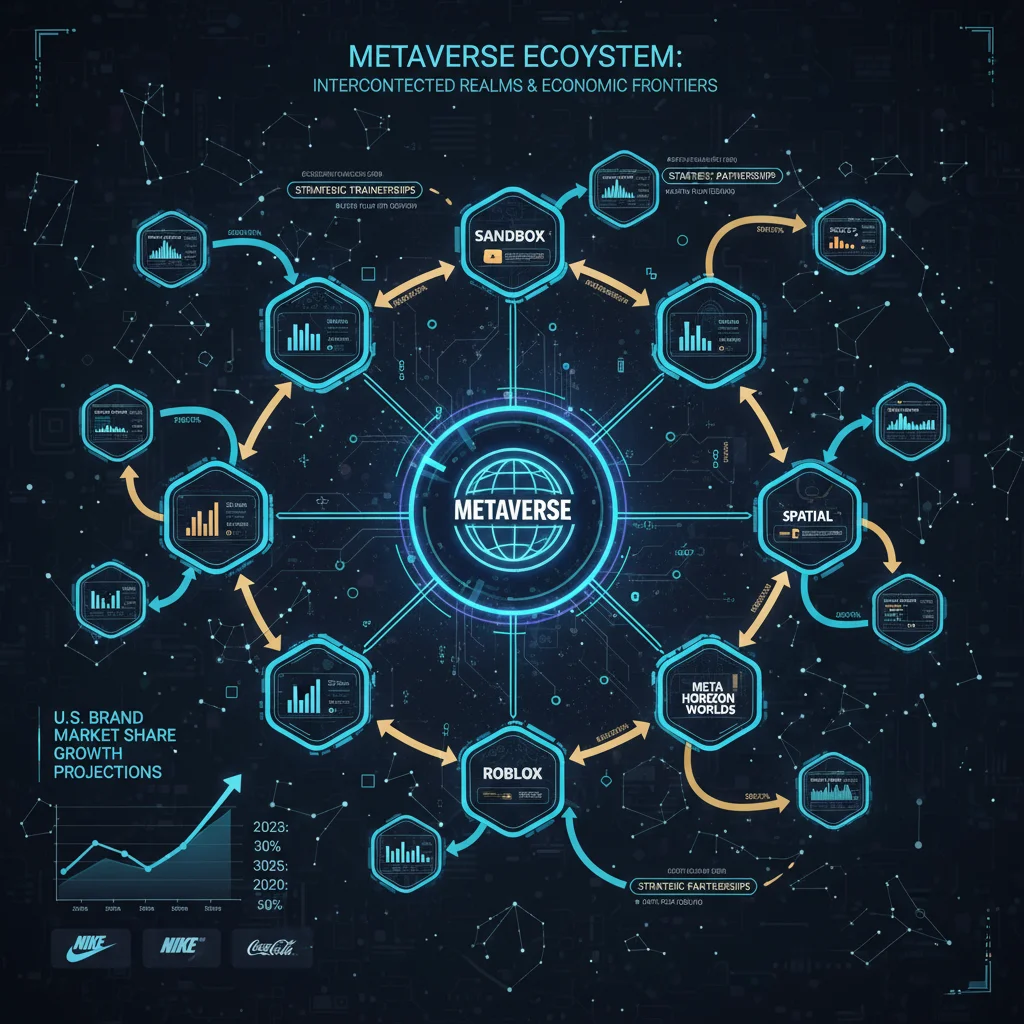
No single brand or platform will dominate the entire metaverse. Therefore, strategic partnerships and a commitment to interoperability are vital for U.S. brands aiming for broad reach and market share. This involves collaborating with other brands, metaverse platforms, game developers, and content creators. Partnerships can lead to co-branded virtual products, shared experiences, or cross-platform promotions, expanding your brand’s presence and audience significantly. Interoperability, the ability for digital assets and identities to move seamlessly between different virtual worlds, is a key long-term goal of the metaverse. Brands that embrace and advocate for interoperable standards will be better positioned for future growth.
Consider partnering with popular metaverse platforms like Decentraland, The Sandbox, Roblox, or Fortnite to create custom experiences or integrate your brand into existing popular environments. Collaborations with digital artists or fashion designers can yield unique NFT collections that resonate with specific sub-communities. Furthermore, exploring technical partnerships that enable your digital assets to be recognized and utilized across various platforms will future-proof your investments. This strategic approach to collaboration ensures that your brand isn’t an isolated island in the metaverse but a connected and influential entity within a larger, interconnected ecosystem. This collaborative spirit is essential for any U.S. brand looking to achieve significant market penetration and influence in the metaverse.
Strategy 5: Monetization Models and Virtual Economics
Developing robust monetization models tailored to the metaverse economy is critical for capturing and sustaining market share. This goes beyond simply selling virtual goods. U.S. brands should explore diverse revenue streams, including:
- NFTs and Digital Collectibles: Creating unique, scarce, and verifiable digital assets that offer utility or status.
- Virtual Advertising: Implementing dynamic and interactive advertising within metaverse environments.
- Experiential Commerce: Charging for access to exclusive virtual events, concerts, or premium experiences.
- Subscription Models: Offering recurring access to premium content, virtual spaces, or digital services.
- Play-to-Earn (P2E) and Create-to-Earn (C2E) Mechanisms: Integrating economic incentives that reward user participation and content creation.
- Digital Real Estate: Acquiring and developing virtual land for brand experiences, stores, or advertising.
Understanding the nuances of virtual currencies, blockchain transactions, and digital ownership will be essential. Brands must also be transparent about their monetization strategies and ensure they provide genuine value to consumers. The most successful Metaverse Brand Strategy will seamlessly integrate monetization with compelling user experiences, making transactions feel like a natural part of the immersive journey rather than an interruption.
Furthermore, brands must carefully consider the pricing strategies for their virtual goods and services. What is the perceived value of a digital item versus a physical one? How does scarcity impact pricing? The dynamic nature of virtual economies, often influenced by supply and demand within decentralized markets, requires constant monitoring and adaptation. Employing data analytics to understand consumer behavior and market trends within the metaverse will be crucial for optimizing monetization strategies and ensuring long-term profitability. Brands that can effectively balance innovation in product development with savvy economic models will be best positioned to capture a significant portion of the metaverse’s financial flow.
Strategy 6: Data-Driven Insights and Adaptive Evolution
The metaverse is a nascent and rapidly evolving space. Therefore, the sixth critical strategy for U.S. brands is to adopt a data-driven approach and commit to continuous adaptation and evolution. This involves establishing robust analytics frameworks to monitor user engagement, virtual product performance, community sentiment, and overall ROI. Understanding what resonates with your audience, what drives conversions, and where friction points exist will be paramount for refining your Metaverse Brand Strategy.
Key metrics could include:
- Active User Count: Number of unique users interacting with your brand’s metaverse presence.
- Engagement Rate: Time spent, interactions per session, and unique activities performed.
- Conversion Rates: Sales of virtual goods, event registrations, or NFT mints.
- Community Growth: Number of followers, forum participants, or DAO members.
- Sentiment Analysis: Monitoring social media and in-metaverse chat for brand perception.
Beyond quantitative data, qualitative insights gathered from community feedback, surveys, and direct interaction are invaluable. The metaverse landscape is constantly shifting with new technologies, platforms, and consumer behaviors emerging regularly. Brands must be agile, willing to experiment, learn from failures, and pivot their strategies as needed. This iterative process of deployment, measurement, learning, and adaptation will be the hallmark of successful U.S. brands in the metaverse, enabling them to maintain relevance and continue to expand their market share towards the 25% goal by 2027.
The Road Ahead: Securing 25% Market Share by 2027
Achieving a 25% market share in the metaverse by 2027 for U.S. brands is an ambitious yet attainable goal, provided a strategic, long-term vision is embraced. The metaverse is not merely another marketing channel; it is a fundamental shift in how businesses will operate and interact with their customers. Brands that view it as a fleeting trend risk being left behind. The strategies outlined—cultivating authentic digital identity, innovating virtual products, building engaged communities, forging strategic partnerships, developing diverse monetization models, and embracing data-driven adaptation—form a powerful framework for success.
The journey into the metaverse will require significant investment in technology, talent, and creative vision. It will also demand a willingness to challenge traditional business models and embrace new forms of value creation. U.S. brands have a unique opportunity to lead this charge, leveraging their innovative spirit and strong market presence to define the future of digital commerce and consumer engagement. By focusing on these six critical areas, brands can not only establish a dominant position but also contribute to the co-creation of a richer, more immersive, and economically vibrant metaverse. The time to act is now, to ensure your brand is not just a participant but a leader in the next iteration of the internet.