U.S. Policy Driving Renewable Energy Adoption: 4 Key Updates
U.S. Policy Driving Renewable Energy Adoption: 4 Key Updates Shaping a Greener Future
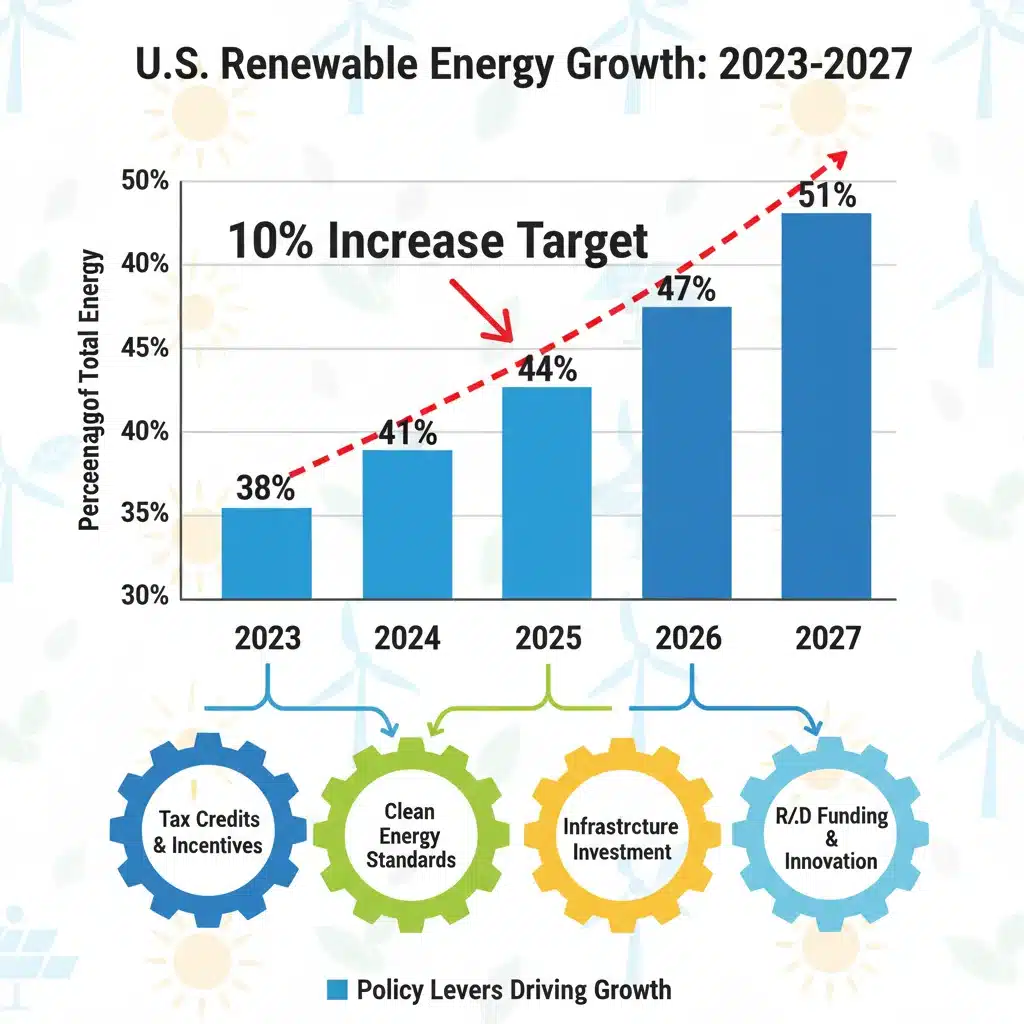
The global shift towards sustainable energy sources is no longer a distant dream but a rapidly unfolding reality, with the United States playing a pivotal role. The urgency of climate change, coupled with the desire for energy independence and economic growth, has propelled renewable energy to the forefront of national policy agendas. In recent years, a series of ambitious legislative actions and strategic investments have laid the groundwork for a significant transformation of the U.S. energy landscape. These policies are not merely aspirational; they are designed to deliver tangible results, specifically aiming for a substantial increase in renewable energy adoption – a target of 10% by 2027. This ambitious goal underscores a profound commitment to a greener, more sustainable future, powered by innovation and strategic foresight.
Understanding the intricacies of these policy changes is crucial for anyone interested in the future of energy, technology, and environmental sustainability. From tax credits that incentivize clean energy production to investments in grid modernization and research, the U.S. renewable policy framework is multifaceted and far-reaching. This article delves into four recent U.S. policy updates that are acting as powerful catalysts for this transition. We will explore how these policies are fostering sustainable tech innovations, creating new economic opportunities, and addressing the critical challenges of climate change. By examining these key updates, we can gain a clearer picture of the path forward and the profound impact they are having on driving renewable energy adoption across the nation.
The Imperative for Renewable Energy: Why Now?
The drive towards renewable energy is fueled by a confluence of critical factors. Climate change remains perhaps the most pressing concern, with scientific consensus overwhelmingly pointing to the need for drastic reductions in greenhouse gas emissions. Renewable energy sources like solar, wind, hydro, and geothermal offer a cleaner alternative to fossil fuels, significantly lowering carbon footprints and mitigating environmental degradation. Beyond environmental stewardship, the pursuit of energy independence is a powerful motivator. Relying on domestic renewable resources reduces vulnerability to volatile global energy markets and geopolitical instabilities, strengthening national security and economic stability.
Furthermore, the economic benefits of investing in renewable energy are becoming increasingly undeniable. The sector is a significant job creator, spurring innovation and attracting substantial private investment. As technology advances, the cost of generating renewable energy continues to fall, making it competitive, and often cheaper, than traditional fossil fuel sources. This economic viability, coupled with growing public demand for sustainable practices, has created a fertile ground for policy interventions that accelerate the transition. The U.S. renewable policy framework recognizes these benefits and seeks to leverage them to achieve ambitious energy goals. The collective impact of these factors underscores the critical importance of the current policy push and its potential to redefine the nation’s energy future.
Policy Update 1: The Inflation Reduction Act (IRA) and Its Green Provisions
The Inflation Reduction Act (IRA), signed into law in August 2022, stands as a landmark piece of legislation with profound implications for U.S. renewable policy. While its scope is broad, addressing healthcare, taxes, and climate change, its clean energy provisions are particularly transformative. The IRA dedicates an estimated $369 billion to climate and clean energy initiatives, representing the largest investment in climate action in U.S. history. This unprecedented financial commitment is designed to accelerate the deployment of renewable energy technologies, enhance energy efficiency, and foster domestic manufacturing of clean energy components.
Key Mechanisms of the IRA:
- Expanded and Extended Tax Credits: The IRA significantly extends and expands tax credits for clean energy projects, including solar, wind, geothermal, and battery storage. The Investment Tax Credit (ITC) and Production Tax Credit (PTC) are now available for a longer duration and offer higher credit values, especially for projects that meet domestic content requirements or are located in energy communities. These credits reduce the upfront costs and ongoing operational expenses for renewable energy developers, making projects more financially attractive and accelerating their deployment.
- Manufacturing Incentives: To bolster domestic supply chains and create American jobs, the IRA includes manufacturing tax credits for components like solar panels, wind turbine parts, and electric vehicle batteries. This incentivizes companies to produce these critical technologies within the U.S., reducing reliance on foreign supply chains and fostering a robust domestic clean energy industry.
- Consumer Rebates and Tax Credits: The act also provides direct incentives for consumers to adopt clean energy technologies. This includes tax credits for installing residential solar panels, energy-efficient appliances, and purchasing electric vehicles. These provisions aim to make clean energy more accessible and affordable for everyday Americans, driving demand from the ground up.
- Clean Hydrogen and Carbon Capture Credits: Recognizing the role of emerging technologies, the IRA offers tax credits for clean hydrogen production and carbon capture, utilization, and storage. These incentives are crucial for decarbonizing hard-to-abate sectors and exploring new pathways to a net-zero economy.
The IRA’s comprehensive approach is expected to dramatically lower energy costs for families and businesses, create millions of jobs, and put the U.S. on track to reduce greenhouse gas emissions by approximately 40% below 2005 levels by 2030. For renewable energy adoption, the IRA is a game-changer, providing long-term policy certainty and robust financial support that will catalyze unprecedented growth and innovation in the sector. This powerful U.S. renewable policy update is foundational to achieving the 10% renewable energy adoption target by 2027.
Policy Update 2: Infrastructure Investment and Jobs Act (IIJA) and Grid Modernization
While the Inflation Reduction Act focuses heavily on incentivizing clean energy production, the Infrastructure Investment and Jobs Act (IIJA), enacted in November 2021, complements this by addressing the critical need for a modernized and resilient energy infrastructure. The IIJA commits over $65 billion to upgrade the nation’s power grid, invest in clean energy transmission, and develop new technologies that support a high-renewables future. A robust and intelligent grid is paramount for integrating the increasing volumes of intermittent renewable energy sources like solar and wind.
Impact on Renewable Energy Integration:
- Grid Modernization: A significant portion of the IIJA funding is directed towards improving grid reliability and resilience. This includes investments in smart grid technologies, advanced sensors, and automation systems that can better manage the fluctuating output of renewable energy. A modernized grid can dynamically respond to supply and demand changes, ensuring stable power delivery even with a higher penetration of renewables.
- Transmission Line Expansion: One of the biggest bottlenecks for renewable energy deployment has been the lack of adequate transmission infrastructure to carry clean power from remote generation sites (like wind farms in the Midwest or solar arrays in the Southwest) to population centers. The IIJA allocates substantial funds for new high-voltage transmission lines and upgrades to existing ones, facilitating the efficient transport of renewable electricity across regions. This is a crucial step for the U.S. renewable policy goals.
- Energy Storage Research and Deployment: The act supports the research, development, and demonstration of advanced energy storage technologies, including long-duration storage. As renewable energy sources are intermittent, effective storage solutions are essential to ensure consistent power supply. By investing in storage, the IIJA helps to overcome one of the key challenges to widespread renewable adoption.
- Cybersecurity for Energy Systems: With increased digitalization and interconnectedness, the energy grid becomes more vulnerable to cyber threats. The IIJA includes provisions to enhance the cybersecurity of critical energy infrastructure, protecting the stability and reliability of a grid increasingly reliant on renewable sources.
The IIJA’s focus on infrastructure is vital for the successful integration of new renewable energy projects catalyzed by the IRA. Without a robust and flexible grid, even the most innovative clean energy technologies would struggle to deliver their full potential. This U.S. renewable policy update ensures that the physical backbone of the energy system is ready to support the transition to a cleaner, more sustainable future, directly contributing to the ambitious 10% renewable energy adoption target by 2027.
Policy Update 3: Department of Energy (DOE) Initiatives and Funding
Beyond legislative acts, the Department of Energy (DOE) plays a crucial role in shaping U.S. renewable policy through its strategic initiatives, research funding, and technical assistance programs. The DOE acts as a driving force for innovation, supporting the development and commercialization of next-generation clean energy technologies. Its programs often fill critical gaps not directly addressed by broad legislative mandates, focusing on specific technological challenges and market barriers.
Key DOE Contributions:
- Advanced Research Projects Agency-Energy (ARPA-E): ARPA-E funds high-potential, high-impact energy technologies that are too early for private-sector investment. Many groundbreaking innovations in solar efficiency, battery storage, and grid management have originated from ARPA-E-backed projects. This continuous investment in frontier technologies is essential for maintaining the U.S.’s competitive edge in sustainable tech innovations.
- Loan Programs Office (LPO): The LPO provides loans and loan guarantees for innovative clean energy projects that might struggle to secure conventional financing due to perceived risks or novel technologies. This de-risks critical projects, enabling them to scale and contribute to the broader renewable energy landscape. Projects supported by the LPO often include large-scale solar farms, advanced nuclear reactors, and electric vehicle manufacturing facilities.
- Clean Energy Demonstrations and Deployments: The DOE actively funds demonstration projects that prove the viability of new clean energy technologies at scale. These projects are crucial for bridging the gap between laboratory research and commercial deployment, providing real-world data and building confidence in emerging solutions. Examples include advanced geothermal systems, offshore wind pilots, and carbon capture demonstrations.
- Workforce Development Programs: Recognizing that a skilled workforce is essential for the clean energy transition, the DOE supports various initiatives to train workers for jobs in renewable energy installation, manufacturing, and maintenance. These programs are vital for ensuring that the U.S. has the human capital necessary to implement its ambitious renewable energy goals.
- National Laboratories Research: The DOE’s network of national laboratories conducts cutting-edge research across all aspects of energy science, from fundamental materials science to systems integration. This foundational research underpins many of the technological advancements that make increased renewable energy adoption possible and cost-effective.
The DOE’s multifaceted approach ensures that the U.S. renewable policy is not just about incentives but also about fostering the innovation ecosystem necessary for long-term sustainable growth. Its targeted funding and strategic initiatives are indispensable for pushing the boundaries of what’s possible in clean energy, directly supporting the 10% renewable energy adoption goal by 2027 through continuous technological advancement.
Policy Update 4: State-Level Renewable Energy Standards and Incentives
While federal policies provide a broad framework, state-level initiatives are equally crucial in driving U.S. renewable policy and adoption. Many states have implemented their own Renewable Portfolio Standards (RPS) or clean energy mandates, setting specific targets for utilities to source a certain percentage of their electricity from renewable sources by a given date. These state-led efforts often precede or complement federal actions, creating a dynamic and competitive environment for clean energy development.
The Power of State-Level Action:
- Renewable Portfolio Standards (RPS): Over 30 states and Washington D.C. have adopted some form of RPS or clean energy standard. These policies create a market for renewable energy credits (RECs), providing an additional revenue stream for renewable energy generators and incentivizing investment. States with aggressive RPS targets, such as California, New York, and Hawaii, have seen significant growth in their renewable energy sectors.
- Net Metering Policies: Many states have implemented net metering policies, which allow consumers who generate their own electricity (e.g., with rooftop solar panels) to feed excess power back into the grid and receive credits on their utility bills. This encourages distributed generation and empowers individual homeowners and businesses to contribute to renewable energy goals.
- State Tax Incentives and Grants: Beyond federal tax credits, many states offer their own tax incentives, grants, and rebate programs for renewable energy installations. These localized financial supports can further reduce the cost of adoption for residents and businesses, making renewable energy more attractive.
- Permitting and Siting Streamlining: States also play a critical role in streamlining the permitting and siting processes for large-scale renewable energy projects. Reducing bureaucratic hurdles and accelerating approval timelines can significantly decrease project development costs and speed up deployment.
- Community Solar Programs: Several states have championed community solar programs, which allow multiple subscribers to benefit from a single, shared solar installation. This expands access to solar energy for individuals who cannot install panels on their own property, such as renters or those with unsuitable rooftops.
The synergy between federal and state policies creates a powerful momentum for renewable energy growth. State-level U.S. renewable policy often allows for tailored solutions that address local energy needs and resources, fostering a diverse and resilient clean energy economy. This decentralized approach, combined with overarching federal support, is essential for reaching the national target of 10% renewable energy adoption by 2027 and ensuring that the transition is both equitable and effective across all regions.

Sustainable Tech Innovations Driven by Policy
The robust U.S. renewable policy landscape is not just about deploying existing technologies; it’s a powerful catalyst for sustainable tech innovations. The long-term certainty provided by policies like the IRA and the targeted funding from the DOE encourage significant investment in research and development. This leads to breakthroughs in efficiency, cost reduction, and new applications for clean energy.
Key Areas of Innovation:
- Advanced Solar Technologies: Policy support fuels research into next-generation solar cells, including perovskites, thin-film technologies, and multi-junction cells, which promise higher efficiencies and lower manufacturing costs. Innovations in solar panel design also include bifacial modules that capture sunlight from both sides and integrated solar solutions for buildings and infrastructure.
- Grid-Scale Energy Storage: The demand for reliable energy storage is driving innovation beyond traditional lithium-ion batteries. Research is accelerating into long-duration storage solutions such as flow batteries, compressed air energy storage, gravitational storage, and even thermal storage. These advancements are crucial for balancing the grid with high penetrations of intermittent renewables.
- Offshore Wind Technology: U.S. renewable policy has spurred significant interest and investment in offshore wind. This includes innovations in larger, more efficient turbines, floating offshore wind platforms that can be deployed in deeper waters, and advanced installation techniques. These technologies unlock vast untapped renewable energy potential along U.S. coastlines.
- Green Hydrogen Production: Policies incentivizing clean hydrogen production are driving innovation in electrolysis technologies, aiming to reduce the cost of producing hydrogen from renewable electricity. This also includes research into advanced materials for electrolyzers and efficient hydrogen storage and transport solutions, positioning green hydrogen as a key decarbonization tool for heavy industry and transportation.
- Smart Grid and AI Integration: The push for grid modernization under the IIJA is accelerating the integration of artificial intelligence (AI) and machine learning into grid management. These technologies optimize energy distribution, predict demand fluctuations, and enhance the resilience of the grid, making it more capable of handling diverse renewable energy inputs.
- Carbon Capture, Utilization, and Storage (CCUS): While primarily focused on reducing emissions from industrial processes and power plants, CCUS technologies are also seeing innovation driven by policy. This includes developing more efficient capture methods, exploring novel uses for captured CO2, and ensuring safe and permanent geological storage.
The symbiotic relationship between U.S. renewable policy and sustainable tech innovations is critical. Policy provides the market signals and financial incentives, while innovation delivers the more efficient, cost-effective, and scalable solutions needed to meet ambitious renewable energy targets. This continuous cycle of policy support driving innovation, which in turn makes policy goals more achievable, is a cornerstone of the nation’s clean energy transition.
Challenges and the Path Forward
While the current U.S. renewable policy framework is robust and ambitious, the path to a 10% increase in renewable energy adoption by 2027 and beyond is not without its challenges. Overcoming these hurdles will require continued vigilance, adaptability, and collaboration among various stakeholders.
Key Challenges:
- Grid Interconnection and Permitting: Despite efforts to streamline, the process for interconnecting new renewable energy projects to the grid and obtaining necessary permits can still be lengthy and complex. Bottlenecks in these areas can delay deployment and increase project costs.
- Supply Chain Constraints: The rapid expansion of renewable energy demand can strain global supply chains for critical materials and components. Geopolitical factors and trade policies can also impact the availability and cost of these essential inputs.
- Workforce Development: While programs exist, ensuring a sufficiently large and skilled workforce to build, operate, and maintain the expanding renewable energy infrastructure remains a significant challenge. Addressing this requires sustained investment in education and training.
- Social Acceptance and Siting: Large-scale renewable energy projects, particularly wind and solar farms, sometimes face local opposition due to aesthetic concerns, land use conflicts, or perceived impacts on property values. Effective community engagement and equitable benefit-sharing are crucial.
- Energy Storage Scalability: While significant progress is being made, scaling energy storage solutions to meet the needs of a fully decarbonized grid remains a technological and economic challenge. Further innovation and cost reductions are necessary.
- Policy Durability and Consistency: The long-term success of renewable energy adoption depends on consistent and durable policy support. Changes in political leadership or priorities could introduce uncertainty, impacting investment decisions.
The Path Forward:
Addressing these challenges requires a concerted effort. Continued investment in grid infrastructure and smart grid technologies, as outlined in the IIJA, is paramount. Further streamlining of permitting processes at both federal and state levels will accelerate project deployment. Diversifying supply chains, fostering domestic manufacturing, and investing in advanced materials research can mitigate supply chain risks. Robust workforce development programs, including vocational training and apprenticeships, are essential to meet labor demands. Proactive community engagement and benefit-sharing models can enhance social acceptance for new projects.
Furthermore, continued support for research and development, particularly through initiatives like the DOE’s ARPA-E and LPO, will drive the next wave of sustainable tech innovations, making renewable energy even more efficient and cost-effective. The U.S. renewable policy landscape must remain adaptive, responding to emerging challenges and opportunities with agility. By tackling these hurdles head-on, the U.S. can solidify its leadership in the global clean energy transition and confidently achieve its ambitious target of 10% renewable energy adoption by 2027, paving the way for a truly sustainable and energy-independent future.
Conclusion: A Transformative Era for U.S. Energy
The confluence of recent U.S. policy updates – spearheaded by the Inflation Reduction Act, the Infrastructure Investment and Jobs Act, strategic Department of Energy initiatives, and robust state-level standards – marks a transformative era for the nation’s energy landscape. These policies collectively represent an unprecedented commitment to accelerating renewable energy adoption, fostering sustainable tech innovations, and building a resilient, clean energy economy. The ambitious target of increasing renewable energy adoption by 10% by 2027 is not merely an aspiration; it is a meticulously planned objective underpinned by significant financial incentives, infrastructure upgrades, and a dedicated focus on technological advancement.
The impact of these policies extends far beyond environmental benefits. They are driving economic growth, creating high-paying jobs, enhancing energy security, and positioning the United States as a global leader in the clean energy transition. While challenges remain, the comprehensive nature of the current U.S. renewable policy framework provides a clear and actionable path forward. By continuing to invest in innovation, modernize infrastructure, and foster collaboration across all levels of government and industry, the U.S. is well-equipped to overcome these hurdles and realize its vision of a future powered by clean, abundant, and sustainable energy. The journey towards a greener, more prosperous future is well underway, with these policies serving as powerful engines of change.