Brain-Computer Interfaces: U.S. Workforce Impact 2028

The dawn of Brain-Computer Interfaces (BCIs) is no longer a distant sci-fi fantasy but an emerging reality, poised to profoundly reshape the landscape of the U.S. workforce by 2028. As these sophisticated neural technologies transition from research labs to practical applications, their ethical and economic implications demand immediate and thorough consideration. This article delves into the potential impacts of BCI U.S. Workforce integration, exploring both the transformative opportunities and the significant challenges that lie ahead.
The Rise of Brain-Computer Interfaces: A Brief Overview
Brain-Computer Interfaces are revolutionary systems that create a direct communication pathway between the brain and an external device. Historically, BCIs have been primarily associated with medical applications, offering hope to individuals with severe disabilities by restoring lost motor functions, enabling communication for paralyzed patients, or controlling prosthetic limbs with thought. However, the scope of BCI technology is rapidly expanding beyond therapeutic uses. Non-invasive BCIs, such as those utilizing electroencephalography (EEG), are becoming more sophisticated, allowing for brain-controlled computing, enhanced focus, and even augmented reality experiences. Invasive BCIs, while requiring surgical implantation, offer higher bandwidth and precision, promising even more direct and powerful interactions between human thought and digital systems.
By 2028, we anticipate a significant leap in the maturity and accessibility of BCI technologies. Advancements in miniaturization, power efficiency, and signal processing will make them more user-friendly and reliable. This progression will inevitably push BCIs into mainstream professional environments, creating a new paradigm for human-computer interaction and human performance. The question is no longer if BCIs will impact the U.S. workforce, but how deeply and in what ways.
Economic Implications for the U.S. Workforce
Job Augmentation vs. Job Displacement: The Dual-Edged Sword
One of the most pressing economic questions surrounding BCI integration into the U.S. workforce is its effect on employment. Will BCIs primarily augment human capabilities, leading to increased productivity and new job categories, or will they displace a significant portion of the existing workforce?
Job Augmentation: For many roles, BCIs could serve as powerful augmentation tools. Imagine surgeons performing delicate operations with enhanced precision, architects designing complex structures with thought-controlled software, or data analysts processing information at unprecedented speeds by directly interfacing with their analytical tools. BCIs could enhance cognitive functions like focus, memory, and problem-solving, turning average workers into super-performers. This could lead to a demand for new skills related to BCI operation, maintenance, and ethical oversight, creating entirely new job markets.
Job Displacement: Conversely, the ability of BCIs to automate complex cognitive tasks, traditionally reserved for humans, poses a significant risk of job displacement. Roles involving repetitive mental processes, data entry, or even certain analytical tasks could be streamlined or entirely taken over by BCI-enhanced systems or BCI-driven automation. This could particularly impact middle-skill jobs, exacerbating existing inequalities and requiring extensive workforce retraining programs. The economic impact on the BCI U.S. Workforce could be substantial, necessitating robust social safety nets and forward-thinking economic policies.
Productivity Boost and Economic Growth
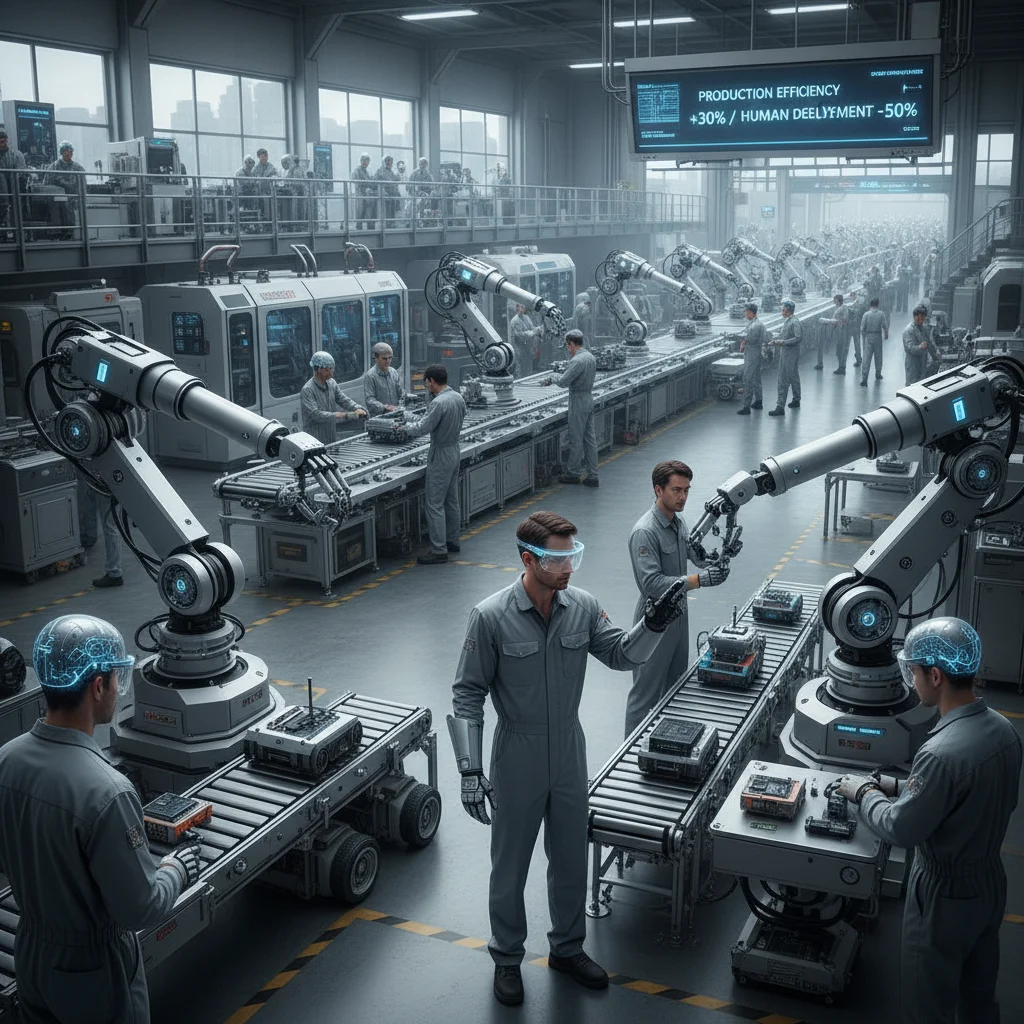
The potential for a massive surge in productivity is a key economic driver for BCI adoption. By eliminating the need for physical input devices (keyboards, mice) and allowing for direct mental control, BCIs could drastically reduce the time and effort required for many tasks. This increased efficiency could lead to higher output, faster innovation cycles, and ultimately, significant economic growth. Industries that heavily rely on precision, speed, and complex cognitive processing, such as advanced manufacturing, finance, and technology development, stand to benefit immensely. This could bolster the competitiveness of the BCI U.S. Workforce on a global scale.
New Industries and Economic Opportunities
The emergence of BCI technology will inevitably spawn entirely new industries and economic sectors. We can anticipate growth in:
- BCI Hardware and Software Development: Companies specializing in designing, manufacturing, and maintaining BCI devices and their software ecosystems.
- Neural Data Analytics: Experts in interpreting and securing the vast amounts of neural data generated by BCIs.
- BCI Training and Education: Institutions and professionals dedicated to teaching individuals how to effectively use and integrate BCIs into their work.
- Ethical BCI Consulting: Advisors guiding organizations through the complex ethical and regulatory landscape of BCI deployment.
- Personalized BCI Services: Customization and optimization of BCI systems for individual professional needs.
These new opportunities could offset some job losses, but they will require a highly skilled and adaptable BCI U.S. Workforce, highlighting the need for significant investment in education and reskilling initiatives.
Ethical Implications for the U.S. Workforce
Privacy and Data Security: The Mind as a Data Stream
Perhaps the most profound ethical challenge posed by BCIs is the issue of privacy and data security. BCIs operate by reading brain signals, which are inherently personal and sensitive. The data generated by these interfaces could reveal thoughts, intentions, emotional states, and even predispositions. Who owns this neural data? How will it be stored, accessed, and used? The potential for misuse, from targeted advertising based on cognitive patterns to surveillance and even manipulation, is immense.
Robust legal frameworks and ethical guidelines will be crucial to protect individuals in the BCI U.S. Workforce. This includes:
- Informed Consent: Ensuring individuals fully understand what data is being collected and how it will be used.
- Data Anonymization and Encryption: Implementing advanced techniques to protect neural data from unauthorized access.
- Non-Discrimination: Preventing employers from using BCI data to discriminate against employees based on their cognitive profiles.
Cognitive Liberty and Autonomy
The concept of cognitive liberty – the right to mental self-determination – comes under scrutiny with BCIs. If employers can monitor or even influence cognitive states through BCIs, where does the line between work requirement and personal autonomy blur? The pressure to adopt BCIs for performance enhancement could become a de facto requirement, potentially eroding individual freedom and creating a two-tiered BCI U.S. Workforce: those who are augmented and those who are not.
Questions arise:
- Can an employer mandate BCI use?
- What are the implications for mental privacy during and outside of work hours?
- How do we ensure individuals retain control over their own cognitive processes?
These are not merely theoretical concerns but urgent ethical dilemmas that require proactive solutions before widespread adoption.
Equity and Access: The Digital Divide of the Mind
Like any advanced technology, BCIs come with significant costs and require specialized training. This raises concerns about equity and access. If BCI adoption becomes a prerequisite for high-paying jobs, will it create a new form of digital divide, further marginalizing those who cannot afford or access the technology and training? The BCI U.S. Workforce could become stratified, deepening existing socio-economic inequalities.
Policymakers must consider:
- Affordability and Subsidies: How to make BCIs accessible to a broader population.
- Inclusive Training Programs: Ensuring diverse groups have opportunities to acquire BCI-related skills.
- Ethical Guidelines for Deployment: Preventing BCIs from becoming tools for exclusion rather than empowerment.
Safety and Health Concerns
While non-invasive BCIs generally pose fewer physical risks, long-term use and potential side effects need thorough investigation. Invasive BCIs carry surgical risks and the potential for infection or neurological damage. Beyond physical health, the mental and psychological impact of constantly interfacing with machines – the potential for cognitive overload, addiction, or identity shifts – must be rigorously studied and addressed. The well-being of the BCI U.S. Workforce must be paramount.
Policy and Regulatory Challenges by 2028
The rapid advancement of BCIs necessitates equally rapid development of policy and regulatory frameworks. The U.S. government, alongside international bodies, will need to address several critical areas:
Establishing Legal Frameworks for Neural Data
Existing privacy laws, such as HIPAA or GDPR, may not be sufficient to cover the unique sensitivities of neural data. New legislation specifically designed for BCI data, addressing ownership, consent, usage, and security, will be essential. This will require collaboration between legal experts, ethicists, neuroscientists, and industry stakeholders to define what constitutes “neural privacy” and how to protect it.
Workplace Regulations and Standards
New workplace policies will be needed to govern BCI use. This includes guidelines on voluntary versus mandatory adoption, acceptable use policies, working hours for BCI-augmented tasks, and protections against discrimination based on BCI performance or data. Occupational safety standards will also need to be updated to account for potential physical and psychological risks associated with BCI technology, ensuring the health of the BCI U.S. Workforce.
Investment in Education and Workforce Development
To mitigate job displacement and capitalize on new opportunities, significant investment in education and reskilling programs will be critical. This includes:
- STEM Education: Strengthening foundational science, technology, engineering, and mathematics education to prepare future generations for BCI-related careers.
- Vocational Training: Developing specialized training programs for BCI operators, technicians, and developers.
- Lifelong Learning Initiatives: Creating accessible pathways for current workers to reskill and adapt to a BCI-integrated economy.
These initiatives are vital to ensure a resilient and adaptable BCI U.S. Workforce.
Ethical Oversight and Governance Bodies
The complexity and potential impact of BCIs warrant dedicated ethical oversight. The establishment of independent ethics committees or regulatory bodies, composed of diverse experts, could provide guidance on BCI research, development, and deployment. These bodies would play a crucial role in anticipating and addressing ethical dilemmas before they become widespread societal problems, fostering public trust in BCI technology.
The Future of Work: A Transformed BCI U.S. Workforce
By 2028, the BCI U.S. Workforce will likely be characterized by a blend of human and augmented intelligence. Repetitive and physically demanding tasks will continue to be automated, but increasingly, cognitive tasks will also see augmentation or automation through BCIs. This shift will elevate the importance of uniquely human skills such as creativity, critical thinking, emotional intelligence, and complex problem-solving – areas where humans still hold a significant advantage over machines, even BCI-enhanced ones.
The workplace itself might transform. Remote work could become even more seamless with direct neural interfaces. Collaboration could evolve, with shared cognitive spaces enabled by advanced BCI networks. The definition of “work” and “worker” may expand to include individuals whose primary contribution is through direct mental interaction with digital systems.

Preparing for the BCI Revolution
For individuals, preparing for this future means embracing lifelong learning and developing adaptable skill sets. Focusing on “human-centric” skills that complement BCI capabilities will be paramount. Understanding the basics of BCI technology, even for non-technical roles, will become increasingly valuable.
For businesses, strategic planning for BCI integration is essential. This includes:
- Pilot Programs: Experimenting with BCIs in controlled environments to understand their benefits and challenges.
- Employee Training: Investing in programs to upskill and reskill employees for BCI-augmented roles.
- Ethical Frameworks: Developing internal policies that address the ethical implications of BCI use, prioritizing employee well-being and privacy.
For governments, the task is to create a regulatory environment that fosters innovation while safeguarding societal values and individual rights. This involves proactive legislation, international cooperation on standards, and significant investment in public education and social support systems to manage the transition for the BCI U.S. Workforce.
Conclusion: Navigating the BCI Frontier
The integration of Brain-Computer Interfaces into the U.S. workforce by 2028 presents a future filled with both immense promise and profound challenges. Economically, BCIs could unlock unprecedented levels of productivity and create entirely new industries, but they also risk exacerbating job displacement and inequality. Ethically, they raise fundamental questions about privacy, cognitive liberty, and access to technology.
Successfully navigating this BCI frontier will require a concerted, multi-stakeholder effort. Researchers, policymakers, industry leaders, and the public must engage in open dialogue, develop robust ethical guidelines, and implement forward-thinking economic and educational policies. The goal is not to resist this technological evolution but to shape it in a way that maximizes its benefits for all, ensuring that the BCI U.S. Workforce of tomorrow is not only more productive but also more equitable, secure, and humane. The decisions made in the coming years will determine whether BCIs usher in an era of unprecedented human potential or deepen existing societal divides. The time to act and prepare for this transformative shift is now.