
Navigating the Future: U.S. Ethical AI Framework Expected by Mid-2026
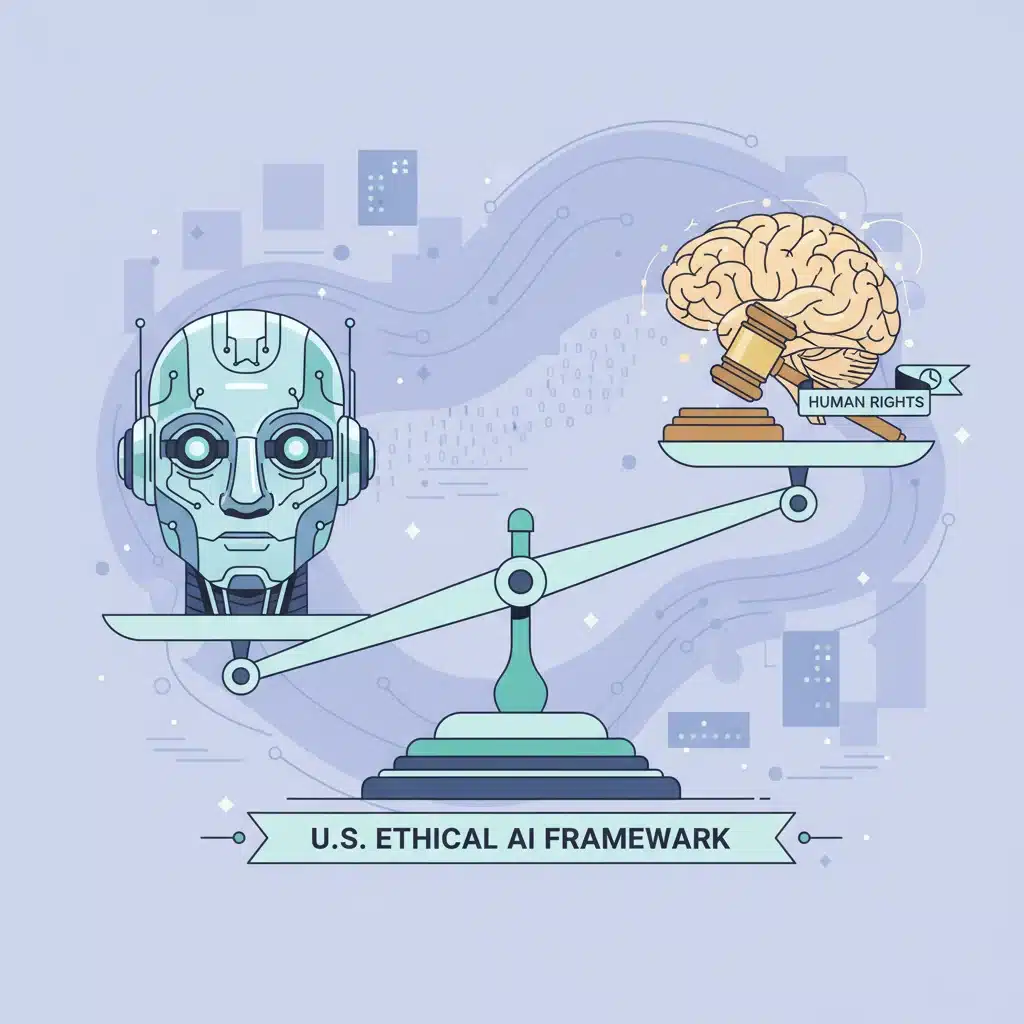
The rapid evolution of Artificial Intelligence (AI) has brought forth unprecedented opportunities and complex challenges. As AI systems become more integrated into every facet of our lives, from healthcare and finance to transportation and national security, the imperative for responsible development and deployment has never been more critical. Recognizing this, the United States is on the cusp of introducing a comprehensive ethical AI framework, with expectations for its unveiling by mid-2026. This landmark initiative aims to establish clear guidelines, foster innovation, and safeguard societal values in the age of intelligent machines.
The journey towards a robust ethical AI framework is not merely a regulatory exercise; it is a profound societal conversation. It involves balancing the immense potential of AI to drive economic growth and solve pressing global issues with the inherent risks of algorithmic bias, privacy invasion, job displacement, and autonomous decision-making. For businesses, researchers, policymakers, and the public alike, understanding the contours of this forthcoming framework is paramount. It will redefine the landscape of AI development, mandating a proactive approach to ethics, transparency, and accountability.
This article delves into the anticipated components of the U.S. ethical AI framework, exploring its potential impact on various sectors, the challenges in its implementation, and the opportunities it presents for fostering responsible innovation. We will examine the driving forces behind this initiative, draw parallels with international efforts, and discuss how organizations can prepare for the new era of AI governance.
The Imperative for an Ethical AI Framework
The call for an ethical AI framework is not new, but its urgency has escalated dramatically in recent years. AI’s transformative power is undeniable. From optimizing supply chains and personalizing education to accelerating scientific discovery and enhancing national defense, AI promises to reshape industries and improve human lives. However, this power comes with significant ethical dilemmas. Consider the following:
- Algorithmic Bias: AI systems trained on biased data can perpetuate and even amplify existing societal inequalities, leading to discriminatory outcomes in areas like lending, hiring, and criminal justice.
- Privacy Concerns: The extensive data collection required for AI training raises serious questions about individual privacy and data security.
- Accountability and Transparency: When AI makes critical decisions, who is accountable? The lack of transparency in complex AI models (the ‘black box’ problem) makes it difficult to understand how decisions are reached, hindering oversight and redress.
- Job Displacement: Automation driven by AI could lead to significant job losses in certain sectors, necessitating robust social safety nets and workforce retraining initiatives.
- Autonomous Systems: The deployment of autonomous weapons systems and other critical AI applications raises profound ethical questions about human control, moral responsibility, and the nature of warfare.
These challenges highlight the need for a coherent, comprehensive, and enforceable ethical AI framework that can guide developers, deployers, and users of AI technologies. Without such a framework, the risks associated with AI could undermine public trust, stifle innovation, and lead to unintended societal harms.
Key Pillars of the Expected U.S. Ethical AI Framework
While the precise details of the U.S. ethical AI framework are still under development, informed speculation suggests it will build upon existing principles and discussions. Several key pillars are likely to form its foundation:
1. Transparency and Explainability
A cornerstone of any effective ethical AI framework will be the requirement for greater transparency and explainability in AI systems. This means moving beyond opaque ‘black boxes’ to systems where the rationale behind AI decisions can be understood, audited, and communicated to affected individuals. This will likely involve:
- Documentation Requirements: Mandating detailed documentation of AI system design, training data, performance metrics, and intended use.
- Explainable AI (XAI) Techniques: Encouraging and potentially requiring the use of techniques that make AI models more interpretable, allowing for a clearer understanding of their internal workings.
- Impact Assessments: Requiring organizations to conduct ethical impact assessments before deploying high-risk AI systems, identifying potential biases and harms.
2. Fairness and Non-Discrimination
Addressing algorithmic bias will be a central focus. The framework is expected to mandate measures to ensure AI systems are developed and deployed fairly, without perpetuating or exacerbating discrimination. This could include:
- Bias Detection and Mitigation: Requirements for developers to actively identify and mitigate biases in training data and algorithmic design.
- Representative Data Sets: Encouraging the use of diverse and representative data sets to train AI models, reducing the likelihood of biased outcomes.
- Regular Audits: Independent audits of AI systems to assess fairness and identify discriminatory practices.
3. Privacy and Data Security
Given the U.S.’s existing privacy landscape, the ethical AI framework will likely emphasize robust data privacy and security protections. This might involve:
- Data Minimization: Principles encouraging the collection of only necessary data for AI development.
- Anonymization and Pseudonymization: Mandating techniques to protect individual identities within data sets.
- Secure Data Handling: Establishing stringent security standards for storing and processing data used by AI systems.
- Interoperability with Existing Privacy Laws: Ensuring the framework complements and strengthens existing regulations like CCPA and potential federal privacy laws.
4. Accountability and Governance
Establishing clear lines of accountability for AI systems is crucial. The framework is expected to define responsibilities for developers, deployers, and operators of AI. This could involve:
- Human Oversight: Emphasizing the importance of human oversight in critical AI decision-making processes, ensuring that humans remain ultimately responsible.
- Risk Management: Requiring organizations to implement comprehensive risk management frameworks for AI systems, identifying, assessing, and mitigating potential harms.
- Internal Governance Structures: Encouraging the establishment of internal AI ethics committees or review boards within organizations.

5. Safety and Robustness
Ensuring AI systems are safe, reliable, and robust is paramount, especially in high-stakes applications. The ethical AI framework will likely address:
- Testing and Validation: Requirements for rigorous testing and validation of AI systems before deployment, including stress testing and adversarial attack simulations.
- Error Handling: Protocols for identifying, reporting, and correcting errors or failures in AI systems.
- Security from Malicious Use: Measures to prevent AI systems from being misused for malicious purposes, such as cyberattacks or disinformation campaigns.
Driving Forces Behind the U.S. Ethical AI Framework
Several factors are converging to accelerate the development of this U.S. ethical AI framework:
- Executive Orders and National Strategies: The U.S. government has already issued executive orders and national strategies emphasizing responsible AI development, laying the groundwork for a more formal framework.
- Congressional Interest: There is growing bipartisan interest in Congress to regulate AI, driven by concerns about national security, economic competitiveness, and societal impact.
- Industry Demand: Many leading technology companies are advocating for clear regulatory guidelines to ensure a level playing field and build public trust in AI.
- Public Concern: Increasing public awareness and concern about the ethical implications of AI are putting pressure on policymakers to act.
- International Precedent: The European Union’s AI Act and other global initiatives are setting a precedent, compelling the U.S. to articulate its own approach to AI governance to maintain its leadership in technology and uphold democratic values.
Challenges in Implementing an Ethical AI Framework
Developing and implementing an effective ethical AI framework is a monumental task, fraught with challenges:
1. Defining ‘Ethics’ in AI
Ethics are often subjective and culturally nuanced. Translating abstract ethical principles into concrete, enforceable regulations for AI systems is incredibly complex. What constitutes ‘fairness’ or ‘accountability’ can vary significantly across contexts and applications.
2. Keeping Pace with Rapid Innovation
AI technology evolves at an astonishing pace. Any framework must be flexible and adaptable enough to remain relevant in the face of continuous advancements. Overly prescriptive regulations could stifle innovation, while overly vague ones might be ineffective.
3. Technical Complexity
The technical intricacies of AI systems, particularly advanced machine learning models, can make it difficult for policymakers and regulators to understand their inner workings and design appropriate oversight mechanisms. Bridging the gap between technical experts and legal professionals is crucial.
4. Global Harmonization
AI is a global technology. A purely national ethical AI framework risks creating regulatory fragmentation, hindering international collaboration and trade. Efforts to achieve some level of global harmonization will be essential, though challenging.
5. Enforcement and Resources
Effective enforcement of a complex AI framework will require significant resources, including adequately trained personnel, sophisticated auditing tools, and clear legal mechanisms for redress. The U.S. government will need to invest heavily in building regulatory capacity.
Opportunities for Responsible AI Innovation
While the prospect of new regulations might seem daunting, the U.S. ethical AI framework also presents significant opportunities:
1. Building Public Trust
A well-designed framework can instill greater public confidence in AI technologies. When people trust that AI systems are developed and used responsibly, they are more likely to adopt and benefit from them, fostering broader societal acceptance.
2. Driving Competitive Advantage
Companies that proactively embrace ethical AI principles and build responsible AI systems will gain a competitive edge. Ethical AI can become a brand differentiator, attracting customers, talent, and investors who prioritize responsible technology.
3. Fostering Innovation in AI Ethics Tools
The demand for ethical AI solutions will spur innovation in areas such as bias detection and mitigation tools, explainable AI techniques, privacy-preserving AI, and AI governance platforms. This could create entirely new markets and job opportunities.
4. Attracting and Retaining Talent
Professionals in the AI field, particularly younger generations, are increasingly concerned with the ethical implications of their work. Organizations committed to responsible AI development will be better positioned to attract and retain top talent.
5. Shaping Global Standards
By developing a robust ethical AI framework, the U.S. can play a leading role in shaping global norms and standards for AI governance, influencing how AI is developed and deployed worldwide.
Preparing for the New Era of AI Governance
With the U.S. ethical AI framework on the horizon, organizations involved in AI development or deployment should begin preparing now. Here are some proactive steps:
- Stay Informed: Monitor legislative developments, policy discussions, and official announcements related to the framework. Engage with industry associations and expert groups.
- Conduct Internal Audits: Assess current AI systems and practices against anticipated ethical principles. Identify potential areas of risk, such as algorithmic bias or privacy vulnerabilities.
- Establish Internal Governance: Create an internal AI ethics committee or appoint a dedicated AI ethics officer. Develop internal policies and guidelines for responsible AI development and deployment.
- Invest in Ethical AI Tools: Explore and integrate tools for bias detection, explainability, and privacy preservation into your AI development lifecycle.
- Train Your Teams: Educate engineers, data scientists, product managers, and legal teams on AI ethics principles, responsible AI practices, and upcoming regulatory requirements.
- Engage with Stakeholders: Foster dialogue with customers, employees, and civil society organizations to understand their concerns and expectations regarding AI.
- Build a Culture of Responsibility: Embed ethical considerations into the core of your AI development process, making it an integral part of your organizational culture rather than an afterthought.
Proactive engagement with ethical AI principles is not just about compliance; it’s about building sustainable, trustworthy, and impactful AI solutions that benefit society. The forthcoming ethical AI framework in the U.S. will serve as a crucial guide in this endeavor, providing a structured approach to navigating the complex ethical landscape of AI.
International Perspectives and Harmonization
The U.S. ethical AI framework will not exist in a vacuum. Globally, nations and international bodies are grappling with similar challenges. The European Union’s AI Act, for instance, proposes a risk-based approach to AI regulation, categorizing AI systems based on their potential to cause harm. Other countries like Canada, the UK, and Singapore are also developing their own strategies and guidelines.
While each nation’s framework will reflect its unique legal, cultural, and economic context, there is a growing recognition of the need for international cooperation. Harmonizing standards where possible, sharing best practices, and collaborating on research into AI ethics will be vital to ensure that AI benefits all of humanity. The U.S. framework will likely engage with these international dialogues, potentially influencing or being influenced by global trends in AI governance.
The goal is not necessarily uniform global regulation, but rather interoperability and mutual recognition of standards, allowing for the free flow of ethical AI innovation across borders while upholding fundamental rights and values. The U.S. framework will be a significant piece in this global puzzle.
The Role of Public-Private Partnerships
The successful development and implementation of the U.S. ethical AI framework will heavily rely on robust public-private partnerships. Government agencies alone cannot address the technical complexities and rapid pace of AI innovation. Collaboration with industry, academia, and civil society organizations will be essential for:
- Expertise Sharing: Leveraging the technical expertise of the private sector and the ethical insights of academia and civil society.
- Pilot Programs and Sandboxes: Creating regulatory sandboxes where new AI technologies can be tested under controlled conditions, allowing for iterative refinement of regulations.
- Standard Development: Collaborating on the development of technical standards and best practices that support ethical AI principles.
- Workforce Development: Partnering to develop training programs that equip the future workforce with the skills needed to build and manage ethical AI systems.
These partnerships will ensure that the framework is not only theoretically sound but also practically implementable and responsive to the needs of both innovators and the public.
Conclusion: A New Era of Responsible AI
The impending U.S. ethical AI framework, expected by mid-2026, marks a pivotal moment in the evolution of artificial intelligence. It signifies a collective commitment to harnessing the transformative power of AI while proactively addressing its ethical implications. This framework will serve as a critical guide for responsible innovation, ensuring that AI development aligns with societal values, protects individual rights, and promotes a future where technology serves humanity.
For businesses, this is not a moment for apprehension but for strategic foresight. Embracing ethical AI principles now will not only ensure compliance with future regulations but will also foster greater trust, enhance brand reputation, and unlock new avenues for sustainable innovation. The journey towards a truly ethical AI ecosystem is complex and ongoing, but with a clear framework in place, the U.S. is poised to lead the way in building a future where AI is not just intelligent, but also responsible and beneficial for all.
The coming years will be defined by how effectively we integrate ethical considerations into the very fabric of AI. The U.S. framework is a crucial step in this direction, setting the stage for a new era of AI where innovation and responsibility go hand in hand.