Predictive Analytics for U.S. Supply Chains: 2026 Efficiency Innovations

The backbone of the American economy, the U.S. supply chain, is undergoing a profound transformation. In an era defined by volatility, uncertainty, complexity, and ambiguity (VUCA), traditional reactive approaches are no longer sufficient. Enter predictive analytics – a revolutionary force poised to deliver an impressive 12% greater efficiency to U.S. supply chains by 2026. This isn’t just a projection; it’s a strategic imperative, driven by technological advancements and the urgent need for resilience and optimization.
The journey towards this enhanced efficiency is paved with innovation, data-driven decision-making, and a fundamental shift in how businesses perceive and manage their logistical networks. From forecasting demand with unprecedented accuracy to optimizing inventory and streamlining last-mile delivery, predictive analytics is rewriting the rules of engagement. This comprehensive exploration delves into the core of these innovations, dissects the challenges, and paints a vivid picture of the future of U.S. Supply Chain Analytics.
The Imperative for Predictive Analytics in U.S. Supply Chains
The past few years have starkly highlighted the vulnerabilities within global and, consequently, U.S. supply chains. From the Suez Canal blockage to the COVID-19 pandemic and geopolitical tensions, disruptions have become the norm rather than the exception. These events have exposed the limitations of traditional, historical-data-centric planning, which often fails to account for unforeseen variables.
Predictive analytics offers a powerful antidote. By leveraging vast datasets – including historical sales, market trends, weather patterns, social media sentiment, and even geopolitical indicators – advanced algorithms can identify patterns, forecast probabilities, and anticipate future events with remarkable accuracy. This proactive capability is what fundamentally differentiates it from descriptive or diagnostic analytics, moving businesses from understanding what happened to predicting what will happen.
For U.S. businesses, the stakes are particularly high. A resilient and efficient supply chain directly translates to competitive advantage, customer satisfaction, and shareholder value. The pursuit of a 12% efficiency gain by 2026 is not merely an ambitious target; it reflects a strategic pivot towards a more intelligent, adaptive, and robust logistical ecosystem powered by U.S. Supply Chain Analytics.
Key Innovations Driving 12% Greater Efficiency by 2026
Achieving a 12% efficiency increase in such a complex system requires a multi-faceted approach, underpinned by several interconnected technological and methodological innovations. These innovations are already taking root and are expected to mature significantly by 2026.
Advanced Demand Forecasting and Inventory Optimization
One of the most immediate and impactful applications of predictive analytics is in demand forecasting. Traditional methods often rely on simple moving averages or exponential smoothing, which struggle with volatile demand fluctuations. Modern predictive models, however, incorporate machine learning (ML) algorithms that can analyze hundreds of variables simultaneously. These include:
- External Factors: Economic indicators, competitor promotions, social media trends, weather forecasts, and even public health data.
- Internal Factors: Historical sales, promotional activities, product lifecycle stages, and pricing strategies.
- Anomaly Detection: Identifying unusual spikes or drops in demand that might indicate a unique event rather than a trend.
By generating highly accurate demand forecasts, businesses can optimize inventory levels, reducing both stockouts and overstock situations. This directly translates to lower carrying costs, less waste, and improved cash flow. The ability of U.S. Supply Chain Analytics to finely tune inventory across a vast network of warehouses and distribution centers is a cornerstone of the projected efficiency gains.
Predictive Maintenance for Logistics Assets
Downtime in transportation and warehousing can be incredibly costly. A broken-down truck, a malfunctioning conveyor belt, or a failing forklift can halt operations, leading to delays, missed deliveries, and frustrated customers. Predictive maintenance, powered by IoT sensors and predictive analytics, addresses this head-on.
Sensors embedded in vehicles, machinery, and infrastructure collect real-time data on performance, temperature, vibration, and other critical parameters. Predictive algorithms analyze this data to identify subtle anomalies that indicate impending failure. Maintenance can then be scheduled proactively, during off-peak hours or before a critical failure occurs, significantly reducing unplanned downtime and extending asset lifespan. This proactive approach ensures the smooth flow of goods through the U.S. supply chain, contributing significantly to efficiency.
Optimized Routing and Last-Mile Delivery
Last-mile delivery is often the most expensive and complex part of the supply chain. Predictive analytics, combined with real-time traffic data, weather conditions, delivery windows, and even driver availability, enables dynamic route optimization. This goes beyond static route planning, allowing for real-time adjustments based on unfolding events.
- Dynamic Routing: Algorithms constantly re-evaluate routes to avoid congestion, road closures, or other delays.
- Capacity Planning: Predicting package volumes and allocating resources (vehicles, drivers) efficiently.
- Customer Experience: Providing accurate estimated times of arrival (ETAs) and proactive notifications about potential delays, enhancing transparency and satisfaction.
The ability to deliver more goods faster and at a lower cost per delivery is a direct result of sophisticated U.S. Supply Chain Analytics driving these optimizations.
Risk Management and Resilience Building
The VUCA world necessitates a proactive approach to risk. Predictive analytics can identify potential disruptions before they escalate. This includes:
- Geopolitical Risk: Analyzing news feeds, political instability indicators, and trade policy changes to anticipate impacts on sourcing or shipping.
- Natural Disasters: Integrating weather forecasts and climate models to predict potential disruptions from hurricanes, floods, or wildfires.
- Supplier Risk: Assessing supplier financial health, performance history, and geopolitical exposure to identify potential points of failure.
By anticipating these risks, businesses can implement contingency plans, diversify suppliers, or reroute shipments, thereby mitigating the impact of disruptions and building a more resilient U.S. supply chain. This foresight is a critical component of achieving and sustaining higher efficiency levels.
The Role of Data and Technology in U.S. Supply Chain Analytics
The efficacy of predictive analytics is directly proportional to the quality and quantity of data it consumes. By 2026, the proliferation of IoT devices, enhanced connectivity, and more sophisticated data integration platforms will provide an unprecedented wealth of information.
Big Data and Cloud Computing
Predictive models thrive on large datasets. The sheer volume, velocity, and variety of data generated by modern supply chains necessitate robust big data infrastructure. Cloud computing platforms provide the scalable storage and processing power required to handle these massive datasets and run complex analytical models without significant upfront capital investment. This accessibility democratizes advanced analytics, allowing more U.S. businesses to leverage its power.
Artificial Intelligence and Machine Learning
At the heart of predictive analytics are AI and ML algorithms. These include:
- Neural Networks: For complex pattern recognition in unstructured data.
- Regression Models: For forecasting continuous variables like demand or lead times.
- Classification Algorithms: For predicting categorical outcomes, such as the likelihood of a supplier default.
- Reinforcement Learning: For optimizing dynamic systems like inventory management or autonomous routing.
These algorithms learn and improve over time, making predictions more accurate as they are fed new data. The continuous learning aspect is crucial for adapting to the ever-changing dynamics of the U.S. supply chain.
Digital Twin Technology
A digital twin is a virtual replica of a physical system, process, or product. In the context of supply chains, a digital twin can simulate the entire network, from manufacturing plants to warehouses and transportation routes. By feeding real-time data into this digital model, businesses can:
- Test Scenarios: Simulate the impact of potential disruptions (e.g., port closures, factory shutdowns) without affecting physical operations.
- Optimize Processes: Experiment with different strategies for inventory placement, routing, or staffing to identify the most efficient configurations.
- Proactive Problem Solving: Identify bottlenecks and inefficiencies before they occur in the real world.
This allows for a highly agile and responsive U.S. supply chain, capable of rapid adaptation and continuous improvement, directly contributing to the 12% efficiency goal.
Challenges and Considerations for Implementation
While the benefits of predictive analytics are clear, the path to implementation is not without its hurdles. Businesses must strategically address several challenges to fully harness its potential.
Data Quality and Integration
The adage “garbage in, garbage out” holds especially true for predictive analytics. Inconsistent, incomplete, or inaccurate data can lead to flawed predictions and poor decisions. Many organizations struggle with disparate data sources, legacy systems, and a lack of standardized data formats. Investing in data governance, cleansing, and integration tools is paramount.
Talent Gap
There is a significant shortage of skilled professionals in data science, machine learning, and supply chain analytics. Businesses need to either invest in training their existing workforce or attract new talent with these specialized skills. Partnerships with academic institutions and specialized consulting firms can also help bridge this gap.
Organizational Change Management
Implementing predictive analytics is not just a technological upgrade; it’s a cultural shift. It requires moving from intuition-based decision-making to data-driven insights. This necessitates strong leadership, clear communication, and training to ensure employees embrace new tools and processes. Resistance to change can significantly impede adoption and limit the realized efficiency gains.
Cybersecurity Concerns
As supply chains become more digitized and interconnected, the risk of cyberattacks increases. Protecting sensitive data, intellectual property, and operational systems from malicious actors is critical. Robust cybersecurity protocols and continuous monitoring are essential to maintain trust and ensure the integrity of the U.S. Supply Chain Analytics infrastructure.
Ethical AI and Bias
AI and ML models can inadvertently perpetuate or amplify biases present in their training data. For example, historical data might reflect past inefficiencies or discriminatory practices. It’s crucial to develop and deploy AI ethically, regularly auditing models for bias and ensuring transparency in their decision-making processes. Fair and unbiased analytics are essential for sustainable and equitable efficiency gains.
The Future Landscape: Beyond 2026
The 12% efficiency gain by 2026 is an ambitious yet achievable milestone. However, the evolution of U.S. Supply Chain Analytics will not stop there. Looking beyond 2026, we can anticipate even more transformative developments.
Hyper-Personalization and Micro-Supply Chains
Predictive analytics will enable even finer-grained personalization, with supply chains adapting to individual customer preferences and even anticipating needs. This could lead to the proliferation of micro-supply chains, highly localized and agile networks designed to serve specific geographic areas or customer segments with extreme efficiency.
Autonomous Supply Chain Operations
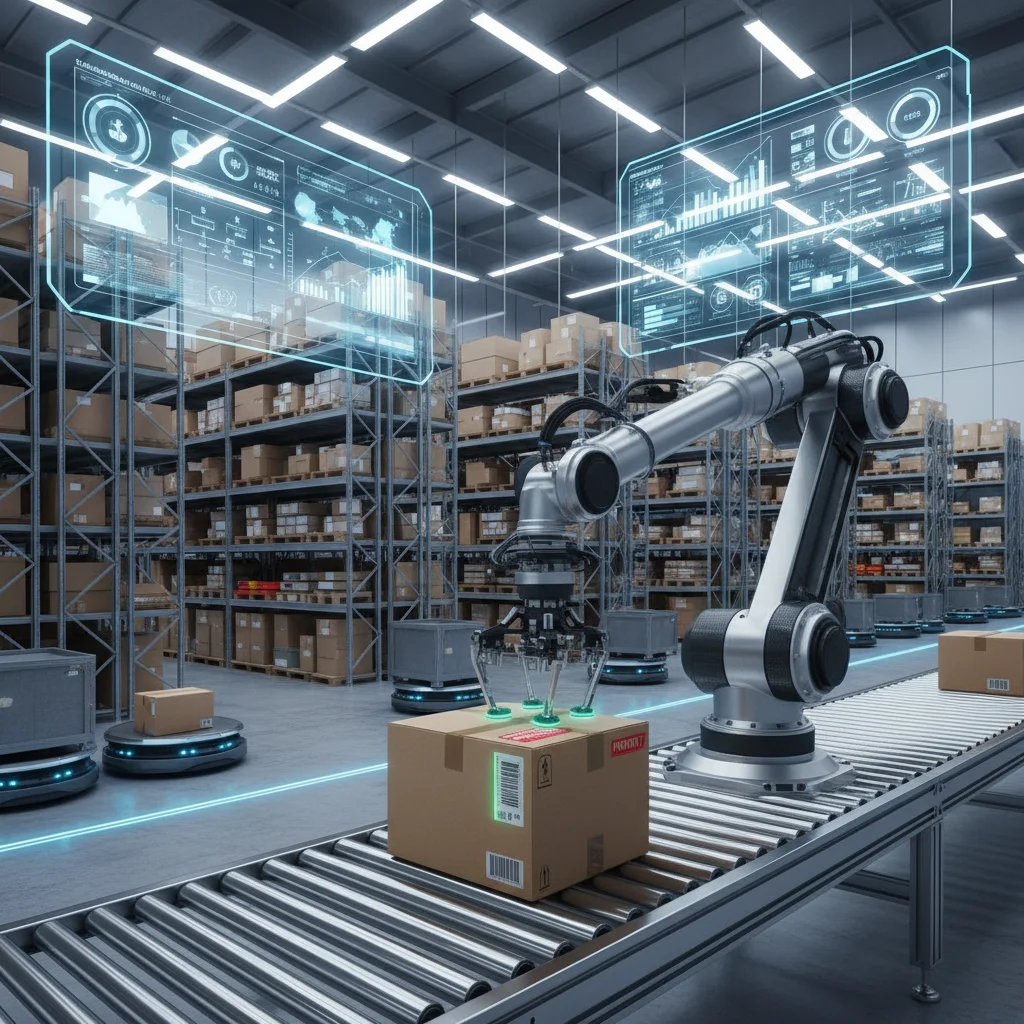
As AI and machine learning mature, we will see a greater degree of automation and autonomy in supply chain decision-making. This includes self-optimizing inventory systems, autonomous vehicles for logistics, and intelligent warehouses that can manage themselves with minimal human intervention. Humans will transition from operational roles to oversight, strategy, and problem-solving for truly exceptional cases.
Enhanced Collaboration and Transparency
Predictive analytics will foster unprecedented levels of collaboration across the entire supply chain ecosystem. Shared platforms and data lakes will allow suppliers, manufacturers, distributors, and retailers to share insights and coordinate efforts in real-time. Blockchain technology, combined with predictive models, could provide immutable records of transactions and movements, further enhancing transparency and trust.
Sustainability and Circular Economy Integration
Predictive analytics will play a crucial role in driving sustainability initiatives. By optimizing routes, reducing waste, and forecasting material needs more accurately, businesses can significantly lower their environmental footprint. Furthermore, predictive models can facilitate the transition to a circular economy by optimizing reverse logistics, predicting product returns, and identifying opportunities for reuse, repair, and recycling.
Measuring Success: KPIs for U.S. Supply Chain Analytics
To confirm the 12% efficiency gain, organizations must establish clear Key Performance Indicators (KPIs) and continuously monitor their progress. These KPIs can include:
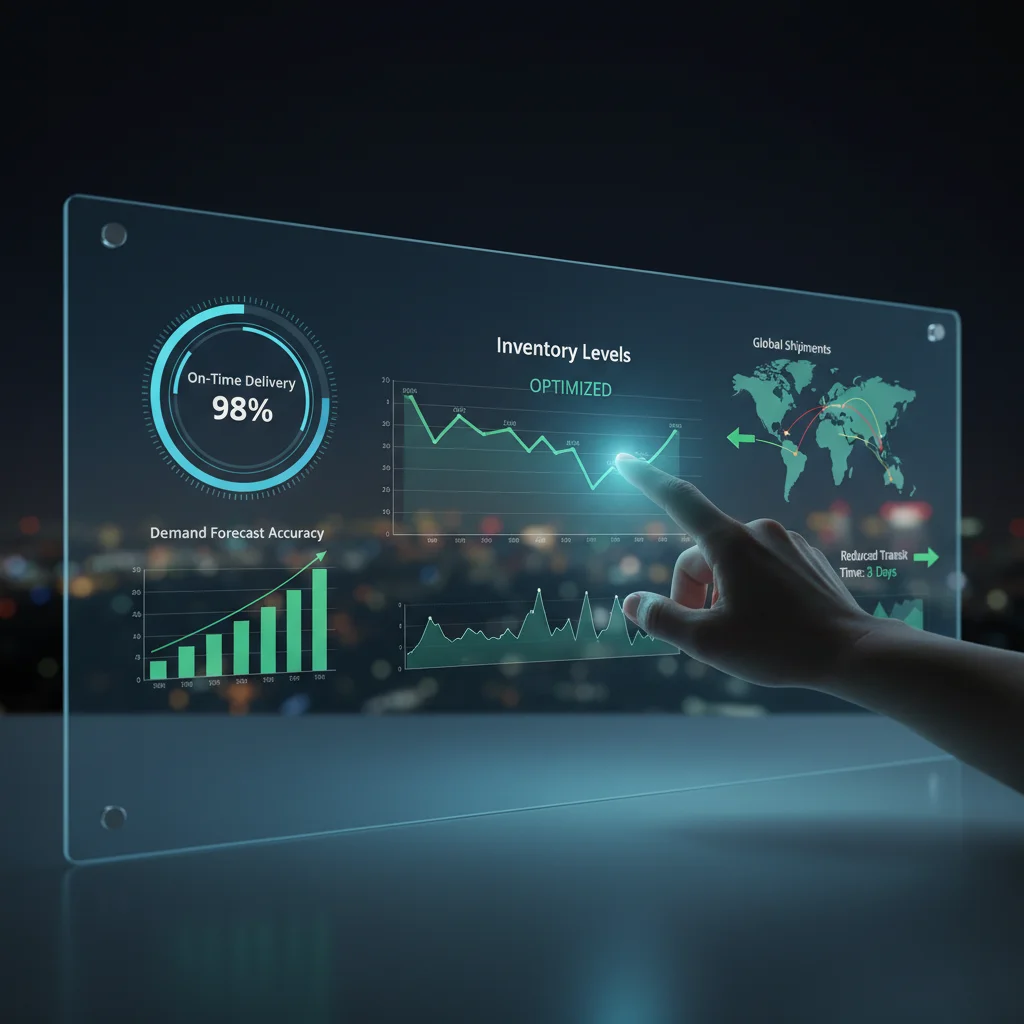
- On-Time Delivery Rate: A direct measure of logistical efficiency and customer satisfaction.
- Inventory Turnover: How quickly inventory is sold and replaced, indicating efficient inventory management.
- Order Fulfillment Cycle Time: The total time from order placement to delivery.
- Logistics Costs as a Percentage of Sales: A critical financial metric reflecting operational efficiency.
- Forecast Accuracy: Measuring the deviation between predicted and actual demand.
- Warehouse Utilization Rate: Optimizing space and resource usage within storage facilities.
- Return Rate: Reducing returns through improved product availability and quality.
- Carbon Footprint Reduction: Quantifying environmental impact improvements.
Continuous monitoring and iterative refinement of these metrics, informed by U.S. Supply Chain Analytics, will be essential for achieving and exceeding the efficiency targets.
Conclusion: A Smarter, More Efficient U.S. Supply Chain by 2026
The vision of a U.S. supply chain operating with 12% greater efficiency by 2026 is not a distant dream but a tangible reality within reach. Predictive analytics is the engine powering this transformation, offering unprecedented capabilities for foresight, optimization, and resilience. From intelligent demand forecasting and inventory management to dynamic routing and proactive risk mitigation, every facet of the supply chain stands to benefit.
While challenges related to data quality, talent, and organizational change must be navigated, the strategic advantages of embracing predictive analytics far outweigh the hurdles. Businesses that invest in these technologies and foster a data-driven culture will not only achieve significant efficiency gains but also build more robust, agile, and sustainable supply chain operations. The future of the U.S. supply chain is intelligent, interconnected, and undeniably predictive, setting a new benchmark for global logistical excellence.