Building Resilient Supply Chains: A 2026 Growth Imperative for 5% Operational Delay Reduction
Building Resilient Supply Chains: A 2026 Growth Imperative for a 5% Reduction in Operational Delays
In an increasingly volatile and interconnected global economy, the concept of resilient supply chains has transcended from a mere strategic advantage to an absolute necessity. Businesses worldwide are grappling with unprecedented disruptions, from geopolitical tensions and trade wars to natural disasters and pandemics. These challenges underscore the urgent need for robust, adaptable, and future-proof supply chain frameworks. Our ambitious goal for 2026 is not just to survive these disruptions but to thrive, specifically by achieving a a 5% reduction in operational delays through the strategic development of truly resilient supply chains.
The traditional linear supply chain model, optimized primarily for cost efficiency, has proven vulnerable. The focus is now shifting towards creating dynamic, agile, and transparent networks capable of anticipating, withstanding, and recovering from shocks. This article delves into the critical strategies, technological advancements, and cultural shifts required to build such resilience, ultimately positioning organizations for sustained growth and unparalleled competitive advantage.
The journey towards a 5% reduction in operational delays by 2026 is not a simplistic task; it demands a holistic transformation. It requires a deep understanding of potential vulnerabilities, a proactive approach to risk management, and the integration of cutting-edge technologies. This target is not arbitrary; a 5% reduction in operational delays can translate into significant cost savings, improved customer satisfaction, enhanced market share, and a stronger brand reputation. In today’s competitive landscape, even marginal improvements in efficiency can yield substantial returns.
Understanding the Modern Supply Chain Landscape
Before we can build truly resilient supply chains, we must first comprehend the complexities and inherent fragilities of the contemporary global supply network. The past decade has been a masterclass in demonstrating these weaknesses. From the Fukushima earthquake in 2011 to the Suez Canal blockage in 2021 and the ongoing effects of the COVID-19 pandemic, each event has exposed critical vulnerabilities. These disruptions have highlighted the dangers of single-sourcing, just-in-time inventory strategies without adequate buffers, and a lack of real-time visibility across the entire supply ecosystem.
Globalization, while offering immense opportunities for cost reduction and market expansion, has also introduced layers of complexity. Longer lead times, diverse regulatory environments, and increased reliance on international logistics partners mean that a disruption in one part of the world can have a cascading effect across the entire chain. Furthermore, rising consumer expectations for faster delivery and greater product customization put additional pressure on supply chains, demanding both efficiency and flexibility. The challenge, therefore, is to design systems that can deliver on these expectations while simultaneously being robust enough to absorb unforeseen shocks.
Key Drivers of Supply Chain Vulnerability:
- Geopolitical Instability: Trade wars, sanctions, and regional conflicts can severely disrupt sourcing, manufacturing, and distribution channels.
- Natural Disasters: Earthquakes, floods, hurricanes, and wildfires increasingly impact production facilities and transportation infrastructure.
- Pandemics and Health Crises: Widespread illness can lead to labor shortages, factory shutdowns, and drastic shifts in consumer demand.
- Cyberattacks: Disruptions to IT systems can cripple logistics, inventory management, and communication across the supply chain.
- Economic Volatility: Sudden shifts in demand, inflation, and currency fluctuations can impact material costs and consumer purchasing power.
- Over-reliance on Single Suppliers: A lack of diversification in sourcing can lead to critical dependencies and magnified risks.
Addressing these vulnerabilities is the cornerstone of building resilient supply chains. It requires a paradigm shift from reactive problem-solving to proactive risk mitigation and strategic planning. The 5% reduction in operational delays by 2026 is not merely about optimizing existing processes; it’s about fundamentally rethinking how supply chains are designed, managed, and adapted.
Pillars of Resilient Supply Chains: Strategies for 2026
Achieving a 5% reduction in operational delays by 2026 hinges on implementing a multi-faceted approach centered around several key pillars. These strategies are not standalone solutions but rather interconnected components that collectively contribute to a more robust and responsive supply chain.
1. Enhanced Visibility and Transparency
You cannot manage what you cannot see. End-to-end visibility is perhaps the most critical element of a resilient supply chain. This means having real-time data on inventory levels, shipment locations, production schedules, supplier performance, and potential disruptions across all tiers of your supply network. Blockchain technology, IoT sensors, and advanced analytics are transforming how organizations gain this crucial insight.
- Real-time Tracking: Implementing GPS trackers, RFID tags, and IoT sensors on goods and vehicles to monitor their location and condition throughout transit.
- Digital Twins: Creating virtual models of the physical supply chain to simulate scenarios, predict outcomes, and identify potential bottlenecks before they occur.
- Supplier Collaboration Platforms: Utilizing shared digital platforms to exchange information, synchronize planning, and foster greater trust and transparency with suppliers.
Improved visibility allows for faster detection of issues, better decision-making, and the ability to reroute shipments or adjust production schedules proactively, directly contributing to reducing operational delays.
2. Diversification and Redundancy
The perils of single-sourcing have been starkly exposed. Building resilience means strategically diversifying your supply base and incorporating redundancy where critical. This doesn’t necessarily mean duplicating every single component, but rather identifying critical nodes and components where alternative options are essential.
- Multi-sourcing: Engaging with multiple suppliers for critical components or raw materials, even if it means a slight increase in unit cost.
- Geographic Diversification: Spreading manufacturing and sourcing across different regions to mitigate risks associated with localized disruptions.
- Strategic Stockpiling: Maintaining safety stock for high-demand, high-risk items, moving away from a purely just-in-time model to a ‘just-in-case’ approach for certain critical goods.
- Nearshoring/Reshoring: Evaluating the benefits of bringing some production closer to home markets to reduce lead times and exposure to international risks.
This strategy directly tackles the root causes of many operational delays by providing alternative pathways and resources when primary channels are disrupted.
3. Advanced Risk Management and Scenario Planning
Proactive risk management is fundamental to building resilient supply chains. This involves not just identifying potential risks but also assessing their likelihood and impact, and developing contingency plans. Scenario planning goes a step further, simulating various disruptive events to test the robustness of the supply chain and refine response strategies.
- Risk Mapping: Identifying all potential risks across the supply chain, from natural disasters to cyber threats, and mapping their potential impact.
- Predictive Analytics: Using historical data and AI algorithms to forecast potential disruptions, such as weather patterns, geopolitical shifts, or supplier financial instability.
- War Gaming: Conducting simulated exercises with key stakeholders to practice responses to various crisis scenarios, improving reaction times and coordination.
By anticipating and preparing for disruptions, organizations can significantly minimize their impact and reduce the duration of operational delays.
4. Digital Transformation and Automation
Technology is the engine driving the transformation towards resilient supply chains. Automation, artificial intelligence (AI), machine learning (ML), and blockchain are not just buzzwords; they are practical tools that enhance efficiency, visibility, and decision-making capabilities.
- AI and ML for Demand Forecasting: More accurate demand predictions reduce overstocking or understocking, minimizing waste and ensuring product availability.
- Robotics and Automation: Automating warehouse operations, material handling, and even some manufacturing processes to improve efficiency, reduce labor dependency, and enhance consistency.
- Blockchain for Traceability: Providing an immutable and transparent ledger for tracking goods and transactions, enhancing trust and reducing fraud.
- Cloud-based Platforms: Enabling seamless data sharing and collaboration across the entire supply chain ecosystem, from suppliers to customers.
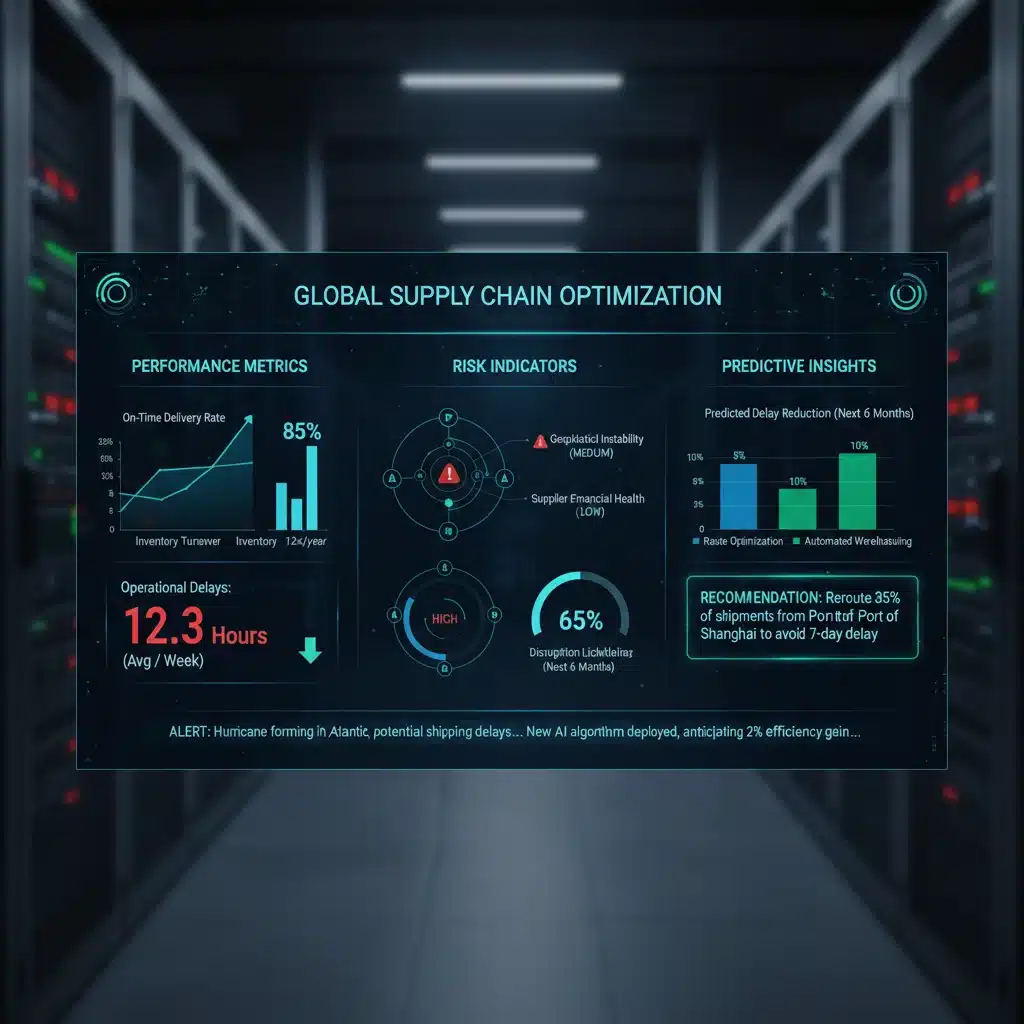
These technologies empower supply chain managers with the insights and tools needed to make faster, more informed decisions, directly contributing to the 5% reduction in operational delays target.
5. Collaborative Ecosystems and Partnerships
No single company can build a truly resilient supply chain in isolation. Collaboration with suppliers, logistics providers, and even competitors (in certain contexts) is essential. Building strong, trust-based relationships fosters information sharing, joint problem-solving, and shared risk mitigation.
- Strategic Supplier Relationships: Moving beyond transactional relationships to long-term partnerships based on mutual trust, shared goals, and open communication.
- Logistics Partner Integration: Closer integration with 3PLs and 4PLs to leverage their expertise, networks, and advanced technologies.
- Industry Consortia: Participating in industry groups to share best practices, develop common standards, and address systemic challenges.
- Government and Regulatory Engagement: Working with governmental bodies to understand and influence policies that impact supply chain resilience.
A collaborative ecosystem creates a network effect of resilience, where the strength of the whole is greater than the sum of its parts, thereby cushioning against disruptions and mitigating delays.
Measuring Success: The 5% Reduction in Operational Delays by 2026
The goal of a 5% reduction in operational delays by 2026 is ambitious yet achievable with concerted effort. To ensure progress, organizations must establish clear metrics and continuously monitor their performance. Key Performance Indicators (KPIs) will be crucial in tracking this objective.
Key Metrics to Monitor:
- Order-to-Delivery Cycle Time: The total time from when a customer places an order to when it is delivered. Reductions here directly reflect reduced delays.
- On-Time Delivery (OTD) Rate: The percentage of orders delivered by the promised date. An increase in OTD indicates improved reliability.
- Lead Time Variability: The consistency of lead times. Reduced variability means more predictable operations and fewer unexpected delays.
- Inventory Turnover: A measure of how quickly inventory is sold or used. While not directly a delay metric, efficient inventory management reduces the risk of stock-outs that cause delays.
- Disruption Recovery Time: The average time it takes to recover from a supply chain disruption and return to normal operations. A shorter recovery time contributes significantly to reducing overall delays.
- Supplier Performance Metrics: Tracking supplier adherence to delivery schedules and quality standards.
Regular audits, performance reviews, and feedback loops are essential to assess the effectiveness of implemented strategies and make necessary adjustments. The 5% target serves as a tangible benchmark, motivating continuous improvement and innovation across the entire supply chain.
Challenges and Overcoming Them
While the benefits of building resilient supply chains are clear, the path is not without its challenges. Implementing these transformative changes requires significant investment, cultural shifts, and overcoming inherent resistance to change.
Common Challenges:
- Data Silos: Information often resides in disparate systems across different departments and partners, making end-to-end visibility difficult.
- Cost of Investment: Implementing new technologies and diversifying suppliers can be expensive in the short term.
- Legacy Systems: Integrating modern solutions with outdated legacy IT infrastructure can be complex and time-consuming.
- Lack of Skilled Talent: A shortage of professionals with expertise in supply chain analytics, AI, and risk management.
- Resistance to Change: Employees and partners may be resistant to new processes, technologies, and collaborative models.

Overcoming these challenges requires strong leadership, a clear vision, and a phased implementation approach. Starting with pilot projects, demonstrating quick wins, and investing in training and change management programs can help smooth the transition. Furthermore, articulating the long-term ROI of resilience, in terms of reduced costs from disruptions and enhanced competitive advantage, is crucial for securing executive buy-in.
The Future of Resilient Supply Chains Beyond 2026
The journey to building resilient supply chains is not a destination but an ongoing process of adaptation and improvement. Beyond the 2026 target of a 5% reduction in operational delays, the future holds even more advanced possibilities.
We can anticipate a greater integration of predictive analytics, not just for risk, but for optimizing every aspect of the supply chain. Autonomous logistics, including self-driving trucks and delivery drones, could revolutionize last-mile delivery and inventory management. The rise of hyper-personalization will demand even greater flexibility and responsiveness from supply chains, pushing the boundaries of agile manufacturing and direct-to-consumer models.
Furthermore, sustainability will become an even more integral component of resilience. Environmentally conscious supply chains are not only good for the planet but also reduce regulatory risks and enhance brand reputation. Building circular economy principles into supply chain design will become a key differentiator, minimizing waste and maximizing resource efficiency.
The concept of ‘supply chain as a service’ might also emerge, where specialized providers manage complex, multi-tiered networks on behalf of multiple clients, leveraging economies of scale and expertise in resilience building. This would allow smaller businesses to access sophisticated supply chain capabilities that were previously only available to large enterprises.
Ultimately, the goal is to create self-healing supply chains – networks that can automatically detect, diagnose, and even resolve minor disruptions without human intervention, and quickly adapt to major ones. This vision requires continued investment in AI, machine learning, and advanced automation, coupled with a deep understanding of human-machine collaboration.
Conclusion
The imperative to build resilient supply chains has never been more pressing. The target of a 5% reduction in operational delays by 2026 is a strategic milestone that will not only enhance operational efficiency but also secure long-term growth and competitive advantage. This transformation demands a holistic approach, encompassing enhanced visibility, strategic diversification, proactive risk management, digital innovation, and strong collaborative partnerships.
By embracing these pillars, organizations can move beyond merely reacting to disruptions and instead build supply chains that are inherently robust, adaptable, and capable of thriving in an unpredictable world. The investment in resilience today is an investment in the future, ensuring that businesses can navigate challenges, seize opportunities, and consistently deliver value to their customers, even when faced with the unexpected. The journey is complex, but the rewards of a truly resilient supply chain – reduced delays, increased customer satisfaction, and sustained profitability – are well worth the effort.