Sustainable Tech: U.S. Companies Cut Costs 10% by 2026 with Circular Economy
Sustainable Tech: How U.S. Companies Are Achieving 10% Cost Reductions Through Circular Economy Principles by 2026
In an era defined by rapid technological advancement and increasing environmental consciousness, businesses across the United States are discovering a powerful synergy between sustainable technology and economic efficiency. The shift towards a circular economy is not merely an environmental imperative; it’s a strategic business advantage, promising significant financial gains. Projections indicate that U.S. companies are on track to achieve an impressive 10% cost reduction by 2026 by embracing these transformative principles. This article delves into the mechanisms, benefits, and real-world applications of how the circular economy cost reduction model is reshaping the American industrial landscape.
The Paradigm Shift: From Linear to Circular
For centuries, the global economy has largely operated on a linear ‘take-make-dispose’ model. This approach, while facilitating rapid industrial growth, has led to unsustainable resource depletion, mounting waste, and significant environmental degradation. However, a growing understanding of the finite nature of our planet’s resources, coupled with the escalating costs associated with virgin materials and waste disposal, has spurred a fundamental re-evaluation of business practices.
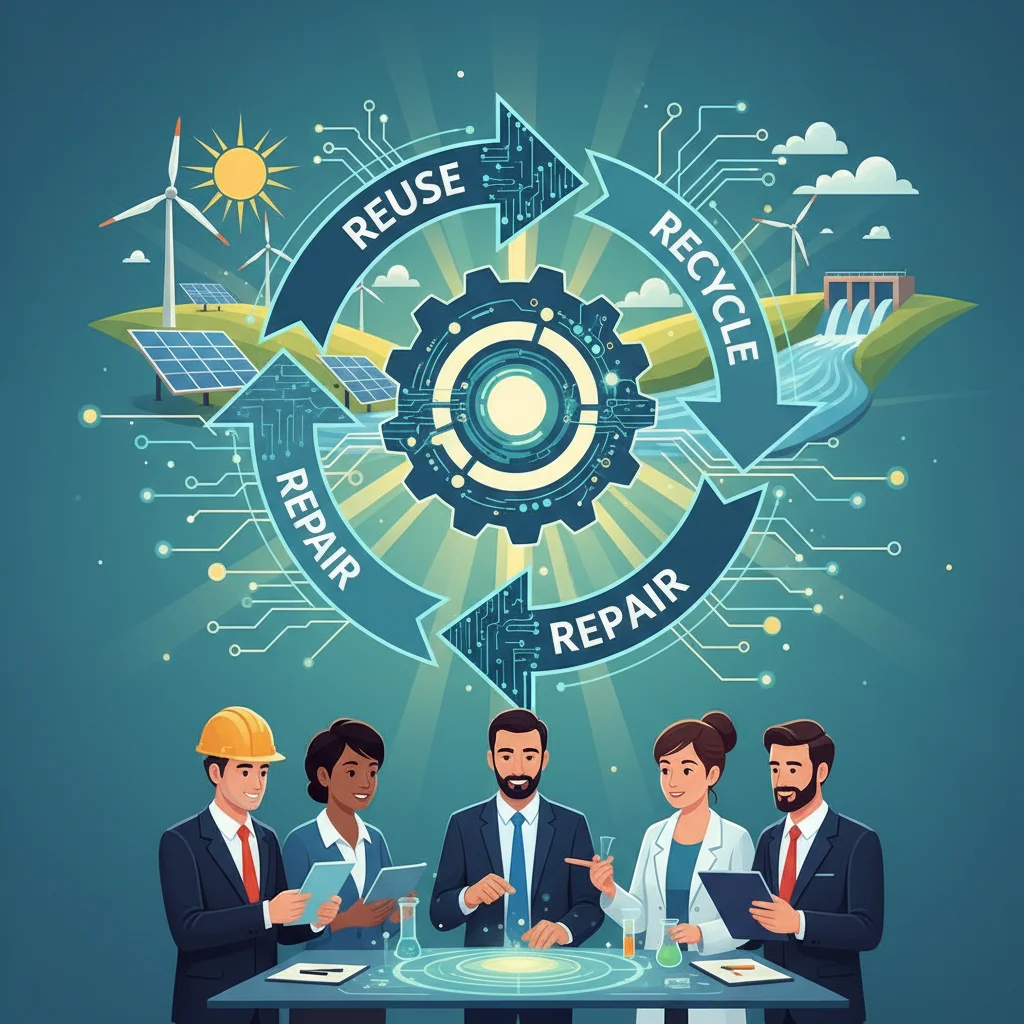
Enter the circular economy – a regenerative system designed to keep products, components, and materials at their highest utility and value at all times. It aims to eliminate waste and the continual use of resources. Instead of discarding products at the end of their life, the circular economy promotes strategies such as:
- Design for Longevity: Creating products that are durable, upgradeable, and easy to repair.
- Reuse and Repair: Extending product lifespans through maintenance, repair, and direct reuse.
- Remanufacturing: Disassembling products, cleaning, refurbishing, and reassembling components into new products.
- Recycling: Processing materials into new substances for new products, when reuse or remanufacturing isn’t feasible.
- Resource Recovery: Extracting valuable materials and energy from waste streams.
This holistic approach offers a compelling alternative, not just for environmental stewardship but also for economic resilience and growth. The focus on circular economy cost reduction is a significant driver for adoption.
Understanding the Circular Economy’s Economic Imperative
The economic benefits of transitioning to a circular economy are multifaceted and profound. For U.S. companies, these benefits translate directly into the targeted 10% cost reductions by 2026. These reductions stem from several key areas:
Reduced Raw Material Costs
One of the most immediate and impactful benefits of a circular economy is the decreased reliance on virgin raw materials. By reusing, recycling, and remanufacturing existing products and components, companies can significantly lower their procurement expenses. Volatile global commodity markets often dictate the price of raw materials, making supply chains vulnerable to price fluctuations. A circular model mitigates this risk by creating a more stable and localized supply of secondary materials. This strategic shift directly contributes to circular economy cost reduction.
Lower Waste Management Expenses
The linear model generates vast quantities of waste, which incurs substantial costs for collection, transportation, and disposal. Landfill fees, incineration costs, and regulatory compliance expenses can be significant burdens for businesses. By minimizing waste generation and maximizing resource recovery, companies can dramatically reduce these operational expenditures. This not only saves money but also enhances a company’s environmental reputation.
Increased Revenue Streams
Beyond cost savings, the circular economy opens up new avenues for revenue generation. Companies can sell refurbished products, offer repair and maintenance services, or even transition to product-as-a-service models where customers pay for access to a product rather than ownership. This creates recurring revenue streams and fosters stronger customer relationships. The value locked in ‘waste’ is unlocked, transforming liabilities into assets.
Enhanced Brand Value and Customer Loyalty
Consumers are increasingly conscious of the environmental and social impact of their purchases. Companies that demonstrate a commitment to sustainability and circular practices often enjoy enhanced brand perception, greater customer loyalty, and a competitive edge. This intangible benefit can translate into higher sales and market share, further contributing to overall economic success and circular economy cost reduction efforts.
Innovation and Competitive Advantage
Embracing the circular economy necessitates innovation in product design, manufacturing processes, and business models. This drive for innovation can lead to the development of new technologies, more efficient operations, and unique market offerings, providing a significant competitive advantage. Companies that lead in circularity are often seen as forward-thinking and resilient.
Key Strategies for Achieving 10% Cost Reduction by 2026
To realize the projected 10% cost reductions, U.S. companies are implementing a range of strategic initiatives. These efforts require a holistic approach, integrating circular principles across the entire value chain.
1. Design for Circularity
The most critical phase for embedding circularity is product design. Designing products with their end-of-life in mind is paramount. This includes:
- Modular Design: Creating products with easily replaceable components, allowing for upgrades and repairs without discarding the entire product. This extends product lifespan and reduces the need for new purchases.
- Material Selection: Prioritizing durable, non-toxic, and recyclable materials. This simplifies recycling processes and reduces the environmental impact.
- Disassembly and Assembly: Designing products that can be easily taken apart for repair, refurbishment, or material recovery.
- Standardization: Using common components across product lines to simplify inventory, repair, and remanufacturing.
Companies like Patagonia, known for its Worn Wear program, exemplify design for longevity and repair, significantly reducing the demand for new materials and fostering customer loyalty. This proactive approach is central to achieving circular economy cost reduction.
2. Advanced Recycling and Material Recovery
While design for longevity is ideal, not all products can be indefinitely reused. For these, advanced recycling and material recovery technologies are crucial. This involves:
- Chemical Recycling: Breaking down polymers into their original monomers, allowing them to be re-polymerized into new, high-quality plastics.
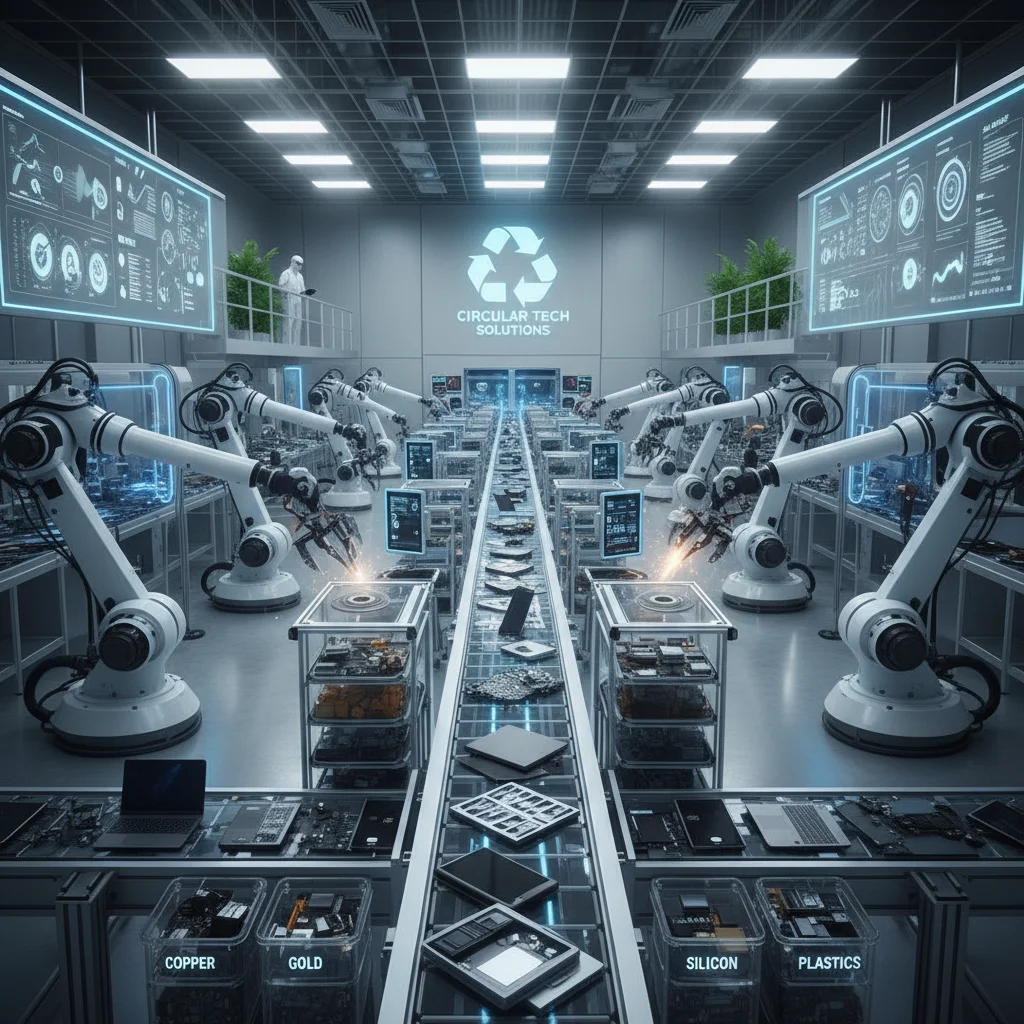
- Urban Mining: Recovering valuable metals and minerals from electronic waste (e-waste) and other discarded products.
- Industrial Symbiosis: Where the waste or by-product of one industrial process becomes a raw material for another.
Investments in these technologies are transforming waste into valuable resources, directly impacting raw material costs. For instance, companies are exploring ways to extract rare earth elements from old electronics, reducing dependence on new mining operations.
3. Product-as-a-Service (PaaS) Models
Shifting from selling products to selling the service they provide is a powerful circular strategy. In a PaaS model, the manufacturer retains ownership of the product and is responsible for its maintenance, repair, and eventual recovery. This incentivizes companies to design durable, efficient, and easily maintainable products. Examples include:
- Tire-as-a-Service: Michelin offers tire mileage rather than selling tires, ensuring optimal tire performance and maximizing their lifespan through maintenance and retreading.
- Lighting-as-a-Service: Philips provides lighting solutions, managing the installation, maintenance, and energy efficiency of lighting systems.
PaaS models can lead to significant circular economy cost reduction for both providers (through better resource utilization) and customers (through predictable operational costs and reduced capital expenditure).
4. Reverse Logistics and Supply Chain Optimization
Effective collection and processing of used products are vital for a successful circular economy. This requires robust reverse logistics systems, including:
- Collection Programs: Establishing convenient take-back programs for consumers and businesses.
- Sorting and Decontamination: Efficiently sorting collected materials and removing contaminants to ensure high-quality secondary raw materials.
- Refurbishment and Remanufacturing Hubs: Centralized facilities for repairing, upgrading, and remanufacturing products.
Optimizing these processes can reduce transportation costs, improve material recovery rates, and accelerate the reintroduction of valuable components into the supply chain. Companies are investing in AI and IoT solutions to streamline reverse logistics, making them more efficient and cost-effective.
5. Collaboration and Industrial Symbiosis
The circular economy thrives on collaboration. Companies can achieve greater cost efficiencies by working together, sharing resources, and finding synergistic uses for waste streams. Industrial symbiosis, where the waste of one industry becomes the input for another, is a prime example. This can lead to:
- Shared Infrastructure: Joint investments in recycling or remanufacturing facilities.
- By-product Exchange: Utilizing each other’s waste streams as valuable inputs.
- Knowledge Sharing: Collaborating on best practices for circular design and operations.
Such partnerships can unlock economies of scale and create new value chains, significantly contributing to overall circular economy cost reduction.
Real-World Impact: U.S. Companies Leading the Charge
Numerous U.S. companies are already demonstrating the tangible benefits of circular economy principles, paving the way for the projected 10% cost reductions by 2026.
Dell Technologies
Dell has been a pioneer in circular computing, with ambitious goals for sustainable materials and closed-loop systems. They utilize recycled plastics, carbon fiber, and even ocean-bound plastics in their products. Their take-back programs allow them to recover materials for reuse and recycling, significantly reducing their reliance on virgin resources and lowering manufacturing costs. Their focus on serviceability and repair also extends product lifespans, benefiting both customers and their bottom line.
Interface
The modular carpet tile manufacturer Interface has long been a leader in industrial ecology. Their ‘Mission Zero’ initiative aimed to eliminate their environmental footprint, largely through circular practices. They collect old carpet tiles, separating the yarn and backing for recycling into new products. This not only reduces waste but also provides a stable source of raw materials, insulating them from fluctuating virgin material prices. This strategy is a clear example of circular economy cost reduction in action.
Caterpillar
Caterpillar’s remanufacturing division is a testament to the economic viability of circularity in heavy industry. They remanufacture engines, transmissions, and other components to ‘as new’ condition, offering them at a fraction of the cost of new parts. This extends the life of valuable components, reduces raw material consumption, and provides customers with cost-effective repair options, creating a win-win scenario.
Levi Strauss & Co.
In the apparel sector, Levi’s has introduced initiatives like ‘Levi’s SecondHand,’ encouraging customers to buy and sell pre-owned denim. They also invest in sustainable design practices, such as Water<Less technology, to reduce water usage in manufacturing. By participating in the resale market and designing for durability, they prolong the life cycle of their products and foster a more circular apparel industry.

Challenges and Opportunities on the Path to 2026
While the benefits are clear, transitioning to a full circular economy is not without its challenges. These include:
- Initial Investment: Establishing new reverse logistics infrastructure, advanced recycling facilities, and redesigning products can require significant upfront capital.
- Technological Gaps: Some materials or products still lack cost-effective recycling or remanufacturing technologies.
- Consumer Behavior: Shifting consumer mindsets from ownership to access, or encouraging repair over replacement, requires education and incentives.
- Regulatory Frameworks: Existing regulations may not always support circular business models, requiring policy adjustments.
However, these challenges also present significant opportunities for innovation, job creation, and economic growth. Government incentives, private sector investment, and collaborative research are helping to overcome these hurdles, accelerating the adoption of circular practices and further driving circular economy cost reduction.
The Role of Technology in Enabling Circularity
Sustainable technology is the backbone of the modern circular economy. Advancements in various fields are making circular practices more feasible and economically attractive:
- Internet of Things (IoT): IoT sensors can monitor product usage, predict maintenance needs, and track products throughout their lifecycle, facilitating repair, refurbishment, and efficient collection.
- Artificial Intelligence (AI) and Machine Learning (ML): AI can optimize sorting processes in recycling facilities, predict material degradation, and even assist in designing more circular products.
- Blockchain: Provides transparency and traceability across complex supply chains, ensuring ethical sourcing and verifying the origin and composition of materials for recycling and reuse.
- Advanced Materials Science: Development of new, highly durable, recyclable, or bio-based materials that are inherently circular.
- Robotics and Automation: Automating disassembly, sorting, and remanufacturing processes, making them more efficient and cost-effective.
These technological innovations are not just supporting the circular economy; they are actively driving its expansion and making the ambitious goal of 10% circular economy cost reduction by 2026 a realistic target for U.S. companies.
Measuring Success: Metrics for Circular Economy Cost Reduction
To ensure that the 10% cost reduction target is met, companies need robust metrics to track their progress. Key performance indicators (KPIs) for circularity often include:
- Material Circularity Index (MCI): A framework developed by the Ellen MacArthur Foundation to assess how restorative a product or company’s material flows are.
- Recycled Content Percentage: The proportion of recycled materials used in new products.
- Waste Diversion Rate: The percentage of waste diverted from landfills through recycling, composting, or reuse.
- Product Lifespan Extension: Metrics related to repair rates, remanufacturing volumes, and product upgrade cycles.
- Revenue from Circular Activities: Tracking income generated from repair services, sales of refurbished products, or product-as-a-service models.
- Raw Material Cost Savings: Direct financial savings from reduced virgin material procurement.
- Waste Disposal Cost Savings: Financial savings from reduced waste generation and landfill fees.
By diligently tracking these metrics, U.S. companies can identify areas for improvement, demonstrate the financial viability of their circular initiatives, and reinforce their commitment to sustainable growth.
The Future Landscape: A Resilient and Profitable Circular Economy
The journey towards a fully circular economy is a continuous process of innovation, adaptation, and collaboration. The projected 10% circular economy cost reduction for U.S. companies by 2026 is a testament to the growing recognition of its economic benefits. This isn’t just about ‘doing good’ for the planet; it’s about building more resilient, efficient, and profitable businesses.
As resource scarcity intensifies and environmental regulations become stricter, companies that embrace circular principles will be better positioned to navigate future challenges. They will benefit from stable supply chains, reduced operational costs, enhanced brand reputation, and new market opportunities. The integration of sustainable tech with circular economy models is creating a powerful engine for economic transformation, proving that ecological responsibility and financial success are not mutually exclusive but rather deeply interconnected.
The momentum is building, and the examples set by leading U.S. companies are inspiring others to follow suit. The future of American industry is increasingly circular, sustainable, and, crucially, more profitable.