Power Your Home: Top 7 Renewable Energy Options for Homeowners in 2026
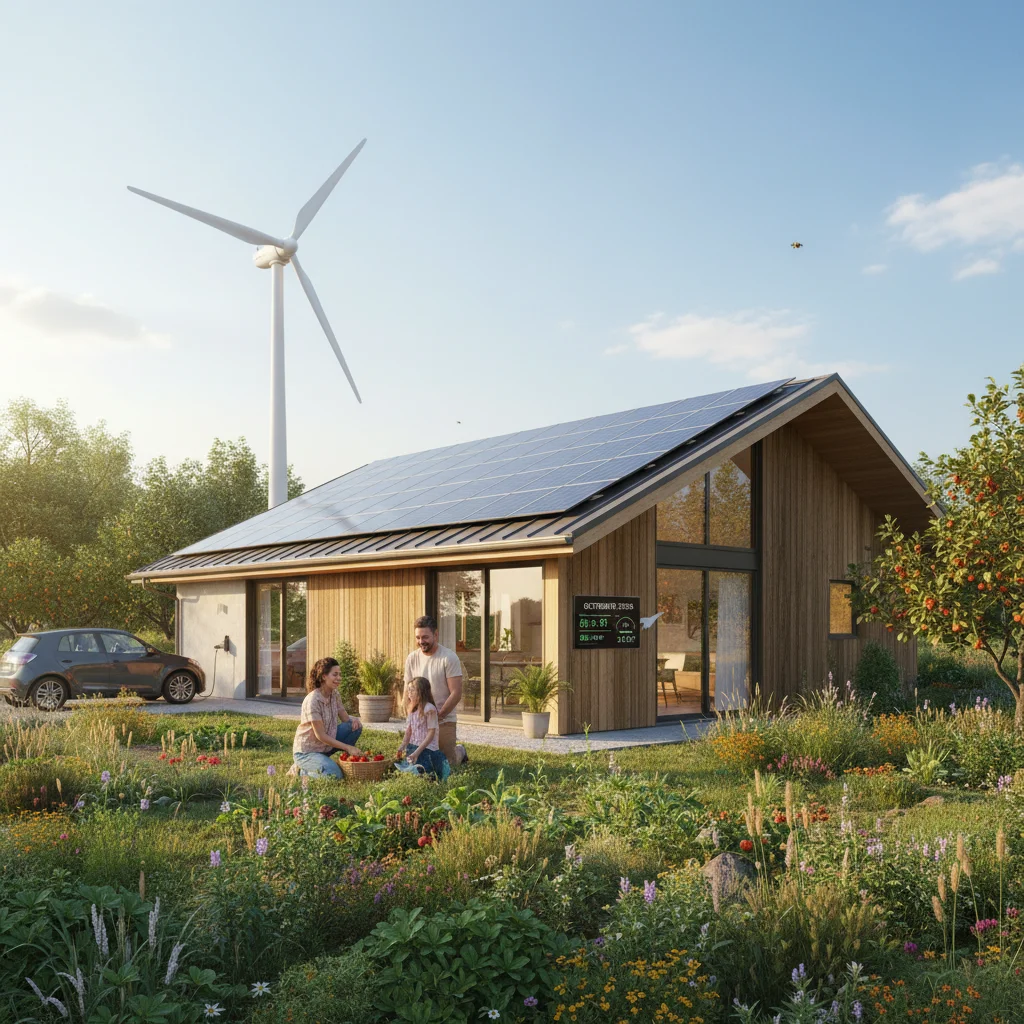
In an era defined by environmental consciousness and the relentless pursuit of energy independence, the concept of powering our homes with renewable energy has transcended from an idealistic dream to a tangible, accessible reality. For the average homeowner in 2026, the question is no longer ‘if’ they should transition to sustainable energy, but ‘how’ and ‘which’ options best suit their needs. This comprehensive guide will delve into seven practical and increasingly popular home renewable energy options, providing you with the insights needed to make an informed decision and embark on your journey towards a greener, more cost-effective future.
The global energy landscape is shifting dramatically. Fossil fuels, once the bedrock of our power grids, are being phased out due to their environmental impact and finite nature. Renewable energy sources, conversely, offer a clean, inexhaustible alternative, promising a future of reduced carbon emissions, lower utility bills, and enhanced energy security. As technology advances and government incentives expand, home renewable energy solutions are becoming more efficient, affordable, and easier to integrate into existing structures. Understanding these options is the first step towards transforming your home into a beacon of sustainability.
The Growing Appeal of Home Renewable Energy
The allure of home renewable energy extends far beyond environmental stewardship. While reducing your carbon footprint is a significant motivator for many, the economic benefits are equally compelling. Imagine a future where your electricity bills are drastically reduced, or even eliminated, and where you’re insulated from volatile energy prices. This is the promise of home renewable energy. Furthermore, many countries and local municipalities offer substantial tax credits, rebates, and incentives for homeowners who invest in renewable energy systems, making the initial outlay more manageable and accelerating the return on investment. The value of your property can also increase significantly, as energy-efficient homes are highly sought after in today’s market.
Beyond the financial incentives, there’s a profound sense of independence that comes with generating your own power. During power outages, homes equipped with certain renewable energy systems and battery storage can remain operational, providing peace of mind and essential services. This resilience is becoming increasingly important in a world facing more frequent extreme weather events. The psychological benefit of knowing you’re contributing positively to the planet, using clean energy that doesn’t deplete natural resources, is also a powerful driver for many homeowners.
1. Solar Photovoltaic (PV) Systems: Harnessing the Sun’s Power for Home Renewable Energy
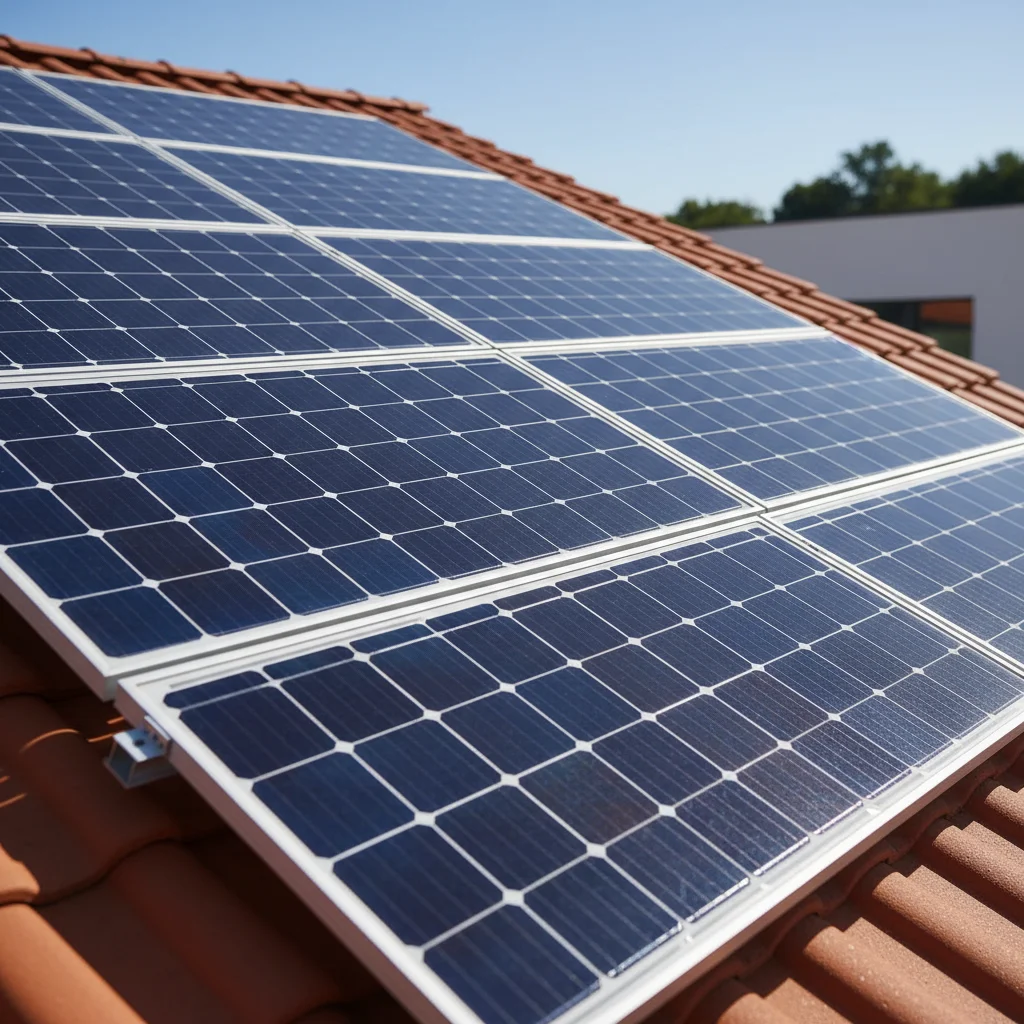
When most people think of home renewable energy, solar panels are often the first image that comes to mind, and for good reason. Solar photovoltaic (PV) systems are arguably the most popular and rapidly expanding renewable energy option for residences. These systems convert sunlight directly into electricity using semiconductor materials, typically silicon. The electricity generated can then be used to power your home, stored in batteries for later use, or even fed back into the grid, potentially earning you credits through net metering programs.
How Solar PV Works
Solar panels, usually installed on rooftops or in open areas with ample sunlight exposure, capture solar energy. This energy is then converted into direct current (DC) electricity. An inverter then transforms the DC electricity into alternating current (AC) electricity, which is the standard used by household appliances. Any excess electricity can be stored in a home battery system or sent to the utility grid. In 2026, advancements in solar panel efficiency mean more power can be generated from smaller areas, and aesthetic options like solar shingles are becoming more common, blending seamlessly with rooflines.
Advantages of Solar PV
- Reduced Electricity Bills: Significant savings on monthly utility bills, often leading to their elimination.
- Environmental Impact: Zero carbon emissions during operation, contributing to a cleaner environment.
- Increased Home Value: Homes with solar panels generally fetch higher prices and sell faster.
- Low Maintenance: Once installed, solar panels require minimal maintenance, typically just occasional cleaning.
- Government Incentives: A wide array of federal, state, and local incentives, including tax credits and rebates, make solar more affordable.
Considerations for Solar PV
- Initial Cost: While decreasing, the upfront investment can still be substantial, though financing options are plentiful.
- Sunlight Exposure: Requires adequate unobstructed sunlight throughout the day. Shading from trees or buildings can reduce efficiency.
- Roof Suitability: Your roof’s age, angle, and structural integrity need to be assessed.
- Intermittency: Solar power generation ceases at night and is reduced on cloudy days, making battery storage or grid connection essential.
For many homeowners, solar PV systems represent the most straightforward and impactful step towards home renewable energy. The technology is mature, reliable, and continuously improving, offering a solid return on investment and a tangible contribution to a sustainable future.
2. Residential Wind Turbines: Harnessing the Breeze for Home Renewable Energy
While less common than solar, residential wind turbines offer another viable home renewable energy solution, particularly for homes in rural or suburban areas with consistent wind resources. Small-scale wind turbines capture kinetic energy from the wind and convert it into electricity. They can be an excellent complement to solar power, as wind often blows more strongly at night or during cloudy periods when solar output is low.
How Residential Wind Turbines Work
A typical residential wind turbine consists of blades mounted on a tower, connected to a generator. As the wind turns the blades, the generator produces electricity. Similar to solar PV systems, this electricity can power your home directly, charge batteries, or be fed into the utility grid. Modern residential turbines are designed to be quieter and more aesthetically pleasing than their larger industrial counterparts, making them more suitable for residential settings.
Advantages of Residential Wind Turbines
- Consistent Power: Can generate electricity 24/7 as long as there is sufficient wind, unlike solar which only operates during daylight hours.
- Reduced Electricity Bills: Like solar, wind power significantly lowers or eliminates electricity costs.
- Environmental Benefits: Clean energy production with zero emissions.
- Space Efficiency: While requiring some open space, the footprint of the tower itself is relatively small.
Considerations for Residential Wind Turbines
- Wind Resource: Requires an average wind speed of at least 10 mph (16 km/h) for efficient operation. A professional wind resource assessment is crucial.
- Noise and Aesthetics: Although quieter, some homeowners might find the noise or visual impact undesirable.
- Zoning Regulations: Local zoning laws and homeowner association (HOA) rules may restrict turbine height or placement.
- Wildlife Impact: Potential, though minimal for small-scale turbines, impact on birds and bats needs consideration.
- Initial Cost: Can be a significant investment, comparable to or sometimes exceeding solar PV for a full home system.
For those with suitable land and wind conditions, a residential wind turbine can be a powerful addition to their home renewable energy strategy, offering a robust and consistent source of clean electricity.
3. Geothermal Energy: Tapping into Earth’s Stable Temperature
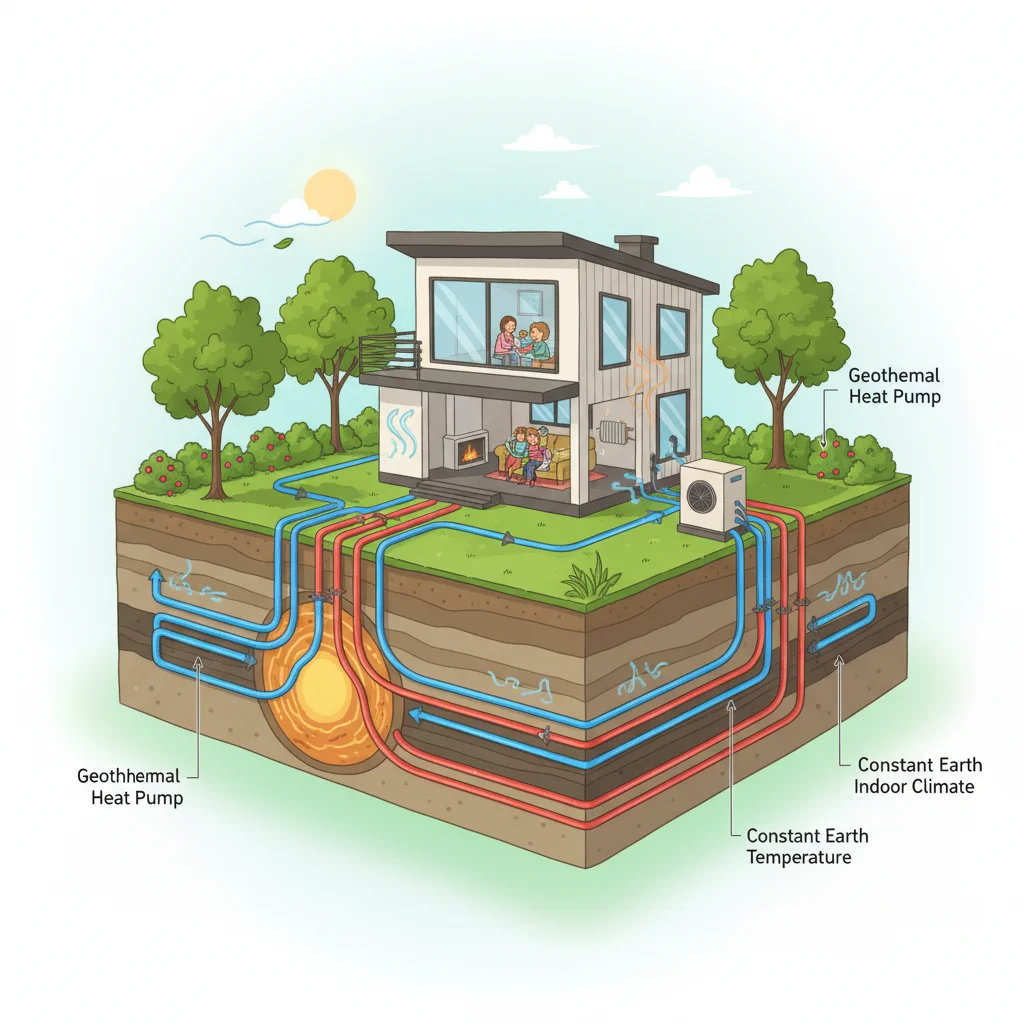
Geothermal energy might not generate electricity directly for most homes, but it offers an incredibly efficient and eco-friendly solution for heating and cooling. Geothermal heat pumps (GHPs) utilize the stable temperature of the earth a few feet below the surface to regulate indoor temperatures. The ground remains at a relatively constant temperature year-round (around 50-60°F or 10-16°C), making it an excellent medium for heat exchange.
How Geothermal Heat Pumps Work
A GHP system consists of an indoor unit and a buried loop of pipes (the earth loop). In winter, the system extracts heat from the ground and transfers it into your home. In summer, it reverses the process, removing heat from your home and transferring it into the cooler ground. This process uses a small amount of electricity to move heat, rather than generate it, making it exceptionally energy-efficient.
Advantages of Geothermal Energy (GHPs)
- Exceptional Efficiency: GHPs are 3 to 6 times more efficient than conventional HVAC systems, leading to significant energy savings.
- Reduced Utility Bills: Drastically lowers heating and cooling costs, which constitute a large portion of household energy consumption.
- Long Lifespan: Ground loops can last 50+ years, and indoor components 20-25 years, far exceeding traditional HVAC systems.
- Quiet Operation: No noisy outdoor compressor units.
- Environmental Benefits: Reduces greenhouse gas emissions by minimizing electricity consumption from conventional sources.
- Consistent Performance: Unaffected by extreme outdoor air temperatures.
Considerations for Geothermal Energy (GHPs)
- High Upfront Cost: The installation of the ground loop can be expensive, requiring excavation.
- Installation Complexity: Requires specialized installers and significant land disturbance for trenching or drilling.
- Land Requirements: Needs sufficient outdoor space for the ground loop installation.
- Retrofit Challenges: Can be more challenging and costly to install in existing homes compared to new construction.
For homeowners looking for a highly efficient and long-term solution for heating and cooling, geothermal heat pumps are an outstanding home renewable energy option, offering unparalleled comfort and substantial savings over their lifespan.
4. Micro-Hydropower Systems: Small-Scale Water Power for Home Renewable Energy
While not applicable to every home, micro-hydropower systems are an incredibly powerful home renewable energy source for those with access to a flowing stream or river on their property. These systems utilize the kinetic energy of moving water to generate electricity, offering a continuous and highly reliable power supply.
How Micro-Hydropower Works
A micro-hydro system typically involves diverting a portion of a stream’s flow through a pipe (penstock) to a turbine. The force of the water spins the turbine, which in turn drives a generator to produce electricity. The water is then returned to the stream downstream, having no significant impact on the ecosystem. These systems are often off-grid, providing complete energy independence.
Advantages of Micro-Hydropower
- Constant Power: Provides a continuous supply of electricity 24/7, as long as there’s water flow.
- High Efficiency: Highly efficient in converting water’s energy into electricity.
- Low Operating Costs: Once installed, operational costs are minimal.
- Environmental Friendliness: A clean, renewable energy source with minimal environmental impact when properly designed.
Considerations for Micro-Hydropower
- Site Specificity: Requires specific geographical conditions – a flowing stream with sufficient head (vertical drop) and flow rate.
- Permitting: Often involves complex permitting processes due to water rights and environmental regulations.
- Initial Cost: Can be expensive to install, requiring civil engineering work.
- Maintenance: Requires periodic maintenance to clear debris and ensure optimal operation.
For the fortunate few with suitable natural resources, micro-hydropower offers one of the most consistent and powerful home renewable energy solutions available, providing true energy independence.
5. Biomass Heating Systems: Sustainable Heat from Organic Matter
Biomass heating systems utilize organic materials, such as wood pellets, wood chips, or agricultural waste, to produce heat for homes. While not generating electricity, they offer a renewable alternative to fossil fuels for heating, which is a significant energy consumer in many climates.
How Biomass Heating Works
Modern biomass boilers or stoves burn compressed biomass fuels efficiently, releasing heat that can be distributed throughout the home via radiators or underfloor heating systems. These systems are often automated, feeding fuel from a storage hopper as needed. The carbon dioxide released during combustion is considered carbon-neutral because it’s equivalent to the CO2 absorbed by the plants during their growth.
Advantages of Biomass Heating
- Renewable Fuel Source: Biomass is a sustainable resource, unlike fossil fuels.
- Reduced Heating Costs: Biomass fuels can be cheaper than oil, gas, or electricity, especially in regions with abundant local supplies.
- Carbon Neutrality: Contributes to a lower carbon footprint.
- Local Economy Support: Often supports local forestry and agricultural industries.
Considerations for Biomass Heating
- Fuel Storage: Requires space for storing biomass fuel (pellets, chips).
- Initial Cost: Installation of a biomass boiler or stove can be more expensive than conventional heating systems.
- Maintenance: Requires regular cleaning and ash removal.
- Emissions: While carbon-neutral, burning biomass still produces particulate matter and other pollutants, which must be managed by efficient systems.
- Fuel Availability: Dependent on a reliable local supply of biomass fuel.
Biomass heating offers a compelling home renewable energy option for those seeking to decarbonize their heating, particularly in areas with access to sustainable biomass resources.
6. Solar Water Heaters (Solar Thermal Systems): Heating Water with the Sun
Often overlooked in favor of solar PV, solar water heaters (also known as solar thermal systems) are a highly efficient and cost-effective way to use the sun’s energy. Instead of generating electricity, these systems directly harness solar energy to heat water for household use, significantly reducing the energy required for one of the largest energy consumers in a home.
How Solar Water Heaters Work
Solar collectors, usually flat-plate or evacuated tube types, are installed on the roof. These collectors absorb sunlight and transfer the heat to a fluid (either water or an antifreeze solution) that circulates through them. This heated fluid then transfers its warmth to the water in an insulated storage tank, providing hot water for bathing, washing, and other domestic needs. A conventional water heater often acts as a backup for cloudy days or periods of high demand.
Advantages of Solar Water Heaters
- Significant Energy Savings: Hot water heating can account for 15-25% of a home’s energy consumption; solar thermal can reduce this by 50-80%.
- Lower Carbon Footprint: Reduces greenhouse gas emissions associated with conventional water heating.
- Long Lifespan: Systems are durable and can last for 20 years or more with proper maintenance.
- Reliable Technology: A mature and proven technology.
- Cost-Effective: Often has a faster payback period than solar PV systems due to direct heating efficiency.
Considerations for Solar Water Heaters
- Sunlight Exposure: Requires good, unobstructed access to sunlight.
- Initial Cost: While offering long-term savings, the upfront installation cost can be higher than conventional water heaters.
- Space Requirements: Needs roof space for collectors and often space for a dedicated storage tank.
- Climate Suitability: While effective in most climates, systems in freezing climates require specific antifreeze solutions or drain-back designs.
For homeowners looking to make a substantial dent in their energy bills with a relatively simple and efficient home renewable energy upgrade, solar water heaters are an excellent choice.
7. Home Energy Storage Systems (Batteries): Maximizing Home Renewable Energy Independence
While not a renewable energy source in itself, home energy storage systems, primarily batteries, are an indispensable component for maximizing the benefits of intermittent renewable sources like solar and wind. They allow homeowners to store excess electricity generated during peak production times and use it when the sun isn’t shining or the wind isn’t blowing, enhancing energy independence and resilience.
How Home Energy Storage Works
When your solar panels or wind turbine produce more electricity than your home is currently consuming, the excess energy is diverted to a battery bank. When production is low (e.g., at night) or during a power outage, the stored energy is discharged from the batteries to power your home. This seamless integration ensures a continuous power supply and enables homeowners to truly go off-grid or minimize their reliance on the utility grid.
Advantages of Home Energy Storage
- Increased Energy Independence: Reduces reliance on the utility grid and provides power during outages.
- Optimize Renewable Energy Use: Allows you to use more of the clean energy you generate, rather than sending it back to the grid.
- Time-of-Use Savings: Store energy when electricity rates are low and use it when rates are high, saving money.
- Grid Services: Some battery systems can participate in grid services, potentially earning revenue for the homeowner.
- Enhanced Resilience: Provides backup power for essential appliances during blackouts.
Considerations for Home Energy Storage
- High Initial Cost: Batteries represent a significant investment, though prices are steadily declining.
- Lifespan: Batteries have a finite number of charge/discharge cycles, though modern batteries offer long lifespans.
- Space Requirements: Batteries require dedicated space, often in a garage or utility room.
- Integration Complexity: Requires careful integration with existing renewable energy systems and electrical panels.
As the cost of home energy storage continues to fall and battery technology improves, these systems are becoming an increasingly vital part of any comprehensive home renewable energy strategy, offering unparalleled flexibility and security.
Integrating Home Renewable Energy: A Holistic Approach
Choosing the right home renewable energy option often involves more than just selecting a single technology. Many homeowners find the greatest benefits come from an integrated approach, combining complementary systems. For instance, solar PV with battery storage is a powerful combination, ensuring power day and night. Similarly, a geothermal heat pump can handle your heating and cooling needs, while solar panels take care of your electricity, creating a truly energy-efficient and sustainable home.
Before making any major investment, it’s crucial to perform a thorough home energy audit. This will identify areas where you can improve energy efficiency, such as upgrading insulation, sealing drafts, or replacing old appliances. Reducing your overall energy consumption will decrease the size and cost of the renewable energy system you need, maximizing your return on investment.
Consulting with reputable local installers and energy consultants is also paramount. They can assess your specific property, analyze your energy needs, and provide tailored recommendations based on local climate, regulations, and available incentives. Request multiple quotes and compare not just prices, but also warranties, equipment quality, and installer experience.
The Future of Home Renewable Energy in 2026 and Beyond
The landscape of home renewable energy is dynamic and constantly evolving. In 2026, we are witnessing a convergence of technological innovation, decreasing costs, and increasing public awareness. Smart home integration is becoming standard, allowing homeowners to monitor and manage their energy production and consumption in real-time through intuitive apps. Artificial intelligence is beginning to play a role in optimizing energy use, predicting demand, and even coordinating with the grid for maximum efficiency and savings.
Further advancements in materials science promise even more efficient solar cells and longer-lasting, more affordable batteries. The development of microgrids and community-based renewable energy projects will also empower neighborhoods to share and manage their clean energy resources more effectively. Policy support, in the form of continued tax credits, grants, and streamlined permitting processes, will undoubtedly continue to drive adoption.
The journey towards a fully sustainable home is an exciting one, offering both financial rewards and the profound satisfaction of contributing to a healthier planet. The options available for home renewable energy in 2026 are more diverse, efficient, and accessible than ever before. By carefully considering your needs, researching the technologies, and seeking expert advice, you can confidently take the leap into a future powered by clean, renewable energy.
Conclusion: Embracing a Sustainable Future with Home Renewable Energy
The shift to home renewable energy is not just a trend; it’s a fundamental transformation in how we power our lives. From the pervasive presence of solar PV systems to the silent efficiency of geothermal heat pumps, and the emerging potential of micro-hydropower, homeowners in 2026 have an unprecedented array of practical and effective options at their disposal. Each of the seven options discussed – solar PV, residential wind turbines, geothermal energy, micro-hydropower, biomass heating, solar water heaters, and home energy storage – offers unique benefits and considerations, allowing for tailored solutions that fit diverse needs and circumstances.
Embracing home renewable energy is a powerful statement of environmental responsibility, a shrewd financial investment, and a step towards greater energy independence. It’s about building a resilient home that is less vulnerable to external energy shocks and contributing to a global effort to combat climate change. The technologies are proven, the incentives are strong, and the long-term benefits are undeniable. By taking the time to understand these options and plan strategically, you can transform your home into a sustainable powerhouse, securing a brighter, cleaner, and more prosperous future for yourself and generations to come. The time to invest in home renewable energy is now.