Personalized Medicine 2026: Genetic Therapies & US Healthcare Costs

Personalized Medicine: A 2026 Guide to Genetic Therapies and Their 18-Month Projected Impact on U.S. Healthcare Costs
Unraveling the future of healthcare through the lens of genetic innovation.
The healthcare landscape is perpetually evolving, but few advancements promise as profound a transformation as personalized medicine, particularly through the burgeoning field of genetic therapies. As we cast our gaze towards 2026, the convergence of genomic sequencing, gene editing technologies, and advanced bioinformatics is set to redefine disease treatment and prevention. However, this revolution comes with a significant financial calculus, prompting critical questions about the genetic therapy healthcare costs and their projected impact on the U.S. healthcare system over the next 18 months.
Personalized medicine, at its core, is about tailoring medical treatment to the individual characteristics of each patient. This approach is in stark contrast to the traditional ‘one-size-fits-all’ model, which often overlooks the genetic, environmental, and lifestyle differences that influence a person’s response to treatment. Genetic therapies, a cornerstone of personalized medicine, aim to treat or prevent disease by addressing the underlying genetic defects. This could involve introducing a healthy copy of a gene, inactivating a faulty gene, or introducing new genes into the body to help fight disease.
The promise of genetic therapies is immense, offering potential cures for previously untreatable conditions such as certain cancers, rare genetic disorders like spinal muscular atrophy (SMA), and even chronic diseases. However, the development, approval, and deployment of these highly complex treatments carry substantial price tags, raising concerns about their affordability and accessibility. Our exploration will delve into the anticipated trajectory of these costs, examining the factors that contribute to them, and forecasting the ripple effects across the U.S. healthcare economy by mid-2026.
The Dawn of a New Era: Understanding Genetic Therapies
Genetic therapies represent a paradigm shift in medical science. Instead of merely managing symptoms, these treatments aim to correct the root cause of diseases at the molecular level. The technologies underpinning this revolution are diverse and rapidly advancing:
- Gene Therapy: This involves introducing new genetic material into a patient’s cells to compensate for defective genes or to introduce a new function. Viral vectors, often modified adeno-associated viruses (AAVs), are commonly used to deliver these genes.
- Gene Editing (CRISPR-Cas9): CRISPR-Cas9 technology allows scientists to precisely cut DNA at specific locations, enabling the removal of faulty genes or the insertion of new genetic sequences. This precision offers unprecedented control over the genome.
- RNA Therapies: These therapies target RNA molecules rather than DNA. They can block the production of disease-causing proteins or enhance the production of beneficial ones. Examples include antisense oligonucleotides (ASOs) and small interfering RNAs (siRNAs).
- Cell-Based Gene Therapies (e.g., CAR T-cell therapy): In these therapies, a patient’s own cells are genetically modified outside the body and then reinfused. CAR T-cell therapy, for instance, involves engineering a patient’s T-cells to recognize and attack cancer cells.
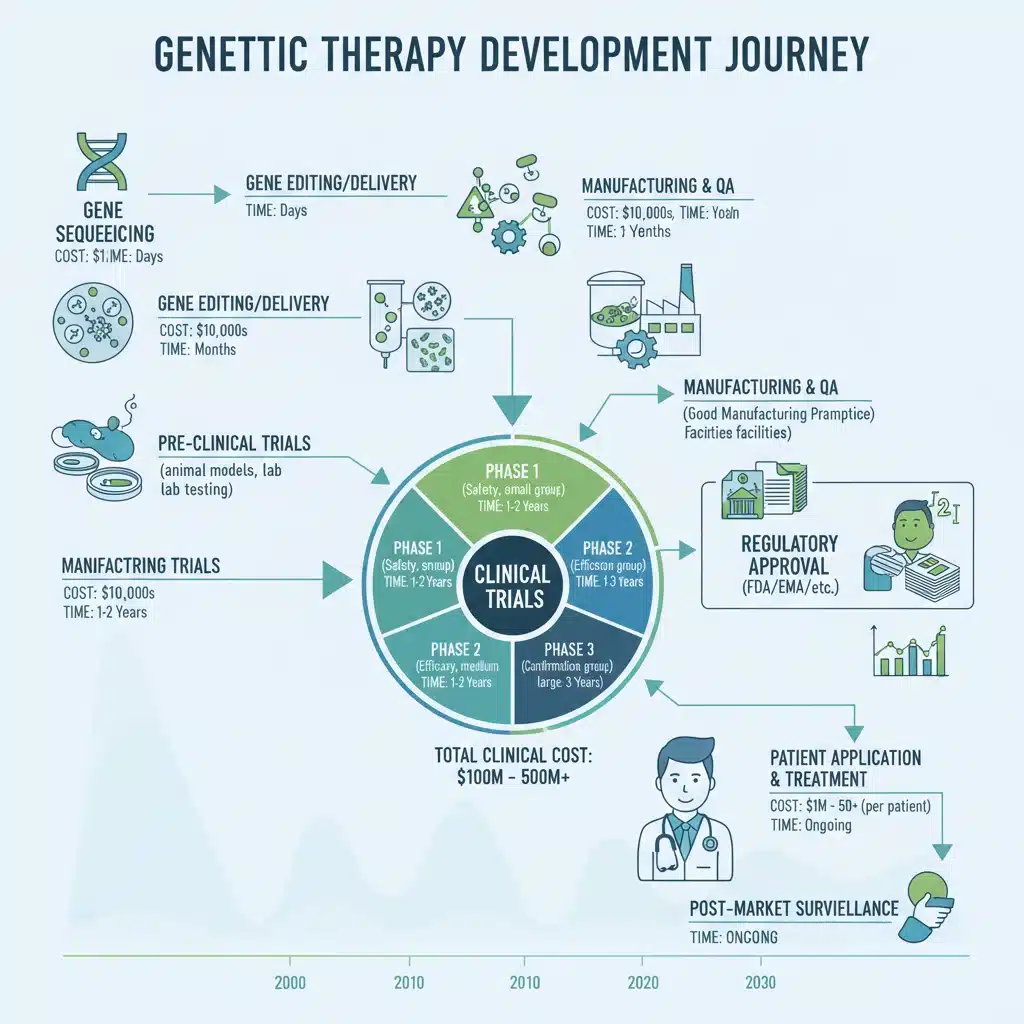
Each of these modalities holds unique potential and presents distinct challenges in terms of development, manufacturing, and regulation. The complexity of these processes directly translates into the high initial costs associated with these breakthrough treatments. As more therapies gain regulatory approval, the discussion around genetic therapy healthcare costs will intensify, demanding innovative solutions for financing and distribution.
Current Landscape of Genetic Therapy Costs in the U.S.
The current price tags for approved genetic therapies are staggering. For example, Zolgensma, a gene therapy for spinal muscular atrophy (SMA), costs approximately $2.1 million per dose, making it one of the most expensive drugs in the world. CAR T-cell therapies like Kymriah and Yescarta can cost upwards of $370,000 to $475,000, not including associated hospitalization and supportive care expenses.
These figures are not arbitrary; they reflect the immense investment in research and development, the complexity of manufacturing, the small patient populations for many rare diseases, and the perceived value of a potential cure or significant life extension. Drug developers argue that these therapies, though expensive upfront, can offer long-term savings by reducing the need for chronic care, repeated hospitalizations, and other ongoing treatments.
However, from the perspective of payers – insurance companies, government programs like Medicare and Medicaid, and ultimately, patients – these costs pose significant challenges. The U.S. healthcare system, already grappling with rising expenditures, must find sustainable ways to integrate these revolutionary treatments without compromising access or financial stability. The next 18 months will be crucial in observing how these initial high costs begin to shape policy, payment models, and market dynamics.
Projected Impact on U.S. Healthcare Costs by Mid-2026
The 18-month horizon leading to mid-2026 is a critical window for assessing the evolving impact of genetic therapy healthcare costs. Several factors will influence this trajectory:
1. Increase in Approved Therapies and Indications
The pipeline for genetic therapies is robust. Many therapies are in various stages of clinical trials, and several are expected to gain FDA approval in the coming years. As more therapies for a wider range of conditions (including more prevalent diseases) become available, the aggregate spending on these treatments will inevitably rise. Each new approval adds to the overall financial burden on the healthcare system.
2. Evolution of Payment Models
Traditional fee-for-service models are ill-suited for gene therapies that offer a one-time treatment with long-term benefits. We can expect to see a continued shift towards value-based payment models, such as:
- Installment Payments: Spreading the cost over several years, often contingent on treatment efficacy.
- Outcomes-Based Agreements: Where payment is tied to the patient’s response to the therapy, with rebates or adjustments if the treatment doesn’t meet predefined clinical endpoints.
- Subscription Models/Population-Based Payments: For diseases with larger patient populations, payers might enter into agreements to pay a fixed amount for access to a therapy for all eligible patients.
The success and widespread adoption of these innovative payment models will be crucial in managing the financial strain. By mid-2026, we should have a clearer picture of which models are gaining traction and their effectiveness in balancing access with financial sustainability.
3. Manufacturing Advancements and Competition
Currently, manufacturing gene therapies is a highly specialized and expensive process. As technology matures and more companies enter the market, economies of scale and increased competition could potentially lead to a gradual reduction in production costs. However, the complexity of these ‘living drugs’ means that significant cost reductions are unlikely to happen rapidly within the 18-month timeframe. We might see marginal improvements, but widespread dramatic price drops are a longer-term prospect.
4. Diagnostic Costs and Screening Programs
The effective deployment of genetic therapies relies heavily on accurate genetic diagnosis. This requires widespread genetic testing and screening programs to identify eligible patients, especially for rare diseases. The costs associated with these diagnostic services will also contribute to overall healthcare expenditures. As personalized medicine becomes more mainstream, genetic screening may become a more routine part of healthcare, adding to the foundational costs.
5. Infrastructure and Workforce Development
Delivering genetic therapies requires specialized infrastructure (e.g., infusion centers, specialized pharmacies) and a highly trained workforce. Hospitals and clinics will need to invest in facilities and staff training, adding another layer of cost to the system. While these are not direct drug costs, they are essential overheads that will impact the overall healthcare budget.
6. Policy and Regulatory Environment
Government policies and regulatory decisions will play a significant role. Expedited review pathways for breakthrough therapies, reimbursement policies by Medicare and Medicaid, and potential legislative actions to address drug pricing will all influence the financial landscape. The political climate surrounding drug costs in the U.S. is dynamic, and any major policy shifts could significantly alter the 18-month projection.
Challenges and Opportunities for Managing Genetic Therapy Healthcare Costs
The integration of genetic therapies into mainstream healthcare presents both formidable challenges and unique opportunities for innovation in cost management.
Challenges:
- Budget Impact: The high upfront costs can strain payer budgets, especially for smaller insurance plans or state Medicaid programs.
- Uncertainty of Long-Term Efficacy: While many genetic therapies show promising results, long-term data on durability and potential side effects are still accumulating, creating uncertainty for payers regarding the true value proposition.
- Equitable Access: Ensuring that all patients who could benefit from these therapies have access, regardless of their socioeconomic status or geographic location, is a major ethical and practical challenge. Disparities in access could exacerbate existing health inequities.
- Data Integration and Infrastructure: The need for robust systems to track patient outcomes, manage complex treatment protocols, and integrate genomic data into electronic health records is substantial.
Opportunities:
- Preventative Potential: In the long run, genetic therapies could reduce the incidence and severity of many chronic and debilitating diseases, leading to significant savings in downstream healthcare costs. For example, a one-time cure for a condition that previously required lifelong, expensive treatment could be highly cost-effective over a patient’s lifetime.
- Precision Medicine Benefits: By targeting treatments to individuals most likely to respond, personalized medicine can reduce wasteful spending on ineffective therapies, improving overall efficiency.
- Market Innovation: The financial pressure from high costs is driving innovation in payment models, which could set precedents for managing other high-cost drugs in the future.
- Research and Development Incentives: The high returns on successful genetic therapies incentivize continued investment in R&D, potentially leading to even more effective and perhaps eventually more affordable treatments.
The Role of Pharmacogenomics in Cost Management
Beyond direct genetic therapies, pharmacogenomics (PGx) plays a crucial role in the broader personalized medicine landscape and can indirectly impact genetic therapy healthcare costs. PGx studies how a person’s genes affect their response to drugs. By understanding an individual’s genetic profile, doctors can predict whether a drug will be effective, or if it might cause adverse side effects.
Integrating PGx testing into clinical practice can lead to significant cost savings by:
- Reducing Adverse Drug Reactions (ADRs): ADRs are a major cause of hospitalizations and emergency room visits, incurring substantial costs. PGx can help avoid these by guiding drug selection and dosing.
- Improving Treatment Efficacy: By prescribing the most effective drug from the outset, PGx can reduce the need for trial-and-error prescribing, shortening treatment durations and improving patient outcomes.
- Optimizing Dosing: Genetic variations can affect how quickly a person metabolizes a drug. PGx can help tailor doses to ensure optimal efficacy and minimize toxicity, preventing costly complications.
While the initial cost of PGx testing can be a factor, its potential to optimize drug therapy and prevent costly complications positions it as a valuable tool in managing overall healthcare expenditures, including those indirectly related to genetic therapy support and follow-up care. By 2026, we anticipate increased adoption of PGx, further solidifying personalized medicine’s economic impact.
Case Studies and Emerging Trends
To illustrate the dynamic nature of genetic therapy healthcare costs, let’s consider a few emerging trends and hypothetical scenarios that could unfold by mid-2026:
Expanding Indications for Approved Therapies
Many existing gene therapies, initially approved for very rare conditions, are being explored for broader indications. For example, if a gene therapy for a specific type of inherited blindness is found effective for other forms of retinal degeneration affecting larger populations, the market size would increase significantly. This could lead to either greater overall spending due to more eligible patients, or, in the long term, potentially drive down per-patient costs through increased production volume and competition, though the latter is less likely within an 18-month window.
The Rise of In Vivo Gene Editing
While most current gene therapies involve ex vivo (outside the body) modification of cells, advancements in in vivo (inside the body) gene editing are rapidly progressing. Delivering gene-editing tools directly to target cells within the body simplifies the treatment process and could potentially reduce some procedural costs associated with cell extraction and reinfusion. However, the development and regulatory hurdles for in vivo therapies are substantial, and widespread clinical application leading to significant cost shifts is likely beyond the immediate 18-month timeframe.
Government and Public Health Initiatives
Recognizing the transformative potential and cost challenges, governments and public health organizations might launch initiatives to support access or manage costs. This could include bulk purchasing agreements, establishing national registries for rare disease patients to streamline access, or funding research into more cost-effective delivery methods. Such initiatives, if implemented, could begin to mitigate some of the financial pressure by mid-2026.

Ethical Considerations and Societal Impact
Beyond the financial implications, the rise of genetic therapies and personalized medicine raises profound ethical questions. Who gets access to these potentially life-saving but exorbitantly priced treatments? How do we ensure equitable distribution? What are the long-term societal impacts of altering the human genome?
These questions are not merely academic; they will increasingly influence policy decisions and public discourse surrounding genetic therapy healthcare costs. The healthcare system must grapple with balancing innovation, affordability, and equity. The next 18 months will undoubtedly see continued debate and the formation of frameworks to address these complex issues.
Conclusion: Navigating the Future of Healthcare
The journey towards a fully personalized medical landscape, powered by genetic therapies, is both exhilarating and challenging. By 2026, the U.S. healthcare system will be deeper into the integration of these groundbreaking treatments, and the impact on costs will be undeniable. While the initial 18-month projection indicates a continued upward trend in expenditures driven by new approvals and the inherent cost of these complex technologies, it also highlights the accelerating development of innovative payment models and the growing recognition of long-term value.
Managing genetic therapy healthcare costs will require a multi-faceted approach involving pharmaceutical companies, payers, healthcare providers, policymakers, and patients. Continued research into more efficient manufacturing processes, the widespread adoption of value-based payment agreements, and thoughtful policy frameworks will be essential to ensure that the promise of personalized medicine translates into accessible and sustainable care for all who need it. The next year and a half will serve as a critical period for laying the groundwork for a future where genetic innovation not only cures disease but does so in a way that strengthens, rather than bankrupts, our healthcare system.
The revolution is here, and understanding its economic contours is paramount for navigating the future of health.