Future of Work US: Tech Reshaping Jobs by 2030
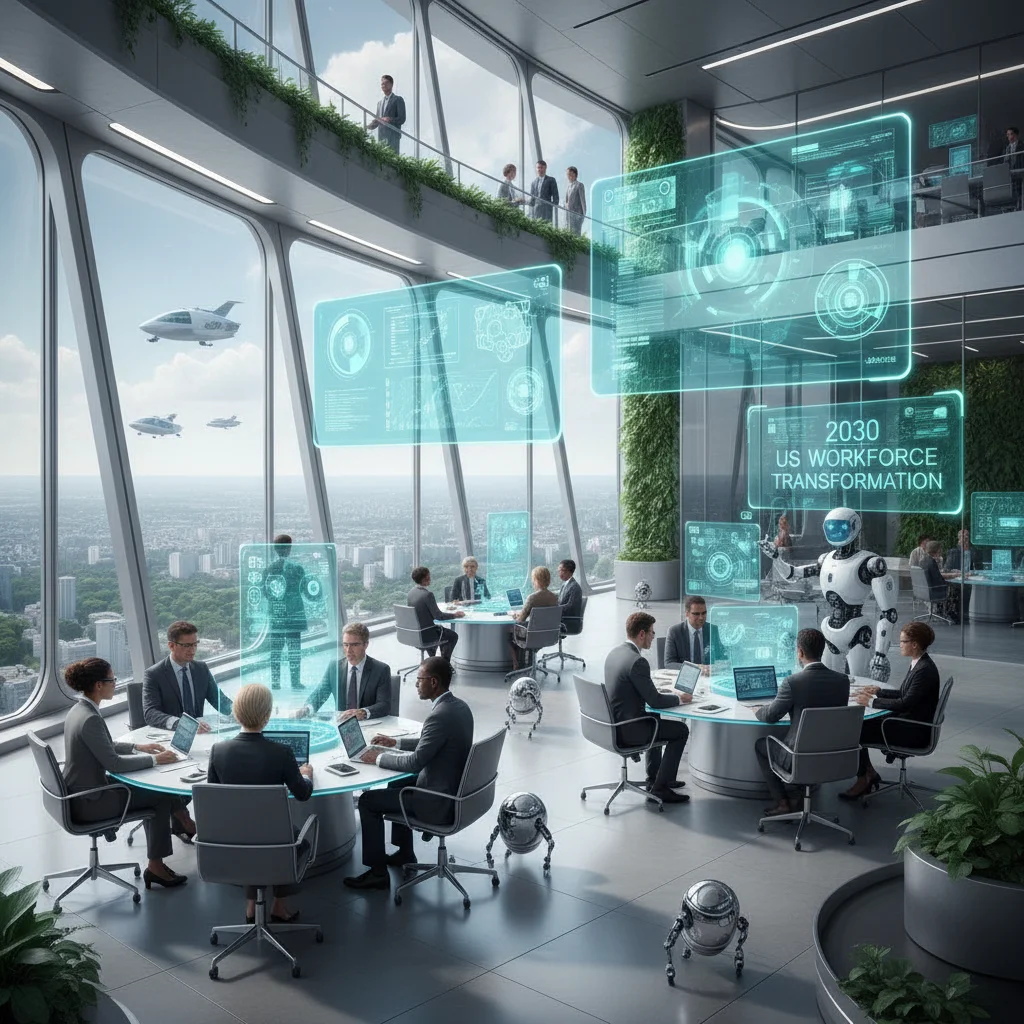
The landscape of employment in the United States is on the precipice of a monumental transformation. As we hurtle towards 2030, a confluence of technological advancements is set to redefine what it means to work, how we work, and even the very nature of jobs themselves. Experts predict that a staggering 70% of all jobs in the U.S. will be significantly reshaped by just four key technologies: Artificial Intelligence (AI), automation, the Internet of Things (IoT), and blockchain. This isn’t merely an evolution; it’s a revolution that demands foresight, adaptation, and proactive strategies from individuals, businesses, and policymakers alike. Understanding the Future of Work US is no longer an academic exercise; it’s an imperative for survival and prosperity in the coming decade.
The Unstoppable March of Technology: Reshaping the Future of Work US
For centuries, technological innovation has been a primary driver of societal change, and the world of work has always been at the forefront of this evolution. From the agricultural revolution to the industrial age and the digital era, each wave of advancement has displaced old jobs while simultaneously creating new ones. However, the current wave, characterized by the rapid acceleration and convergence of AI, automation, IoT, and blockchain, possesses a unique intensity and breadth. It promises to impact the Future of Work US at an unprecedented scale, affecting routine tasks, complex problem-solving, and even creative endeavors.
The sheer speed at which these technologies are being developed and integrated into various sectors means that the traditional model of education and career progression may no longer suffice. Lifelong learning, continuous skill development, and an agile mindset will become non-negotiable requirements for navigating this new terrain. Businesses, too, face the critical challenge of reimagining their operational structures, talent acquisition strategies, and ethical frameworks to harness the benefits of these technologies while mitigating potential disruptions.
Artificial Intelligence (AI): The Brain Behind the Revolution
Artificial Intelligence stands as perhaps the most transformative force in the evolving Future of Work US. AI encompasses a broad range of technologies that enable machines to perform tasks typically requiring human intelligence, such as learning, problem-solving, decision-making, perception, and language understanding. Its applications are vast and varied, from sophisticated algorithms powering autonomous vehicles to intelligent systems optimizing supply chains, and from chatbots handling customer service inquiries to AI-driven tools assisting in medical diagnostics.
AI’s Impact on Job Roles and Industries
The influence of AI is particularly pronounced in roles involving data analysis, pattern recognition, and predictive modeling. Financial services, healthcare, marketing, and logistics are already seeing significant shifts. For instance, AI can process vast amounts of financial data to identify market trends, automate fraud detection, and even manage investment portfolios with greater efficiency than human counterparts. In healthcare, AI assists in analyzing medical images for early disease detection, personalizing treatment plans, and streamlining administrative tasks, freeing up medical professionals to focus on patient care.
However, AI’s impact isn’t limited to white-collar jobs. In manufacturing, AI-powered systems optimize production lines, predict equipment failures, and improve quality control. Even creative industries are experiencing AI’s touch, with algorithms capable of generating music, art, and written content, albeit often requiring human oversight and refinement.
The Rise of AI-Augmented Work
Crucially, the narrative isn’t solely about AI replacing jobs, but rather augmenting human capabilities. Many roles will evolve into AI-augmented positions, where humans work collaboratively with AI tools to achieve superior outcomes. For example, a marketing specialist might use AI to analyze customer behavior and personalize campaigns, while a lawyer might leverage AI to sift through legal documents and identify relevant precedents. This synergy promises increased productivity, accuracy, and innovation, fundamentally altering the day-to-day responsibilities within numerous professions across the Future of Work US.
Challenges and Opportunities with AI Integration
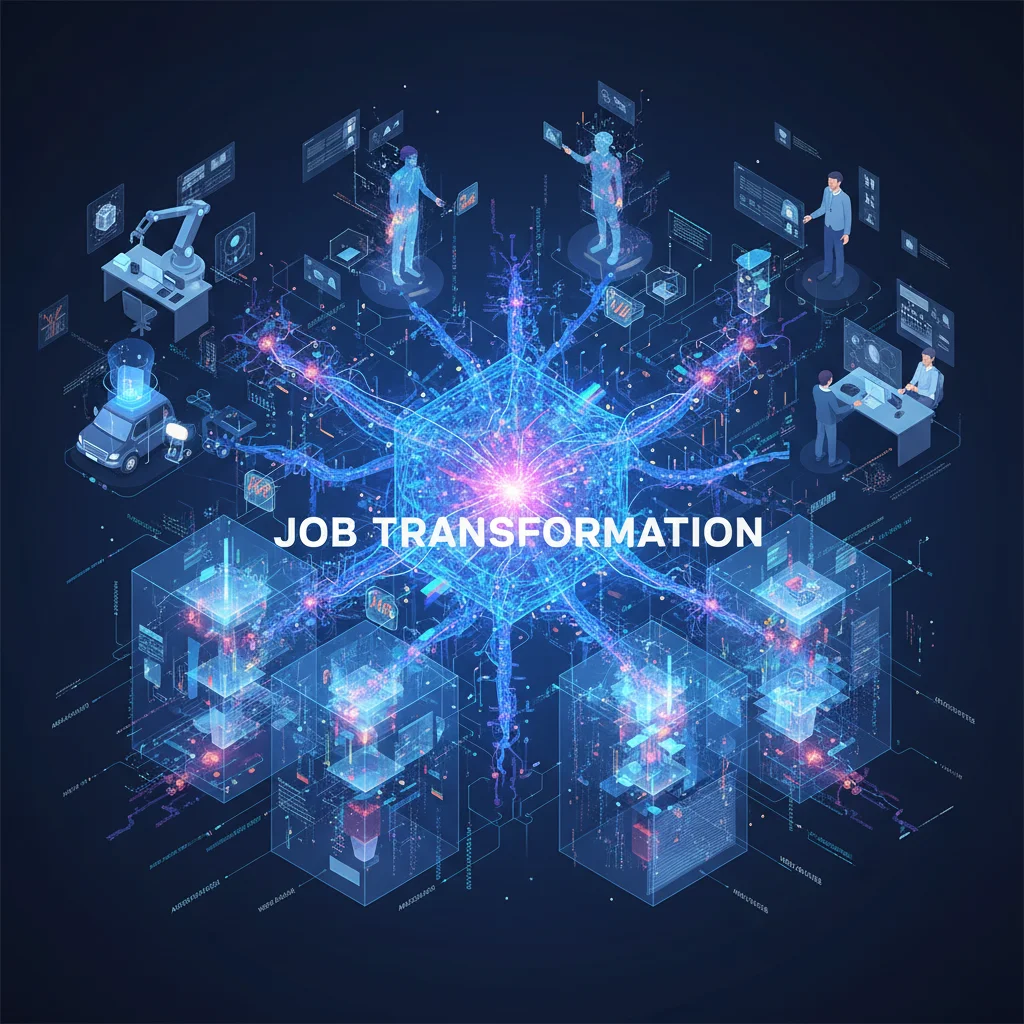
Despite the immense potential, the widespread adoption of AI also presents significant challenges. Ethical considerations surrounding data privacy, algorithmic bias, and accountability are paramount. Furthermore, the rapid obsolescence of certain skills will necessitate massive reskilling and upskilling efforts to ensure the workforce remains relevant. Governments, educational institutions, and businesses must collaborate to create robust frameworks for lifelong learning and provide accessible training programs. The opportunity, however, lies in creating higher-value, more strategic roles for humans, allowing AI to handle the repetitive and data-intensive tasks, thereby enhancing the overall quality of work and fostering new avenues for economic growth in the Future of Work US.
Automation and Robotics: Transforming Physical and Repetitive Tasks
Automation, often working hand-in-hand with AI, refers to the use of technology to perform tasks with minimal human intervention. Robotics, a key component of automation, involves designing, building, operating, and applying robots to carry out specific functions. While automation has been a feature of industrial production for decades, modern automation, empowered by AI and advanced sensors, is far more sophisticated, flexible, and capable of handling complex, non-linear tasks.
Automation’s Pervasive Reach
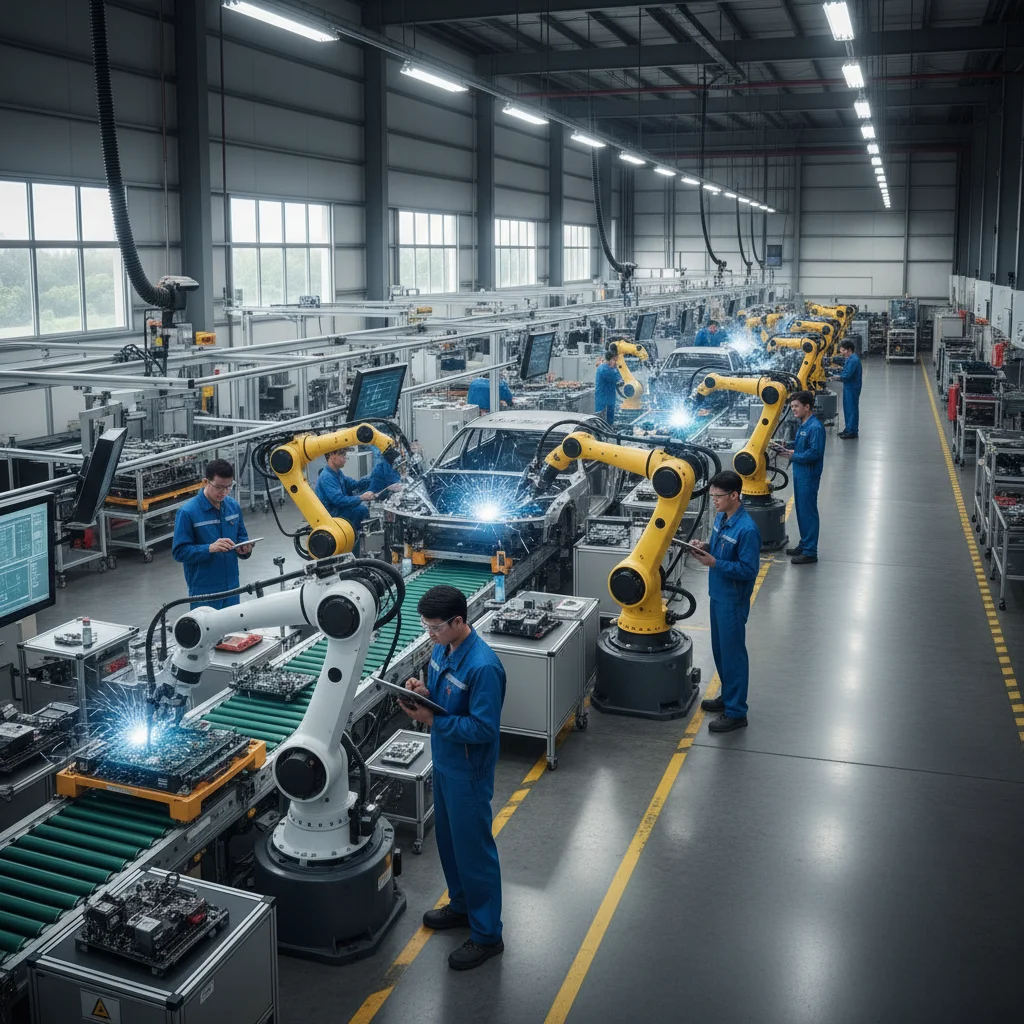
The impact of automation and robotics is most visibly felt in industries characterized by repetitive, manual, or hazardous tasks. Manufacturing, logistics, agriculture, and even certain aspects of retail are experiencing profound changes. In warehouses, autonomous robots sort, retrieve, and transport goods, dramatically increasing efficiency and reducing human error. In agriculture, robotic systems can plant, harvest, and monitor crops with precision, optimizing yields and minimizing waste. Service industries are also embracing automation, with self-service kiosks, robotic cleaners, and automated food preparation systems becoming increasingly common.
Redefining Human Roles in Automated Environments
As machines take over routine and physically demanding tasks, human roles are shifting towards supervision, maintenance, programming, and strategic oversight of automated systems. This requires a different set of skills: critical thinking, problem-solving, technical expertise in robotics and software, and interpersonal skills for managing teams and collaborating with technology. The jobs that remain or emerge in highly automated environments will often be those that leverage uniquely human attributes such as creativity, emotional intelligence, complex decision-making, and strategic planning – areas where machines still fall short.
The Social and Economic Implications
The widespread adoption of automation brings both social and economic implications for the Future of Work US. While it can lead to increased productivity, lower costs, and higher quality products, it also raises concerns about job displacement and widening income inequality. Addressing these concerns will require robust social safety nets, investment in retraining programs, and policies that encourage businesses to invest in their human capital alongside technological advancements. The goal should be to create a future where automation serves to elevate human potential rather than diminish it, fostering a more productive and equitable society.
The Internet of Things (IoT): Connecting the Physical and Digital Worlds
The Internet of Things (IoT) refers to the vast network of physical objects embedded with sensors, software, and other technologies for the purpose of connecting and exchanging data with other devices and systems over the internet. From smart homes and wearable devices to connected factories and smart cities, IoT is creating an interconnected ecosystem that generates enormous amounts of real-time data. This data, when analyzed, provides unparalleled insights that drive efficiency, enable predictive capabilities, and create entirely new service models.
IoT’s Impact on Operations and New Job Creation
In the context of the Future of Work US, IoT is transforming operations across almost every industry. In manufacturing, IoT sensors monitor machinery performance, predict maintenance needs, and optimize production flows, leading to ‘smart factories.’ In logistics, connected sensors track goods in transit, ensuring optimal temperature, location, and security. In healthcare, wearable devices monitor patient vitals remotely, enabling proactive care and reducing hospital visits. Smart buildings use IoT to manage energy consumption, security, and environmental controls, creating more efficient and comfortable workspaces.
The proliferation of IoT devices is creating demand for new specialized roles. These include IoT architects and developers who design and build these interconnected systems, data scientists who analyze the massive datasets generated by IoT, cybersecurity specialists who protect these vulnerable networks, and maintenance technicians skilled in servicing complex IoT infrastructure. Traditional roles will also be reshaped, as employees in various sectors will need to interact with and interpret data from IoT devices to perform their jobs effectively.
Enhancing Decision-Making and Productivity
By providing real-time data and insights, IoT empowers better, faster decision-making across all levels of an organization. For example, a facility manager can instantly see which areas of a building are underutilized or consuming excessive energy, allowing for immediate adjustments. A farmer can monitor soil moisture and nutrient levels in real-time, optimizing irrigation and fertilization. This data-driven approach enhances productivity and efficiency, but it also necessitates a workforce capable of leveraging these insights, moving away from intuition-based decisions towards evidence-based strategies. This shift is fundamental to the evolving Future of Work US.
Blockchain: The Foundation of Trust and Transparency
Blockchain is a decentralized, distributed ledger technology that records transactions across many computers so that the record cannot be altered retroactively without the alteration of all subsequent blocks and the consensus of the network. While best known as the underlying technology for cryptocurrencies like Bitcoin, its applications extend far beyond finance, promising to revolutionize supply chain management, intellectual property rights, digital identity, and more.
Blockchain’s Role in Business Processes
The core value proposition of blockchain lies in its ability to establish trust and transparency in transactions and data management without the need for a central authority. For the Future of Work US, this has profound implications. In supply chain management, blockchain can provide an immutable record of every step a product takes from origin to consumer, enhancing traceability, reducing fraud, and improving efficiency. In contract management, smart contracts (self-executing contracts with the terms of the agreement directly written into code) can automate legal processes, reducing the need for intermediaries and speeding up transactions.
Blockchain also has the potential to reshape how we think about digital identity and credentialing. Secure, verifiable digital identities could streamline hiring processes, simplify access to services, and protect personal data. For freelancers and gig workers, blockchain could facilitate transparent payment systems and verifiable work histories, fostering a more equitable and efficient gig economy.
New Skills and Industries Emerging from Blockchain
The growth of blockchain technology is fueling demand for specialized professionals, including blockchain developers, architects, and legal experts who understand the nuances of decentralized systems. Beyond these direct roles, many existing professions will need to adapt. Accountants will need to understand how to audit blockchain-based transactions. Supply chain managers will leverage blockchain for enhanced visibility. Even artists and content creators might use blockchain to manage intellectual property and royalties. The underlying principles of decentralized trust will permeate various sectors, requiring a new understanding of digital interactions and security.
The Interconnected Impact: How These Technologies Converge
It’s crucial to understand that AI, automation, IoT, and blockchain do not operate in isolation. Their true transformative power emerges from their convergence. For example, IoT devices generate the vast datasets that AI algorithms need to learn and make predictions. Automation systems are becoming ‘smarter’ by incorporating AI for better decision-making and adaptability. Blockchain can provide the secure, transparent ledger for data generated by IoT devices, ensuring its integrity and trustworthiness for AI analysis.
Consider a smart factory: IoT sensors collect real-time data on machine performance and product quality. AI analyzes this data to predict maintenance needs and optimize production schedules. Automated robotic systems execute these optimized plans. And blockchain could record every step of the manufacturing process, from raw material sourcing to final product delivery, ensuring transparency and accountability. This interconnectedness amplifies their individual impacts, accelerating the reshaping of the Future of Work US.
Preparing the Workforce for 2030: A Call to Action
The profound changes discussed are not distant future scenarios; they are already underway. For the U.S. workforce to thrive in this new era, several critical actions are required:
1. Emphasis on Lifelong Learning and Reskilling
The traditional model of front-loaded education followed by a static career is no longer viable. Individuals must embrace a mindset of continuous learning. Governments and employers need to invest heavily in accessible, flexible, and relevant reskilling and upskilling programs. These programs should focus not only on technical skills related to AI, data science, coding, and robotics but also on ‘human’ skills that machines cannot easily replicate: creativity, critical thinking, emotional intelligence, complex problem-solving, and collaboration. The ability to adapt and learn new skills will be the most valuable currency in the Future of Work US.
2. Reimagining Education Systems
Educational institutions, from K-12 to universities, must adapt their curricula to prepare students for a world shaped by these technologies. This means integrating computational thinking, data literacy, and ethical AI considerations into core subjects. Experiential learning, project-based work, and interdisciplinary studies will become increasingly important to foster the holistic skills required for the future workforce.
3. Fostering a Culture of Innovation and Adaptability
Businesses must cultivate organizational cultures that embrace change, encourage experimentation, and prioritize continuous improvement. This includes fostering psychological safety for employees to learn new skills and adapt to new roles, as well as investing in the tools and training necessary for digital transformation. Leading companies will view technology not as a cost center but as a strategic enabler for growth and competitive advantage in the Future of Work US.
4. Developing Robust Policy Frameworks
Policymakers have a crucial role in shaping an equitable transition. This includes addressing issues such as job displacement through social safety nets, exploring new models of taxation that account for automated labor, and developing ethical guidelines for AI development and deployment. Policies should aim to maximize the benefits of these technologies while minimizing their potential downsides, ensuring that the benefits are broadly shared across society.
5. Prioritizing Human-Centric Design
As technology becomes more pervasive, it’s vital to design systems and workplaces that prioritize human well-being and purpose. This means focusing on creating meaningful work, fostering collaboration between humans and machines, and ensuring that technology enhances rather than detracts from the human experience. The Future of Work US should be one where technology empowers individuals to achieve their full potential.
Conclusion: Navigating the New Frontier of Work
The transformation of 70% of U.S. jobs by 2030, driven by AI, automation, IoT, and blockchain, represents both an immense challenge and an unparalleled opportunity. While some traditional roles will diminish, a vast array of new, more complex, and often more rewarding jobs will emerge. The key to navigating this new frontier successfully lies in proactive preparation, continuous adaptation, and a collaborative effort across individuals, businesses, educational institutions, and government.
Embracing these technologies is not optional; it is essential for maintaining economic competitiveness and fostering societal progress. By understanding the profound implications of these four technological pillars and by investing strategically in human capital, the United States can not only weather this transformation but emerge stronger, more innovative, and more prosperous in the evolving Future of Work US.
The journey ahead will require courage, vision, and a commitment to lifelong learning. The future isn’t something that happens to us; it’s something we collectively create. Let us seize this moment to build a future of work that is dynamic, inclusive, and empowering for all.