Edge Computing Deployment in the U.S.: 7 Steps to Optimize Data Processing and Reduce Latency by 20% in 2026

Edge Computing Deployment in the U.S.: 7 Steps to Optimize Data Processing and Reduce Latency by 20% in 2026
In the rapidly evolving digital landscape, the demand for faster, more efficient data processing is no longer a luxury but a fundamental necessity. Businesses across the United States are grappling with an explosion of data generated by countless IoT devices, smart infrastructure, and interconnected systems. The traditional centralized cloud computing model, while powerful, often struggles to cope with the sheer volume and velocity of this data, leading to increased latency and bandwidth costs. This is where Edge Computing Deployment emerges as a game-changer.
Edge computing brings computation and data storage closer to the sources of data, enabling real-time processing and decision-making. For U.S. businesses aiming for a competitive edge, strategically implementing Edge Computing Deployment is paramount. Our goal for 2026 is ambitious yet achievable: to optimize data processing and reduce latency by a significant 20% through smart Edge Computing Deployment strategies.
This comprehensive guide will walk you through seven essential steps for successful Edge Computing Deployment in the U.S., ensuring your organization is well-equipped to leverage this transformative technology. By following these steps, you’ll not only enhance operational efficiency but also unlock new opportunities for innovation and growth.
What is Edge Computing and Why is it Critical for U.S. Businesses?
Before diving into the deployment steps, let’s establish a clear understanding of what Edge Computing Deployment entails. At its core, edge computing is a distributed computing paradigm that brings computation and data storage closer to the location where it is needed, rather than sending all data back to a central cloud or data center. Think of it as bringing intelligence to the ‘edge’ of your network.
The "Edge" Defined
The "edge" can refer to various locations: a factory floor, a retail store, a vehicle, an oil rig, a smart city sensor, or even a user’s mobile device. Anywhere data is generated and consumed, an edge location can exist. The primary benefit of processing data at the edge is the drastic reduction in latency. Instead of data traveling hundreds or thousands of miles to a central server and back, it’s processed locally, often in milliseconds.
Why U.S. Businesses Need Robust Edge Computing Deployment
The United States, with its vast geographical spread and diverse industries, presents unique challenges and opportunities for Edge Computing Deployment. Consider the following drivers:
- Explosion of IoT Devices: From smart home devices to industrial sensors, the number of connected devices is skyrocketing. Each device generates data that needs to be processed, analyzed, and acted upon. Centralizing all this data is becoming economically and technically unfeasible.
- Real-time Decision Making: Industries like autonomous vehicles, healthcare (remote monitoring), manufacturing (predictive maintenance), and finance require instantaneous data processing for critical decisions. A delay of even a few milliseconds can have significant consequences.
- Bandwidth Constraints and Costs: Transmitting massive amounts of raw data to the cloud is expensive and can strain network infrastructure, especially in remote or underserved areas. Edge computing allows for data filtering, aggregation, and pre-processing, sending only relevant insights to the cloud.
- Data Security and Privacy: Processing sensitive data locally at the edge can enhance security by reducing the attack surface and complying with data residency regulations, which are increasingly stringent in various U.S. states and sectors.
- Operational Efficiency: By enabling faster responses and local control, Edge Computing Deployment can significantly improve the efficiency of industrial operations, supply chains, and logistical networks.
The strategic implementation of Edge Computing Deployment is not just about technology; it’s about transforming business models, creating new services, and staying ahead in a hyper-connected world. Our target of a 20% latency reduction by 2026 is a direct response to these evolving business needs.
Step 1: Assess Your Current Infrastructure and Identify Edge Opportunities
The journey to successful Edge Computing Deployment begins with a thorough understanding of your existing IT infrastructure and identifying where edge solutions can deliver the most impact. This step is crucial for laying a solid foundation.
Inventory Your Assets
Start by cataloging all your data-generating assets. This includes IoT devices, sensors, cameras, industrial machinery, point-of-sale systems, and even employee devices. Understand where they are located, the type of data they generate, and their current connectivity methods. Map out your network topology, including existing cloud connections, local area networks (LANs), and wide area networks (WANs).
Analyze Data Flow and Latency Bottlenecks
Trace the journey of your critical data from its origin to its processing destination. Where are the bottlenecks? Are there applications that are suffering from high latency? For instance, in a manufacturing plant, real-time quality control systems might be sending data to a distant cloud, causing delays in identifying defects. In a retail environment, inventory management systems could be slow to update due to centralized processing.
Identify Use Cases for Edge Computing Deployment
Based on your assessment, pinpoint specific business problems that Edge Computing Deployment can solve. Focus on areas where:
- Real-time processing is critical (e.g., autonomous systems, fraud detection, patient monitoring).
- Bandwidth is limited or expensive (e.g., remote oil rigs, agricultural sensors).
- Data privacy or security is a major concern (e.g., sensitive customer data, proprietary industrial processes).
- Large volumes of data are generated that don’t all need to go to the cloud (e.g., video surveillance, sensor data).
For example, a logistics company might identify that tracking thousands of vehicles in real-time across the U.S. generates immense data. Processing this data at local distribution hubs (the edge) could provide immediate insights for route optimization and delivery adjustments, significantly reducing latency compared to sending all data to a central cloud.
By meticulously completing this assessment, you’ll gain clarity on the "why" and "where" of your Edge Computing Deployment strategy, making subsequent steps more targeted and effective.
Step 2: Define Your Edge Architecture and Technology Stack
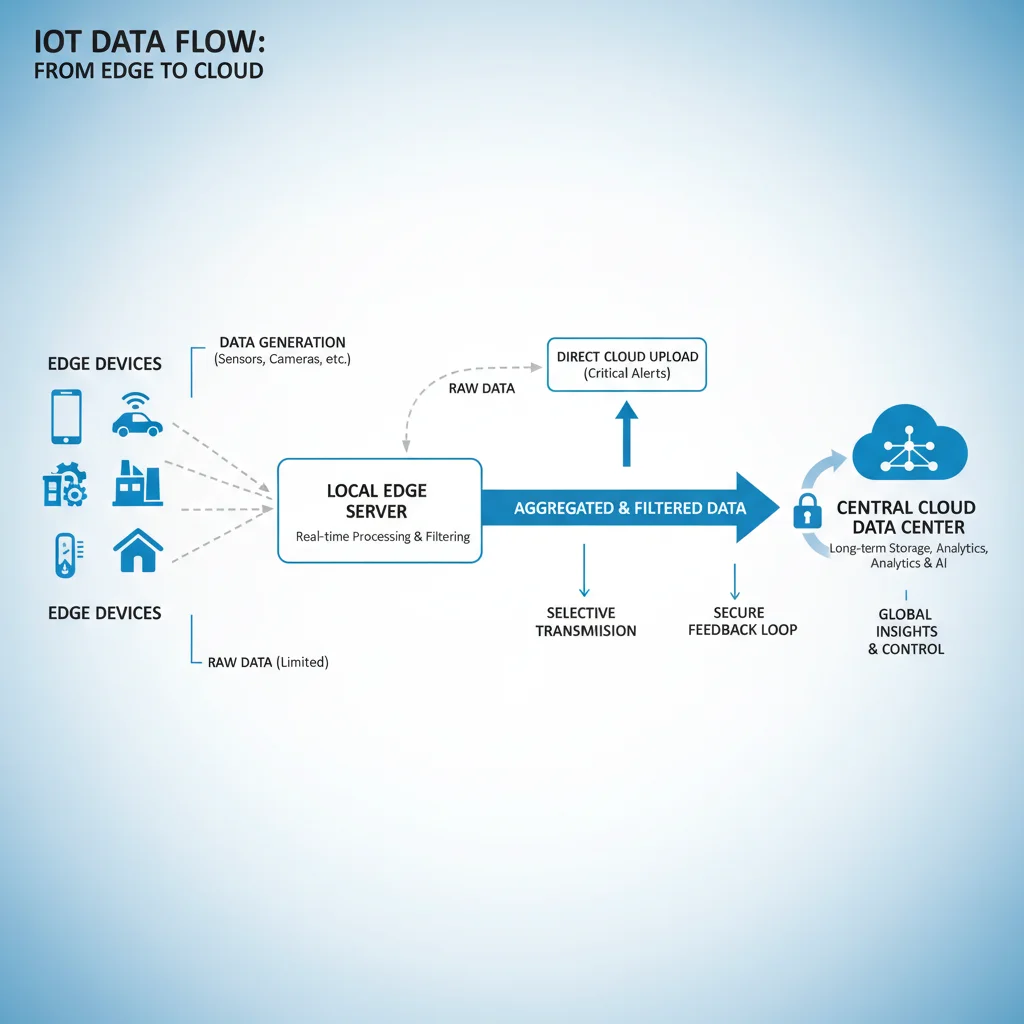
With a clear understanding of your needs, the next step in Edge Computing Deployment is to design the architecture and select the appropriate technologies. This isn’t a one-size-fits-all solution; your architecture will be unique to your specific use cases.
Centralized vs. Decentralized Edge
Consider the spectrum of edge architectures:
- Thin Edge: Minimal processing at the device level, primarily for data collection and basic filtering, with most complex analysis in a regional edge server or the cloud.
- Thick Edge: Significant processing power at the edge device or local server, capable of running complex AI/ML models and making autonomous decisions.
Most successful Edge Computing Deployment strategies involve a hybrid approach, leveraging both thin and thick edge capabilities, orchestrated with a central cloud platform.
Key Architectural Components for Edge Computing Deployment
- Edge Devices: These are the physical devices at the edge, from simple sensors to powerful industrial PCs.
- Edge Gateways: Devices that aggregate data from multiple edge devices, perform initial processing, and provide connectivity to the wider network or cloud.
- Edge Servers/Micro Data Centers: Localized computing resources that can run applications, store data, and perform advanced analytics closer to the source.
- Network Infrastructure: Reliable and secure connectivity, including 5G, Wi-Fi 6, fiber optics, and SD-WAN, is critical for efficient data transfer between edge and cloud.
- Cloud Integration: A robust connection to your central cloud platform for data aggregation, long-term storage, and global analytics.
Selecting Your Technology Stack
The technology choices for your Edge Computing Deployment will impact everything from scalability to security. Consider:
- Hardware: Industrial PCs, embedded systems, network appliances from vendors like Dell, HPE, Cisco, or NVIDIA.
- Operating Systems: Linux distributions are popular for their flexibility and open-source nature.
- Containerization: Technologies like Docker and Kubernetes are essential for deploying and managing applications consistently across diverse edge environments.
- Data Management: Edge databases (e.g., SQLite, MongoDB, InfluxDB) for local storage and processing, and synchronization tools for cloud integration.
- AI/ML Frameworks: TensorFlow Lite, OpenVINO, or custom AI models optimized for edge device resources.
- Security Solutions: Robust authentication, encryption, intrusion detection, and secure boot mechanisms.
The goal is to create a modular, scalable, and secure architecture that can evolve with your business needs. This step is about designing the blueprint for your Edge Computing Deployment.
Step 3: Implement Robust Security and Data Governance
Security and data governance are not afterthoughts; they are foundational pillars for any successful Edge Computing Deployment. The distributed nature of edge environments introduces new attack vectors and complexities that must be addressed proactively.
Multi-layered Security for Edge Computing Deployment
A "defense-in-depth" strategy is essential:
- Device Security: Secure boot, hardware-level encryption, tamper detection, and strong authentication for every edge device. Implement zero-trust principles where no device or user is inherently trusted.
- Network Security: Encrypted communication channels (VPNs, TLS), firewalls, intrusion detection/prevention systems (IDS/IPS) at the edge, and network segmentation to isolate critical systems.
- Application Security: Secure coding practices, vulnerability scanning, and regular patching of all edge applications.
- Data Security: Encryption of data at rest and in transit. Implement data anonymization or pseudonymization techniques where appropriate, especially for sensitive personal data.
- Physical Security: For edge servers and gateways, ensure physical access controls, environmental monitoring, and surveillance.
Data Governance and Compliance
With data being processed in various locations, maintaining compliance with regulations like HIPAA, GDPR (even for U.S. companies dealing with European data), CCPA, and industry-specific mandates is critical. Your Edge Computing Deployment strategy must include:
- Data Classification: Categorize data based on sensitivity and regulatory requirements.
- Access Control: Implement strict role-based access control (RBAC) to ensure only authorized personnel and systems can access specific data.
- Data Residency: Understand where data is stored and processed to meet local legal requirements. Edge computing can help keep certain data within geographical boundaries.
- Audit Trails: Maintain comprehensive logs of all data access and processing activities for compliance and forensic analysis.
- Incident Response Plan: Develop a clear plan for responding to security breaches or data loss incidents at the edge.
Failing to prioritize security and governance can lead to devastating consequences, including data breaches, regulatory fines, and reputational damage. Integrate these considerations into every phase of your Edge Computing Deployment.
Step 4: Pilot Program and Phased Rollout
Attempting a full-scale Edge Computing Deployment across your entire organization simultaneously is a recipe for disaster. A controlled pilot program followed by a phased rollout is the most prudent approach.
Select a Pilot Project
Choose a specific, manageable use case with clear objectives and measurable outcomes. Ideally, this should be a project where the benefits of Edge Computing Deployment (e.g., latency reduction) are evident and quantifiable. For example, deploying edge analytics in one specific manufacturing line or optimizing inventory management in a single retail store.
Define Success Metrics
Before starting the pilot, clearly define what success looks like. This could include:
- Achieving a specific percentage reduction in latency for a critical application.
- Reducing bandwidth consumption by X%.
- Improving operational uptime by Y%.
- Demonstrating a positive ROI within a certain timeframe.
These metrics will allow you to objectively evaluate the pilot’s effectiveness and justify further investment in Edge Computing Deployment.
Execute, Monitor, and Iterate
Deploy the edge solution in your pilot environment. Closely monitor its performance, collect data on the defined metrics, and gather feedback from users and stakeholders. Be prepared to iterate and make adjustments. The pilot phase is about learning and refining your approach before broader deployment.
Phased Expansion
Once the pilot is successful, gradually expand your Edge Computing Deployment. This could mean expanding to more locations, integrating more devices, or supporting additional applications. Each phase should build upon the lessons learned from the previous ones, ensuring a smooth and successful transition.
A phased approach minimizes risk, allows for continuous improvement, and builds internal confidence in the value of Edge Computing Deployment.
Step 5: Optimize Network Connectivity and Bandwidth Management
The effectiveness of your Edge Computing Deployment hinges on robust and optimized network connectivity. Even with local processing, data still needs to move efficiently between the edge, other edge nodes, and the central cloud.
Assess Current Network Capabilities
Understand the bandwidth, latency, and reliability of your existing network infrastructure at each edge location. Are there areas with poor connectivity? Do you have sufficient bandwidth to handle the data flows between the edge and the cloud, even after local processing?
Leverage Advanced Connectivity Options
Explore and implement technologies that enhance network performance for Edge Computing Deployment:
- 5G: For mobile edge computing and high-bandwidth, low-latency applications in urban and suburban areas, 5G offers significant advantages.
- Wi-Fi 6/7: For local area network connectivity at the edge, offering higher throughput and lower latency for dense device environments.
- SD-WAN (Software-Defined Wide Area Network): SD-WAN can intelligently route traffic, prioritize critical applications, and enhance resilience across distributed edge locations, ensuring optimal performance for your Edge Computing Deployment.
- Fiber Optics: Where available, fiber provides the fastest and most reliable backbone for connecting edge sites to regional data centers or the cloud.
- Satellite Internet: For extremely remote edge locations where terrestrial networks are unavailable.
Implement Intelligent Bandwidth Management
Edge Computing Deployment significantly reduces the data sent to the cloud, but effective management is still crucial:
- Data Filtering and Aggregation: Process data at the edge to send only relevant insights, anomalies, or aggregated summaries to the cloud.
- Data Compression: Compress data before transmission to minimize bandwidth usage.
- Quality of Service (QoS): Prioritize critical edge-to-cloud traffic to ensure essential applications receive the necessary bandwidth.
- Load Balancing: Distribute network traffic efficiently across available links to prevent bottlenecks.
By optimizing your network, you ensure that the benefits of local processing at the edge are not negated by poor connectivity, thus maximizing the overall impact of your Edge Computing Deployment.
Step 6: Develop a Robust Management and Orchestration Strategy
Managing a distributed network of edge devices, applications, and infrastructure can be incredibly complex without a centralized management and orchestration strategy. This is a critical step for maintaining the efficiency and scalability of your Edge Computing Deployment.
Centralized Management Platform
Invest in a platform that allows you to monitor, manage, and update your edge infrastructure from a single pane of glass. This platform should provide capabilities for:
- Device Onboarding and Provisioning: Easily deploy new edge devices and configure them remotely.
- Application Deployment and Updates: Push software updates, patches, and new applications to edge devices and servers, often using container orchestration tools like Kubernetes.
- Remote Monitoring and Diagnostics: Gain real-time visibility into the health, performance, and security of your edge infrastructure. This includes CPU usage, memory, storage, network connectivity, and application logs.
- Configuration Management: Ensure consistency across all edge deployments by managing configurations centrally.
- Alerting and Notifications: Set up automated alerts for anomalies, failures, or security incidents at the edge.
Automation and Orchestration
Automation is key to managing a large-scale Edge Computing Deployment. Leverage tools and practices for:
- Infrastructure as Code (IaC): Define your edge infrastructure and application deployments using code, enabling version control, repeatability, and faster deployments.
- CI/CD Pipelines: Implement continuous integration and continuous delivery pipelines for edge applications, ensuring rapid and reliable software updates.
- Automated Remediation: For common issues, configure automated scripts or processes to resolve problems without human intervention.
Integration with Cloud Management
Your edge management platform should seamlessly integrate with your existing cloud management tools, creating a unified operational view. This allows for consistent policies, security controls, and data flows across your entire distributed environment.
Without a strong management and orchestration strategy, your Edge Computing Deployment can quickly become unwieldy, leading to increased operational costs and reduced reliability. This step ensures your edge infrastructure is not only deployed but also maintained and scaled effectively.

Step 7: Continuous Monitoring, Optimization, and Scalability Planning
The final step in successful Edge Computing Deployment is not truly a "final" step, but rather an ongoing process. Edge environments are dynamic and require continuous attention to ensure they remain optimized and scalable.
Continuous Performance Monitoring
Regularly monitor key performance indicators (KPIs) related to your Edge Computing Deployment, including:
- Latency: Track end-to-end latency for critical applications and compare it against your 20% reduction target.
- Throughput: Monitor data processing rates at the edge and data transfer rates to the cloud.
- Resource Utilization: Keep an eye on CPU, memory, and storage usage on your edge devices and servers to prevent overloads or underutilization.
- Application Performance: Monitor the health and responsiveness of applications running at the edge.
- Network Health: Track connectivity, packet loss, and bandwidth usage.
Use dashboards and alerting systems to gain immediate insights into any deviations or issues.
Proactive Optimization
Based on your monitoring data, proactively identify areas for optimization. This could involve:
- Software Updates: Apply patches and updates to edge operating systems and applications as they become available.
- Configuration Tuning: Adjust application parameters or network settings to improve performance.
- Resource Allocation: Reallocate compute or storage resources at the edge based on changing demand.
- Algorithm Refinement: Optimize AI/ML models running at the edge for greater efficiency or accuracy.
- Network Upgrades: Consider upgrading network infrastructure in specific areas if bottlenecks persist.
Scalability Planning for Future Growth
As your business grows and new use cases emerge, your Edge Computing Deployment must be able to scale. Plan for:
- Horizontal Scaling: Adding more edge devices or servers to handle increased data volumes or new geographical areas.
- Vertical Scaling: Upgrading existing edge hardware with more powerful components.
- New Technologies: Keeping abreast of emerging edge computing technologies, such as new types of edge AI accelerators or improved wireless communication standards.
- Budgeting: Allocate resources for future expansion and maintenance of your edge infrastructure.
The goal is to create a dynamic and resilient Edge Computing Deployment that can continuously adapt to evolving business demands and technological advancements, ensuring you meet and exceed your latency reduction goals by 2026 and beyond.
The Future of Edge Computing Deployment in the U.S.
The trajectory for Edge Computing Deployment in the U.S. is one of rapid expansion and increasing sophistication. As industries from manufacturing and healthcare to retail and smart cities continue their digital transformation journeys, the necessity for localized, real-time data processing will only grow.
Emerging Trends and Innovations
- AI at the Edge: The deployment of more powerful AI and Machine Learning models directly on edge devices will enable increasingly autonomous decision-making without constant cloud intervention. This will be crucial for applications like predictive maintenance, real-time video analytics, and autonomous robotics.
- 5G and Edge Synergy: The widespread rollout of 5G networks across the U.S. will supercharge Edge Computing Deployment by providing the ultra-low latency and high bandwidth connectivity needed to link numerous edge devices and micro-data centers. This synergy will unlock new possibilities for mobile edge computing and industrial IoT.
- Edge-as-a-Service (EaaS): Cloud providers and telecommunication companies are increasingly offering EaaS solutions, simplifying the deployment and management of edge infrastructure for businesses. This will lower the barrier to entry for many organizations looking to adopt Edge Computing Deployment.
- Enhanced Security Frameworks: As the attack surface expands with more edge devices, expect more robust and standardized security frameworks specifically designed for distributed edge environments. Zero-trust architectures will become even more prevalent.
- Sustainable Edge: Focus on energy-efficient edge devices and sustainable data center practices will grow, aligning with broader environmental goals.
Achieving the 20% Latency Reduction Target by 2026
The 20% latency reduction target by 2026 is not just an arbitrary number; it represents a significant leap in operational efficiency and responsiveness for U.S. businesses. By diligently following the seven steps outlined in this guide, organizations can expect to achieve and even surpass this goal. This reduction will translate into:
- Faster Decision-Making: Real-time insights for critical business processes.
- Improved Customer Experience: More responsive applications and personalized services.
- Enhanced Safety: Quicker reactions in autonomous systems and industrial environments.
- Cost Savings: Reduced data transmission costs and optimized resource utilization.
Edge Computing Deployment is not merely a technological upgrade; it’s a strategic imperative for any U.S. business looking to thrive in the data-driven economy of tomorrow. By embracing this paradigm shift and meticulously planning its implementation, organizations can unlock unprecedented levels of efficiency, innovation, and competitive advantage.
Conclusion: Paving the Way for a Smarter, Faster U.S. Economy with Edge Computing Deployment
The journey towards optimized data processing and reduced latency in the U.S. is inextricably linked with the strategic adoption of Edge Computing Deployment. As we’ve explored through these seven comprehensive steps, successful implementation requires a holistic approach that spans from initial assessment and architectural design to robust security, phased rollout, network optimization, and continuous management.
The promise of Edge Computing Deployment is profound: it empowers businesses to harness the full potential of their data at the very point of its creation, leading to instantaneous insights, autonomous operations, and a significant competitive edge. By focusing on critical areas such as industrial IoT, smart infrastructure, and real-time analytics, U.S. enterprises can dramatically improve their operational efficiency and deliver superior customer experiences.
Our ambitious, yet entirely achievable, goal of a 20% latency reduction by 2026 is a testament to the transformative power of edge computing. This isn’t just about tweaking existing systems; it’s about fundamentally rethinking how data is processed and utilized across the vast and diverse U.S. landscape. Organizations that commit to a well-planned and executed Edge Computing Deployment strategy will be the ones that lead their respective industries into a smarter, faster, and more resilient future.
The time to act is now. By embracing these principles, U.S. businesses can not only navigate the complexities of the digital age but also innovate and thrive, securing their position at the forefront of global technological advancement. The future of data processing is at the edge, and the U.S. is poised to lead the way.