From Zero to Scale: A 12-Month Growth Roadmap for New Ventures Targeting 100K Users

In the exhilarating world of startups, the journey from conception to market dominance is often fraught with challenges, but also brimming with unparalleled opportunities. For new ventures, the ambition to reach a significant user base – say, 100,000 users – within a challenging 12-month timeframe is not just a dream; it’s a critical benchmark for proving viability, attracting investment, and establishing a formidable presence. This comprehensive 12-month startup growth roadmap is meticulously designed to guide founders and teams through the intricate stages of user acquisition, engagement, and retention, providing actionable strategies to hit that coveted 100K user mark.
Achieving rapid user growth requires more than just a brilliant idea; it demands a strategic, agile, and data-driven approach. It’s about understanding your audience, iterating on your product, leveraging the right marketing channels, and building a community that champions your vision. This roadmap breaks down the complex process into manageable monthly objectives, ensuring that every effort contributes directly to your overarching goal of exponential growth. We will delve into critical phases, from validating your initial concept and achieving product-market fit to scaling your marketing efforts and fostering a loyal user base. Prepare to transform your new venture from an ambitious idea into a thriving ecosystem of engaged users.
Month 1-2: Foundational Sprint – Product-Market Fit and MVP Launch
The initial two months are pivotal. This is where you lay the groundwork, validate your assumptions, and prepare for your grand entry into the market. Without a solid foundation, subsequent growth efforts will be unsustainable. The focus here is squarely on achieving product-market fit (PMF) and launching a Minimum Viable Product (MVP) that truly resonates with your target audience.
Defining Your Niche and Target Audience
Before you even write a line of code or design a single interface, you must intimately understand who you are serving. Conduct extensive market research. Who are your ideal users? What are their pain points, desires, and existing solutions? Create detailed user personas that go beyond demographics, delving into psychographics, behaviors, and motivations. This deep understanding forms the bedrock of your startup growth roadmap.
Problem Validation and Solution Design
Is the problem you’re solving significant enough? Are people willing to pay for a solution? Engage in problem interviews with potential users. Don’t pitch your solution yet; just listen. Once the problem is validated, begin designing a solution that directly addresses these pain points. Focus on core functionalities that deliver maximum value. This iterative process of listening and refining is crucial for PMF.
Building the Minimum Viable Product (MVP)
Your MVP should be the simplest version of your product that delivers core value and solves a critical problem for your target users. It’s not about being feature-rich; it’s about being feature-right. Prioritize ruthlessly. The goal is to get something functional into the hands of early adopters as quickly as possible to gather real-world feedback. This initial product will be the engine of your startup growth roadmap.
Early Adopter Recruitment and Feedback Loop
Identify and recruit a small group of early adopters who are eager to try your MVP. These users are your first champions and your most valuable critics. Establish clear channels for feedback – surveys, interviews, in-app feedback tools. Actively listen, analyze their usage patterns, and prioritize improvements based on their input. This feedback loop is essential for refining your product and moving closer to PMF.
Month 3-4: Ignition Phase – Initial Traction and PMF Confirmation
With your MVP launched, months 3 and 4 are dedicated to gaining initial traction, proving your value proposition, and confirming that you’ve achieved product-market fit. This phase is about methodical user acquisition and deep engagement analysis.
Refining Product-Market Fit Metrics
Product-market fit isn’t a switch you flip; it’s a state you achieve, often measured by key metrics. Look for signs of strong retention, high engagement, and users expressing that they would be ‘very disappointed’ if your product ceased to exist (the Sean Ellis test). Track activation rates, daily/weekly active users (DAU/WAU), and churn rates. These metrics will tell you if your startup growth roadmap is on the right track.
Content Marketing for Awareness
Start building your brand’s voice and authority through content marketing. Create valuable blog posts, guides, or videos that address the pain points of your target audience. Focus on educational content that subtly introduces your solution. This helps with organic discovery and positions you as a thought leader, an important aspect of any robust startup growth roadmap.
Leveraging Social Media and Community Building
Identify the social media platforms where your target audience spends their time. Engage authentically, share valuable content, and foster a sense of community around your product. Respond to comments, answer questions, and encourage user-generated content. Early community members can become powerful advocates.
Pilot Programs and Strategic Partnerships
Consider running small pilot programs with influential users or complementary businesses. These partnerships can provide valuable case studies, testimonials, and access to new audiences. A well-chosen partner can significantly accelerate your initial user acquisition efforts and strengthen your startup growth roadmap.
Month 5-6: Acceleration Phase – Scaling Acquisition Channels
Having established initial PMF and gained some traction, months 5 and 6 are about pouring fuel on the fire. This is where you start to systematically scale your user acquisition efforts, moving beyond early adopters to a broader audience.
Optimizing Onboarding and Activation
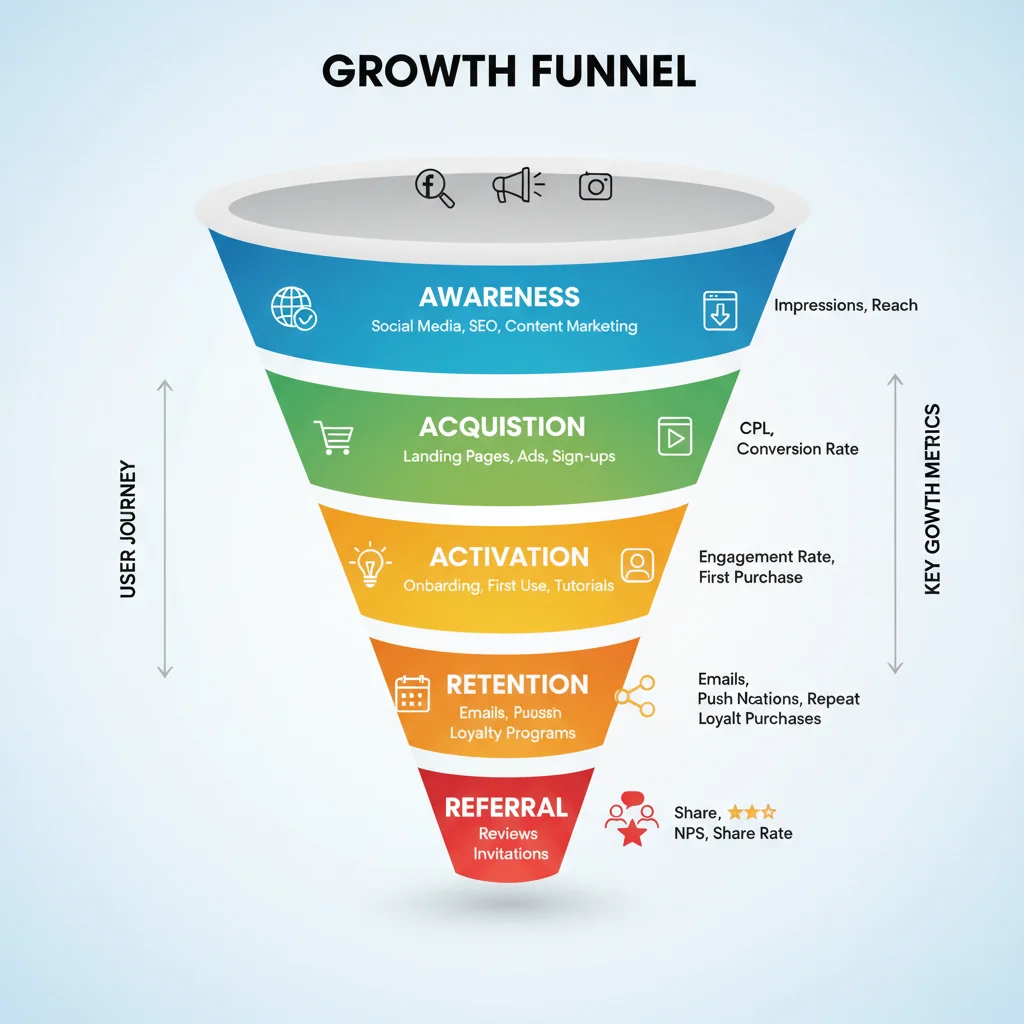
A smooth onboarding experience is crucial for retention. Analyze your user journey from sign-up to first value. Identify drop-off points and optimize them. Use in-app tutorials, clear instructions, and personalized welcome messages to guide new users towards activation. A frictionless experience is a cornerstone of a successful startup growth roadmap.
Paid Advertising Experiments
Begin experimenting with paid advertising channels such as Google Ads, social media ads (Facebook, Instagram, LinkedIn, TikTok, depending on your audience), and display networks. Start with small budgets and A/B test everything – ad copy, visuals, landing pages, and targeting parameters. Focus on channels that deliver the lowest Customer Acquisition Cost (CAC) and highest Return on Ad Spend (ROAS).
SEO and Organic Growth
Double down on your SEO efforts. Conduct thorough keyword research, optimize your website content, and build high-quality backlinks. Organic search is a sustainable and cost-effective acquisition channel in the long run. Ensure your content strategy is aligned with search intent and continuously monitor your rankings. This long-term strategy is vital for a robust startup growth roadmap.
Referral Programs Implementation
If your product naturally lends itself to referrals, implement a referral program. Offer incentives to existing users for bringing in new ones. Word-of-mouth marketing is incredibly powerful, especially in the early stages, and a well-designed referral program can supercharge your user acquisition. Think about what motivates your users to share.
Month 7-8: Optimization and Expansion – Data-Driven Refinement
By months 7 and 8, you should have a growing user base and clearer data on what works and what doesn’t. This phase is about optimizing your existing channels and exploring new avenues for growth.
Deep Dive into User Analytics
Go beyond surface-level metrics. Analyze user behavior in detail. Which features are most used? Where do users spend the most time? What are the common drop-off points within your product? Use tools like heatmaps, session recordings, and custom event tracking to gain granular insights. This data will inform product improvements and marketing refinements, crucial for your startup growth roadmap.
A/B Testing Across the Board
Implement A/B testing not just for ads, but for your website, landing pages, email campaigns, and even in-app features. Small, iterative improvements based on data can lead to significant cumulative gains in conversion rates and user engagement. Continuously test hypotheses about what drives user behavior.
Exploring New Acquisition Channels
With established channels performing, it’s time to explore new ones. This could include influencer marketing, PR outreach, podcast sponsorships, or niche forums and communities. Diversifying your acquisition channels reduces reliance on any single source and provides more opportunities for your startup growth roadmap to expand.
Retention Strategies Enhancement
Acquiring users is only half the battle; retaining them is key to sustainable growth. Implement personalized email sequences, push notifications, and in-app messages to re-engage dormant users and reward active ones. Introduce new features or content regularly to keep the product fresh and valuable. Consider loyalty programs or exclusive benefits for long-term users.
Month 9-10: Hyper-Growth and Scalability – Preparing for 100K
As you approach the 100,000-user milestone, months 9 and 10 are about accelerating growth while ensuring your infrastructure and processes can handle the increased load. Scalability becomes a paramount concern.
Infrastructure and Team Scaling
Anticipate the technical demands of a larger user base. Can your servers handle the traffic? Is your database optimized? Start planning for infrastructure upgrades and consider hiring key personnel to support growth – engineers, customer support, marketing specialists. A strong, scalable foundation is critical for any ambitious startup growth roadmap.
Advanced Marketing Automation
Automate as many marketing and communication processes as possible. Use CRM tools, marketing automation platforms, and AI-driven personalization engines to deliver highly relevant messages at scale. This frees up your team to focus on strategic initiatives rather than manual tasks.
Performance Marketing Optimization
Refine your paid advertising campaigns for maximum efficiency. Optimize bids, targeting, and creative assets based on cumulative data. Explore lookalike audiences and retargeting campaigns to maximize conversion rates. Your goal is to get the most users for your budget, a core tenet of effective startup growth roadmap execution.
User Generated Content (UGC) and Advocacy
Encourage and amplify user-generated content. Testimonials, reviews, social media posts, and case studies from satisfied users are incredibly persuasive. Create opportunities for users to share their positive experiences and become brand advocates. This organic marketing can be incredibly powerful and cost-effective.

Month 11-12: Sustaining Momentum and Future-Proofing
The final two months are about hitting your 100K target, consolidating your gains, and planning for continued, sustainable growth beyond the initial milestone. This is not the end, but a new beginning.
Celebrating the 100K Milestone
Acknowledge and celebrate reaching 100,000 users! This is a significant achievement that boosts team morale, attracts positive media attention, and reinforces your brand’s credibility. Share your success with your community and stakeholders. This milestone is a testament to your effective startup growth roadmap.
Ongoing Product Development and Innovation
Continue to iterate and innovate based on user feedback and market trends. Don’t rest on your laurels. What new features can you introduce? How can you further enhance the user experience? Staying ahead of the curve is crucial for long-term retention and competitive advantage.
Diversifying Revenue Streams (If Applicable)
If your business model allows, start exploring additional revenue streams. This could include premium features, tiered subscriptions, partnerships, or complementary services. Diversification provides stability and new avenues for growth, reinforcing the sustainability of your startup growth roadmap.
Strategic Planning for the Next Growth Phase
With 100,000 users under your belt, it’s time to set new, even more ambitious goals. What does the next 12 months look like? How will you scale to 500K or 1 million users? Develop a strategic plan that outlines your long-term vision, market expansion opportunities, and potential funding rounds. This forward-looking approach ensures continuous momentum.
Key Takeaways for Your Startup Growth Roadmap
The journey from zero to 100,000 users in 12 months is an intense but incredibly rewarding endeavor. It demands relentless focus, adaptability, and a deep understanding of your users. Here are some overarching principles to keep in mind throughout this startup growth roadmap:
- Data-Driven Decisions: Every decision, from product features to marketing spend, should be informed by data. Track everything, analyze constantly, and be prepared to pivot based on insights.
- User-Centricity: Always put your users first. Their needs, feedback, and satisfaction should be at the heart of everything you do. A product built for users will naturally attract and retain them.
- Agility and Iteration: The startup landscape is constantly evolving. Be prepared to adapt your strategies, iterate on your product, and experiment with new approaches. What works today might not work tomorrow.
- Strong Team: Surround yourself with passionate, skilled individuals who believe in your vision. A cohesive and motivated team is your greatest asset in achieving aggressive growth targets.
- Financial Prudence: While growth is paramount, manage your resources wisely. Optimize your CAC, understand your Lifetime Value (LTV), and ensure your spending is efficient and effective.
- Focus on Retention: It’s often cheaper to retain an existing user than to acquire a new one. Prioritize strategies that keep users engaged and coming back. High retention fuels sustainable growth.
- Build a Brand: Beyond just a product, cultivate a strong brand identity and narrative. This helps in attracting users, talent, and investors, giving your startup growth roadmap a unique identity.
Conclusion: The Path to 100K Users is Yours to Create
Reaching 100,000 users within a year is an ambitious, yet entirely achievable goal for new ventures with a compelling product and a well-executed startup growth roadmap. This 12-month guide provides a structured framework, but remember that every startup’s journey is unique. Be prepared to customize, experiment, and learn from every success and setback. The key is consistent effort, strategic thinking, and an unwavering commitment to delivering value to your users. Embark on this journey with confidence, leveraging the insights and strategies outlined here, and watch your new venture flourish into a significant player in its market. The next 12 months will define your trajectory – make them count.