Achieve 10% Annual Growth: Lean Tactics for Small Businesses in 2026

The landscape for small businesses is perpetually evolving, presenting both formidable challenges and unparalleled opportunities. As we cast our gaze towards 2026, the imperative for sustainable and significant growth becomes clearer than ever. Achieving a consistent 10% annual growth might seem ambitious for many small enterprises, but with a strategic and disciplined approach rooted in lean tactics, it is not only attainable but also a pathway to long-term resilience and prosperity. This comprehensive guide will delve into actionable strategies, offering a roadmap for small businesses to navigate the complexities of the modern market and secure robust expansion.
In an era defined by rapid technological advancements, shifting consumer behaviors, and economic uncertainties, traditional growth models often fall short. Small businesses, with their inherent agility and adaptability, are uniquely positioned to leverage lean principles – focusing on maximizing customer value while minimizing waste – to fuel their expansion. This isn’t merely about cutting costs; it’s about optimizing every facet of your operation, from product development and marketing to customer service and internal processes, to deliver superior value and foster sustained small business growth.
Understanding the 10% Growth Imperative for Small Businesses
Why 10%? This figure represents a healthy, sustainable growth rate that allows small businesses to reinvest in their operations, attract top talent, innovate, and withstand market fluctuations without overextending their resources. It’s a benchmark that signals momentum and viability, making your business more attractive to potential investors, partners, and employees. For many small businesses, achieving this level of growth requires a fundamental shift in mindset – moving from reactive problem-solving to proactive strategic planning and continuous improvement.
The journey to 10% annual growth is not a sprint but a marathon, demanding consistent effort, smart decisions, and a deep understanding of your market and internal capabilities. It necessitates a clear vision, measurable goals, and the disciplined execution of strategies that drive efficiency, innovation, and customer loyalty. By embracing lean thinking, small businesses can meticulously identify areas of waste, streamline processes, and allocate resources more effectively, laying a solid foundation for exponential growth.
The Core Principles of Lean for Small Business Growth
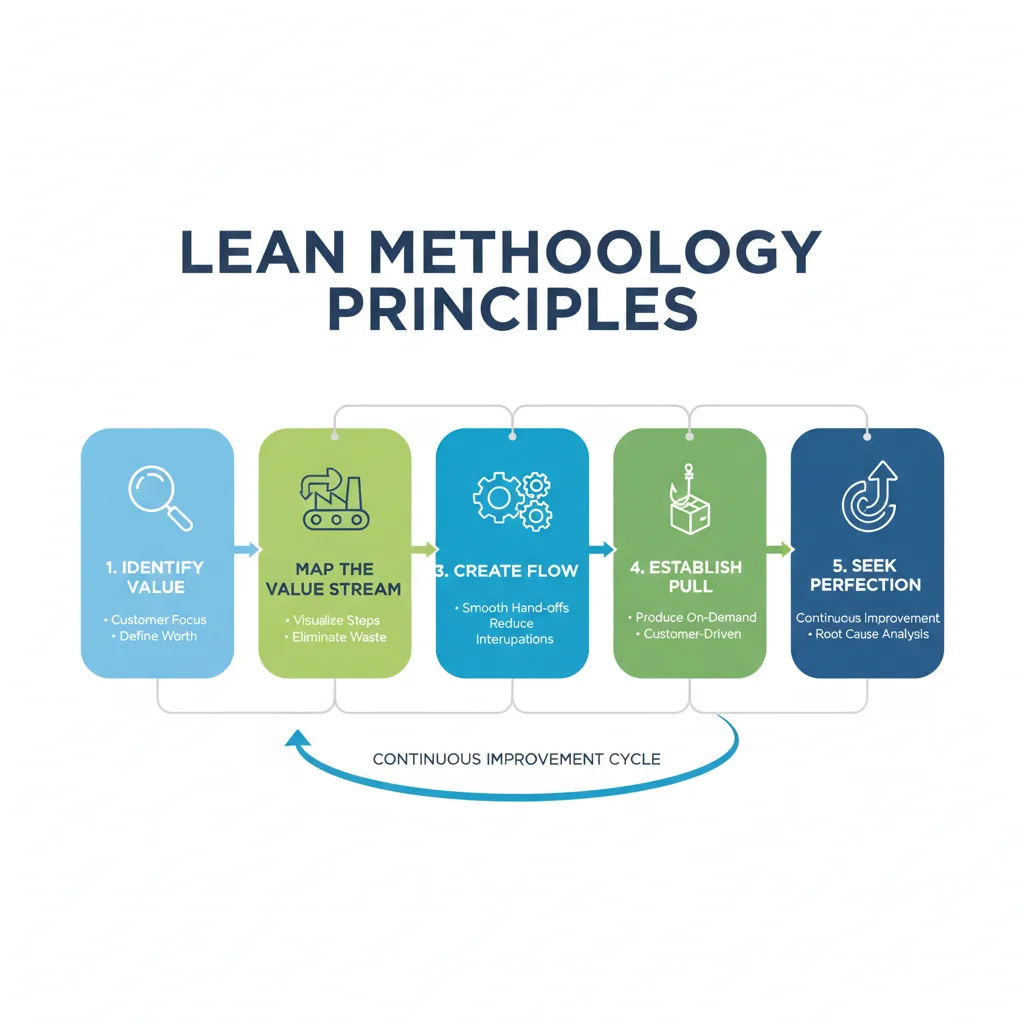
Lean methodology, pioneered by Toyota, is a philosophy centered on maximizing customer value while minimizing waste. For small businesses, this translates into a powerful framework for achieving consistent small business growth. The five core principles of lean are:
- Identify Value: What does your customer truly value? This is the starting point. Everything else is waste.
- Map the Value Stream: Understand all the steps involved in delivering your product or service, from raw materials to the customer.
- Create Flow: Ensure the continuous movement of products, services, and information through the value stream without interruptions.
- Establish Pull: Produce only what the customer needs, when they need it, avoiding overproduction.
- Seek Perfection: Continuously strive to eliminate waste and improve processes.
Applying these principles systematically can transform a small business, making it more agile, responsive, and ultimately, more profitable. It’s about building a culture where efficiency and customer satisfaction are paramount, directly contributing to robust small business growth.
Strategic Pillars for Achieving 10% Annual Growth by 2026
To hit that 10% annual growth target, small businesses need to focus on several interconnected strategic pillars. These pillars, when combined with lean tactics, create a powerful synergy that propels businesses forward.
Pillar 1: Customer-Centric Innovation and Product Development
At the heart of sustainable small business growth lies an unwavering focus on the customer. Innovation that doesn’t serve a customer need is often wasted effort. Lean product development emphasizes rapid prototyping, continuous feedback loops, and iterative improvements. Instead of spending months or years developing a perfect product in isolation, small businesses should adopt a ‘minimum viable product’ (MVP) approach.
- Listen Actively: Utilize surveys, social media monitoring, direct customer feedback, and analytics to understand evolving customer needs and pain points.
- Iterative Development: Launch MVPs quickly, gather feedback, and iterate. This minimizes development waste and ensures that resources are invested in features customers truly want.
- Personalization and Customization: Small businesses can often offer a level of personalization that larger corporations struggle with. Leverage this advantage to create unique value propositions.
- Solve Real Problems: Focus your innovation efforts on solving genuine problems for your target audience. This creates sticky products and services that command loyalty and drive repeat business.
By constantly innovating with the customer in mind, small businesses can create a compelling value proposition that naturally attracts new customers and retains existing ones, a critical component of achieving consistent small business growth.
Pillar 2: Operational Efficiency Through Process Optimization
Waste is the enemy of growth. Operational inefficiencies drain resources, time, and ultimately, profitability. Lean tactics provide a robust framework for identifying and eliminating waste across all business functions. This pillar is about doing more with less, without compromising quality or customer experience.
- Value Stream Mapping: Visually map out your processes to identify bottlenecks, redundant steps, and areas where waste (e.g., overproduction, waiting, unnecessary motion, defects) occurs.
- Automation of Repetitive Tasks: Invest in affordable software and tools to automate administrative, marketing, and operational tasks. This frees up valuable human capital to focus on strategic initiatives.
- Standard Operating Procedures (SOPs): Document and standardize key processes to ensure consistency, reduce errors, and facilitate easier training for new employees.
- Supplier Relationship Management: Optimize your supply chain by building strong relationships with reliable suppliers, negotiating favorable terms, and ensuring timely delivery of quality inputs.
- Inventory Management: Implement just-in-time (JIT) inventory systems where feasible to reduce holding costs and minimize spoilage or obsolescence.
Optimizing operations isn’t a one-time project; it’s a continuous journey. Regular reviews and adjustments are crucial to maintaining efficiency and supporting sustained small business growth.
Pillar 3: Data-Driven Decision Making and Performance Measurement
Guesswork has no place in a strategy aimed at 10% annual growth. Small businesses must embrace data to inform their decisions, identify trends, and measure progress. This involves setting clear key performance indicators (KPIs) and regularly analyzing data to gain actionable insights.
- Define Key Performance Indicators (KPIs): Identify the most critical metrics that directly impact your growth objectives. These could include customer acquisition cost (CAC), customer lifetime value (CLTV), conversion rates, employee productivity, and net promoter score (NPS).
- Implement Analytics Tools: Utilize tools like Google Analytics for website traffic, CRM software for customer data, and accounting software for financial insights.
- Regular Reporting and Review: Establish a cadence for reviewing performance data – weekly, monthly, quarterly – to track progress, identify deviations, and make timely adjustments.
- A/B Testing: For marketing campaigns, website changes, or product features, conduct A/B tests to empirically determine what works best and optimize for maximum impact.
- Predictive Analytics (where feasible): As your business grows and data accumulates, explore predictive analytics to forecast trends and make more informed strategic decisions.
Data is a powerful asset. When effectively collected, analyzed, and acted upon, it becomes the compass guiding your small business growth strategy.
Pillar 4: Strategic Marketing and Sales Enhancement
Even the most efficient and innovative small business won’t grow without effective marketing and sales. This pillar focuses on attracting, engaging, and converting customers efficiently, avoiding marketing waste.
- Targeted Marketing: Instead of broad-brush approaches, identify your ideal customer segments and tailor your marketing messages and channels specifically to them. This reduces wasted ad spend.
- Digital Presence Optimization: Ensure your website is user-friendly, mobile-responsive, and optimized for search engines (SEO). Leverage social media platforms where your target audience is most active.
- Content Marketing: Create valuable, relevant content (blog posts, videos, guides) that addresses your customers’ questions and pain points, establishing your business as an authority and driving organic traffic.
- Nurturing Leads: Implement strategies to capture leads and nurture them through the sales funnel, building trust and demonstrating value before the sale.
- Customer Relationship Management (CRM): Use CRM software to manage customer interactions, track sales pipelines, and identify opportunities for upselling or cross-selling.
- Referral Programs: Encourage satisfied customers to refer new business through incentives. Word-of-mouth remains one of the most powerful marketing tools for small business growth.
By optimizing your marketing and sales efforts, small businesses can achieve a higher return on investment and consistently attract the customers needed for 10% annual growth.
Pillar 5: Empowering Your Team and Fostering a Growth Culture
Your employees are your most valuable asset. A highly engaged, skilled, and empowered team is fundamental to achieving ambitious growth targets. Lean principles extend to human resources, emphasizing continuous learning and respect for people.
- Continuous Learning and Development: Invest in training and upskilling your employees. Provide opportunities for them to learn new technologies, methodologies, and industry best practices.
- Empowerment and Autonomy: Give employees the authority and resources to make decisions and solve problems within their areas of responsibility. This fosters ownership and innovation.
- Transparent Communication: Maintain open and honest communication about business goals, challenges, and successes. When employees understand the ‘why,’ they are more engaged.
- Performance Feedback and Recognition: Provide regular, constructive feedback and recognize achievements. A positive work environment motivates employees to excel.
- Cross-functional Collaboration: Break down silos between departments. Encourage teams to work together, sharing knowledge and perspectives to solve complex problems and improve processes.
- Succession Planning: Identify and develop future leaders within your organization. This ensures continuity and prepares your business for future expansion.
A strong, motivated team that embodies a culture of continuous improvement is an unstoppable force for small business growth.
Implementing Lean Tactics: A Step-by-Step Guide for Small Businesses
Transitioning to a lean operating model requires a structured approach. Here’s how small businesses can start implementing lean tactics to drive their 10% annual growth target:
Step 1: Leadership Commitment and Vision
Lean transformation must start at the top. Business owners and leaders must fully commit to the lean philosophy and clearly articulate the vision for small business growth. Communicate why lean is important, what the expected benefits are, and how it aligns with the 10% growth goal for 2026.
Step 2: Train Your Team on Lean Principles
It’s crucial that everyone understands the basics of lean. Conduct workshops or provide resources to educate your team on concepts like waste identification (Muda), value stream mapping, and continuous improvement (Kaizen). This creates a shared language and understanding.
Step 3: Identify a Pilot Project
Don’t try to transform everything at once. Choose a specific process or department for a pilot lean project. This could be order fulfillment, customer onboarding, or a specific marketing campaign. The goal is to demonstrate early successes and build momentum.
Step 4: Map the Current State Value Stream
For your pilot project, gather your team and visually map out the current steps involved. Identify all activities, decision points, waiting times, and handoffs. This often reveals surprising inefficiencies and waste.
Step 5: Identify and Eliminate Waste (Muda)
Using your value stream map, pinpoint the seven types of waste: defects, overproduction, waiting, non-utilized talent, transportation, inventory, motion, and extra processing. Brainstorm ways to eliminate or significantly reduce these wastes.
Step 6: Design the Future State Value Stream
Based on your waste identification, redesign the process to be more efficient, streamlined, and customer-focused. This ‘future state’ map should aim for continuous flow and pull-based systems where possible.
Step 7: Implement and Measure
Put your new process into action. Crucially, establish clear metrics to measure the impact of your changes. Are you seeing reduced lead times? Fewer errors? Higher customer satisfaction? Track these KPIs rigorously.
Step 8: Standardize and Sustain
Once a new process proves effective, standardize it through SOPs. Document the best practices and ensure they are followed consistently. This prevents regression and locks in the gains.
Step 9: Foster a Culture of Continuous Improvement (Kaizen)
Lean is not a one-time fix; it’s a continuous journey. Encourage your team to constantly look for ways to improve processes, products, and services. Regular ‘Kaizen events’ or daily stand-ups can help embed this mindset. Celebrate small wins to keep the motivation high for ongoing small business growth.

Leveraging Technology for Lean Small Business Growth
Technology is an enabler, not a silver bullet. When strategically applied, it can significantly accelerate your lean initiatives and contribute to small business growth.
- Cloud-Based Software: Utilize cloud-based CRM, ERP, project management, and accounting software to centralize data, improve collaboration, and reduce IT infrastructure costs.
- Communication Tools: Implement tools like Slack or Microsoft Teams to streamline internal communication and reduce reliance on inefficient email chains.
- Marketing Automation: Use platforms that automate email marketing, social media posting, and lead nurturing, freeing up marketing teams for strategic tasks.
- E-commerce Platforms: For product-based businesses, optimize your e-commerce platform for speed, user experience, and seamless integration with inventory and shipping.
- Analytics and Reporting Tools: Invest in robust analytics platforms that provide deep insights into website performance, customer behavior, and sales trends.
The key is to select technology that directly addresses a specific waste or enhances a value-adding process, rather than adopting technology for technology’s sake.
Overcoming Challenges on the Path to 10% Growth
While the vision of 10% annual small business growth is inspiring, the path will inevitably have challenges.
- Resistance to Change: Employees may be comfortable with existing processes. Emphasize the benefits of lean, involve them in the process, and provide adequate training and support.
- Lack of Resources: Small businesses often operate with limited budgets. Prioritize lean initiatives that offer the highest return on investment and start small.
- Maintaining Focus: It’s easy to get sidetracked by daily operational demands. Regularly revisit your growth plan and lean objectives to stay on track.
- Measuring Impact: Clearly defining KPIs and consistently tracking them can be challenging. Invest time in setting up robust measurement systems.
- Market Volatility: External factors can impact growth. Build resilience by diversifying revenue streams, maintaining strong customer relationships, and having contingency plans.
By proactively addressing these challenges, small businesses can mitigate risks and stay focused on their growth trajectory.
The Future of Small Business Growth: Beyond 2026
Achieving 10% annual growth by 2026 is a significant milestone, but lean thinking encourages a forward-looking perspective. The principles of continuous improvement, customer centricity, and waste reduction are timeless. As your business grows, these principles will help you adapt to new market conditions, scale efficiently, and remain competitive.
Consider future trends that will impact small business growth:
- AI and Machine Learning: These technologies will become increasingly accessible, offering opportunities for further automation, personalized customer experiences, and predictive insights.
- Sustainability and Ethical Practices: Consumers are increasingly prioritizing businesses with strong environmental and social responsibility. Integrating these values can be a differentiator.
- Hybrid Work Models: Adapting to and optimizing hybrid work environments will be crucial for attracting and retaining talent.
- Global Market Access: Digital platforms continue to lower barriers to entry for international markets, offering new avenues for expansion.
By embedding lean principles deeply into your organizational DNA, your small business will not only hit its 2026 growth targets but also build a robust, adaptable, and innovation-driven enterprise ready for the challenges and opportunities of the decades to come. The journey to sustained small business growth is an ongoing one, fueled by a commitment to excellence and continuous improvement.
Conclusion: Your Roadmap to 10% Annual Growth
The ambition to achieve 10% annual growth by 2026 is a commendable and achievable goal for any small business willing to embrace change and commit to strategic execution. By meticulously applying lean tactics across all operational facets – from customer-centric innovation and process optimization to data-driven decision-making, strategic marketing, and empowering your team – you can systematically eliminate waste, enhance value, and build a highly efficient and adaptive enterprise.
This journey requires leadership, perseverance, and a deep understanding of what truly drives value for your customers. It’s about cultivating a culture of continuous improvement, where every employee is engaged in finding better ways to operate and serve. By focusing on these core principles and leveraging technology wisely, small businesses can not only meet but exceed their growth aspirations, securing a prosperous and resilient future well beyond 2026. Start today, review your processes, listen to your customers, and empower your team – the path to significant small business growth is within your reach.