Growth Hacking for B2B: Achieve a 15% Increase in Qualified Leads by Q2 2026
Growth Hacking for B2B: Achieving a 15% Increase in Qualified Leads by End of Q2 2026
In the dynamic landscape of business-to-business (B2B) sales and marketing, the pursuit of qualified leads is relentless. Companies are constantly seeking innovative strategies to not only attract but also convert potential clients into loyal customers. This is where B2B Growth Hacking steps in – a methodology focused on rapid experimentation and iteration across marketing, product, and sales channels to identify the most efficient ways to grow a business. Our ambitious goal for this discussion is not just to talk about growth, but to outline a clear path to achieving a 15% increase in qualified leads by the end of Q2 2026. This isn’t a pipe dream; it’s an achievable target with the right strategies and a dedicated approach to B2B Growth Hacking.
The term ‘growth hacking’ originated in the startup world, emphasizing rapid, scalable growth with limited resources. While often associated with consumer-facing companies, its principles are profoundly applicable to the B2B sector. For B2B companies, growth hacking translates into systematically identifying bottlenecks in the lead generation funnel, experimenting with unconventional tactics, and leveraging data to optimize every step of the customer journey. The ultimate aim is to acquire more qualified leads, nurture them effectively, and ultimately drive revenue.
The challenge for many B2B organizations lies in breaking free from traditional marketing silos and embracing a more agile, data-driven mindset. This article will delve into actionable strategies, provide concrete examples, and offer a framework for implementing successful B2B Growth Hacking initiatives designed to meet and exceed your lead generation targets. We will explore how to identify your ideal customer profile, leverage content marketing, optimize your website for conversions, and utilize automation and AI to streamline your efforts. By the end of this comprehensive guide, you will have a robust understanding of how to implement B2B Growth Hacking to achieve substantial and sustainable growth in your qualified leads.
Understanding the B2B Growth Hacking Mindset
Before diving into specific tactics, it’s crucial to grasp the core philosophy behind B2B Growth Hacking. It’s not just a set of tools or techniques; it’s a mindset characterized by:
- Experimentation: Growth hackers are constantly testing new ideas, channels, and messages. They embrace failure as a learning opportunity and iterate quickly.
- Data-Driven Decisions: Every action is measured, and decisions are based on empirical evidence rather than assumptions or intuition. KPIs are paramount.
- Scalability: The goal is to find strategies that can be scaled efficiently to reach a larger audience without a proportional increase in cost.
- Cross-Functional Collaboration: Growth hacking thrives when marketing, sales, product development, and even engineering teams work together towards common growth objectives.
- Customer-Centricity: Understanding the customer’s pain points, needs, and journey is at the heart of effective growth hacking.
This mindset shift is foundational for any B2B organization aiming for significant lead generation improvements. Without it, even the most brilliant tactics will fall flat. The journey to a 15% increase in qualified leads by Q2 2026 begins with this internal transformation, fostering a culture of innovation and relentless pursuit of growth.
Defining Qualified Leads in the B2B Context
To achieve a 15% increase in qualified leads, we first need a clear, shared definition of what constitutes a ‘qualified lead’ within your specific B2B context. This is not a one-size-fits-all definition. A marketing-qualified lead (MQL) might differ from a sales-qualified lead (SQL), and both are distinct from a product-qualified lead (PQL).
Factors to consider when defining your qualified lead:
- Ideal Customer Profile (ICP): Who is your ideal customer? What industry are they in? What’s their company size, revenue, and geographical location?
- Buyer Personas: Within the ICP, who are the key decision-makers and influencers? What are their roles, challenges, and goals?
- Behavioral Triggers: What actions indicate a high level of interest or intent? (e.g., downloading a specific whitepaper, attending a webinar, requesting a demo, visiting pricing pages multiple times).
- Fit and Intent: Does the lead fit your ICP, and do they exhibit clear intent to solve a problem that your product or service addresses?
Establishing clear, measurable criteria for qualified leads ensures that your growth hacking efforts are focused on attracting the right prospects, not just increasing raw lead volume. This precision is critical for reaching our target of a 15% increase in qualified leads.
Phase 1: Foundation and Optimization – Setting the Stage for B2B Growth Hacking
The initial phase of any successful B2B Growth Hacking strategy involves solidifying your foundations and optimizing existing assets. You can’t build a skyscraper on shaky ground. For our goal of a 15% increase in qualified leads, this means ensuring your core marketing and sales infrastructure is robust and efficient.
1. Deep Dive into Your Ideal Customer Profile (ICP) and Buyer Personas
Revisit and refine your ICP and buyer personas. This isn’t a one-time exercise; market dynamics change, and your understanding of your best customers should evolve. Conduct interviews with your sales team, existing clients, and even lost opportunities. Analyze CRM data to identify common characteristics of your most valuable customers.
Growth Hacking Action: Use tools like LinkedIn Sales Navigator or ZoomInfo to build hyper-targeted lists based on your refined ICP. Segment your audience meticulously. This precision enables more effective personalization in outreach and content, a hallmark of successful B2B Growth Hacking.
2. Website Optimization for Conversion
Your website is often the first point of contact for potential B2B leads. It must be optimized for conversion, not just traffic. This includes:
- Clear Value Proposition: Does your website immediately communicate what you do and who you help? Is your unique selling proposition (USP) evident?
- User Experience (UX): Is the site easy to navigate? Is it mobile-responsive? Are load times fast? A poor UX can deter even highly interested prospects.
- Call-to-Actions (CTAs): Are your CTAs clear, compelling, and strategically placed? Experiment with different phrasing, colors, and placements.
- Lead Capture Forms: Optimize your forms. How many fields are necessary? Can you use multi-step forms or progressive profiling to reduce friction?
- Personalization: Can you dynamically adjust content or CTAs based on visitor behavior or demographics?
Growth Hacking Action: Implement A/B testing on landing pages, CTAs, and form fields. Use heatmaps and session recordings (e.g., Hotjar) to understand user behavior. Identify friction points and prioritize changes based on potential impact. Even small improvements in conversion rates can significantly contribute to a 15% increase in qualified leads.
3. Content Strategy for Lead Nurturing and Qualification
Content is king, especially in B2B. But it needs to serve a purpose beyond just attracting traffic. Your content strategy should be designed to attract, educate, and qualify leads at different stages of the buyer’s journey.
- Top-of-Funnel (ToFu): Blog posts, infographics, short videos addressing common pain points.
- Middle-of-Funnel (MoFu): Whitepapers, e-books, webinars, case studies, comparison guides that offer solutions.
- Bottom-of-Funnel (BoFu): Demos, free trials, consultations, pricing guides – content that drives conversion.
Growth Hacking Action: Create gated content (e.g., whitepapers, templates) that requires lead information to download. This helps qualify leads by demonstrating higher intent. Map content to specific buyer persona challenges and funnel stages. Utilize content syndication platforms to extend reach to relevant B2B audiences. Repurpose high-performing content into different formats to maximize its impact.
Phase 2: Experimentation and Channel Expansion in B2B Growth Hacking
Once your foundations are solid, it’s time to experiment with new channels and tactics. This is where the true spirit of B2B Growth Hacking shines – identifying untapped opportunities and scaling what works.
1. Leveraging LinkedIn for Targeted Outreach and Engagement
LinkedIn remains an indispensable platform for B2B lead generation. Its targeting capabilities are unparalleled.
- Sales Navigator: Use advanced filters to pinpoint decision-makers within your ICP.
- Personalized Outreach: Craft highly personalized connection requests and messages. Avoid generic sales pitches. Focus on adding value.
- Content Engagement: Share valuable industry insights, comment thoughtfully on posts from prospects, and participate in relevant groups.
- LinkedIn Ads: Experiment with sponsored content, message ads, and dynamic ads to reach specific job titles, industries, or company sizes.
Growth Hacking Action: Implement a systematic outreach strategy using LinkedIn automation tools (responsibly and with personalization). A/B test different message sequences and content types. Track response rates and conversion to meetings. Analyze which types of content generate the most engagement from qualified prospects. This direct approach can yield significant results for increasing qualified leads.
2. Harnessing the Power of Webinars and Virtual Events
Webinars and virtual events are potent tools for B2B lead generation, offering direct interaction and thought leadership opportunities.
- Topic Selection: Choose topics that directly address common pain points of your ICP.
- Promotion: Promote across all channels – email, social media, partner networks, paid ads.
- Engagement: Make webinars interactive with Q&A sessions, polls, and live demonstrations.
- Follow-Up: The post-webinar follow-up is critical. Segment attendees based on engagement and tailor your outreach.
Growth Hacking Action: Partner with complementary businesses or industry influencers to co-host webinars, expanding your reach to their audience. Offer exclusive content or a free consultation to attendees as a CTA. Analyze registration-to-attendance rates and attendance-to-qualified lead conversion rates. Optimize your promotion and content based on these metrics. 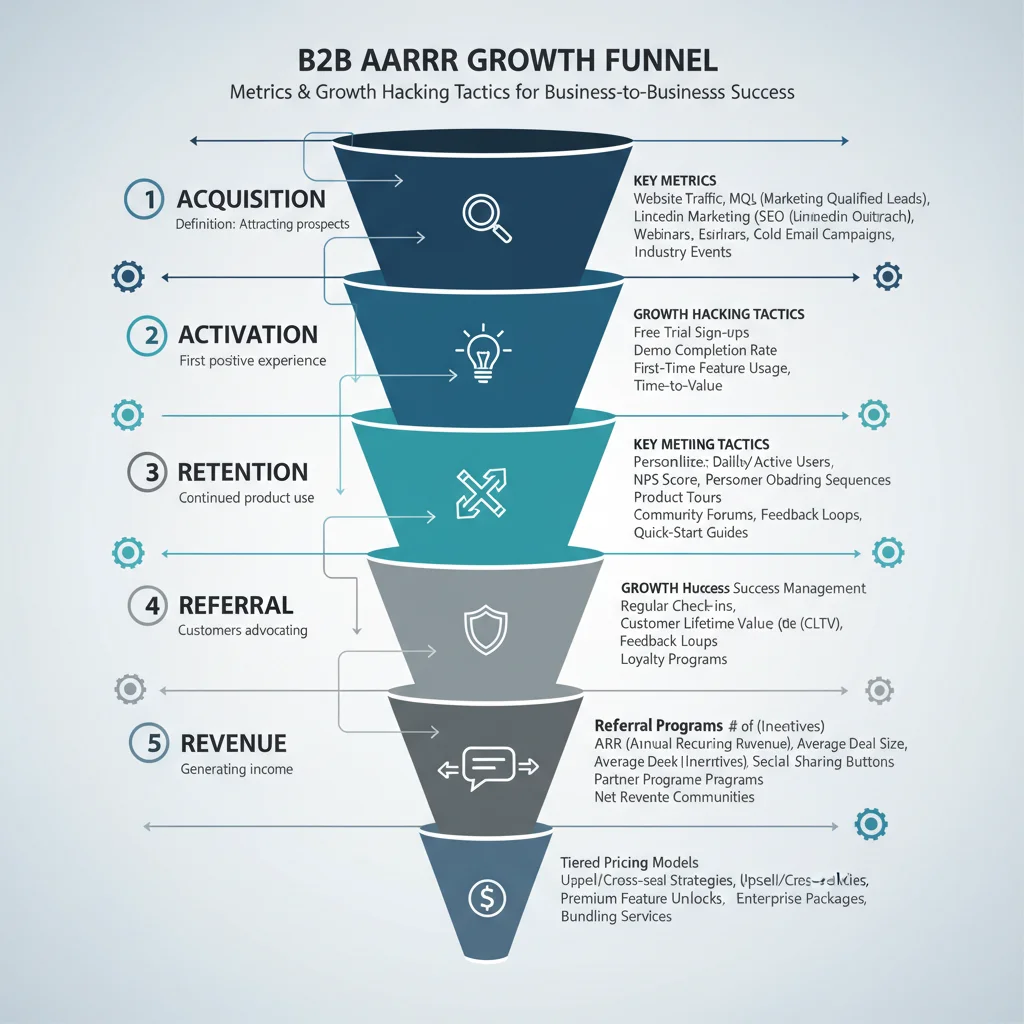
3. Email Marketing Automation and Segmentation
Email remains one of the most effective B2B marketing channels. Growth hacking leverages automation and deep segmentation to maximize its impact.
- Segmentation: Segment your email list based on industry, company size, role, website behavior, content downloads, and engagement levels.
- Automated Nurture Sequences: Develop tailored email sequences for different segments, guiding them through the buyer’s journey.
- Personalization: Beyond just using their name, personalize content based on their observed interests and pain points.
- A/B Testing: Continuously test subject lines, email body copy, CTAs, and send times.
Growth Hacking Action: Implement trigger-based email campaigns. For example, if a lead downloads a whitepaper on ‘Cloud Security,’ trigger a sequence of emails related to your cloud security solutions. Use lead scoring to prioritize which leads receive direct sales outreach. This targeted approach dramatically improves the quality of leads passed to sales, directly contributing to our 15% qualified lead increase goal.
Phase 3: Advanced Tactics and Scaling for Sustainable B2B Growth Hacking
As you progress towards your goal, it’s time to integrate more advanced B2B Growth Hacking tactics and focus on scaling what has proven effective.
1. Account-Based Marketing (ABM) for High-Value Targets
For B2B companies with high-value clients, Account-Based Marketing (ABM) is a powerful growth hacking strategy. Instead of casting a wide net, ABM focuses resources on a defined set of target accounts.
- Identify Target Accounts: Work closely with sales to identify your dream clients.
- Deep Research: Understand their business goals, challenges, decision-makers, and current technology stack.
- Personalized Campaigns: Develop highly customized content, outreach messages, and even ad campaigns specifically for each target account.
- Multi-Channel Engagement: Orchestrate a coordinated effort across email, LinkedIn, direct mail, targeted ads, and sales outreach.
Growth Hacking Action: Use intent data platforms (e.g., G2, Bombora) to identify accounts actively researching solutions like yours. Implement a pilot ABM program for a small cluster of high-value accounts. Measure engagement rates and pipeline generated from these specific accounts. Scaling successful ABM programs can disproportionately contribute to the 15% increase in qualified leads.
2. Leveraging AI and Machine Learning for Predictive Lead Scoring and Personalization
Artificial Intelligence (AI) and Machine Learning (ML) are no longer futuristic concepts; they are critical tools for B2B Growth Hacking, especially for optimizing lead qualification and personalization.
- Predictive Lead Scoring: AI can analyze historical data to identify patterns in your most successful leads, automatically scoring new leads based on their likelihood to convert.
- Dynamic Content Personalization: AI can dynamically adapt website content, email messages, and ad creatives based on individual user behavior and preferences.
- Sales Intelligence: Tools powered by AI can provide sales teams with deeper insights into prospects, including potential pain points, recent company news, and ideal timing for outreach.
Growth Hacking Action: Integrate an AI-powered lead scoring system into your CRM. Use an AI-driven content optimization platform to personalize website experiences for different visitor segments. This allows your sales team to focus on the highest-potential leads, significantly improving efficiency and the conversion of leads into opportunities, thus contributing to our 15% goal.
3. Referral Programs and Partnerships
Word-of-mouth is incredibly powerful in B2B. Growth hacking actively cultivates referral programs and strategic partnerships.
- Client Referral Programs: Incentivize existing satisfied clients to refer new business.
- Strategic Partnerships: Collaborate with non-competing businesses that share your target audience. This could involve co-marketing, joint webinars, or product integrations.
- Affiliate Programs: While less common in pure B2B, some models can support affiliate structures for lead generation.
Growth Hacking Action: Design a clear, attractive referral program with tangible benefits for both the referrer and the referred. Actively seek out and formalize partnerships that offer access to new, qualified audiences. Measure the volume and quality of leads generated through these channels. Referral leads often have a higher conversion rate, making them invaluable for boosting your qualified lead numbers.
Measuring Success and Iteration: The Continuous Loop of B2B Growth Hacking
Achieving a 15% increase in qualified leads by Q2 2026 isn’t a linear process; it’s an iterative cycle of planning, execution, measurement, and optimization. Data is your compass, and continuous improvement is your engine.
Key Performance Indicators (KPIs) to Track:
- Qualified Lead Volume: The absolute number of leads meeting your qualification criteria.
- Lead-to-Opportunity Conversion Rate: The percentage of qualified leads that become sales opportunities.
- Channel-Specific Lead Volume & Quality: Which channels are generating the most (and best) qualified leads?
- Cost Per Qualified Lead (CPQL): How efficiently are you acquiring qualified leads?
- Time to Convert (Lead to Opportunity): How long does it take for a qualified lead to progress?
- Website Conversion Rates: From visitor to lead, and from lead to MQL.
Growth Hacking Action: Establish a robust analytics dashboard that tracks these KPIs in real-time. Conduct weekly or bi-weekly growth meetings to review data, discuss experiments, and plan the next iterations. Celebrate successes, learn from failures, and always be asking, “How can we do this better, faster, or more efficiently?” 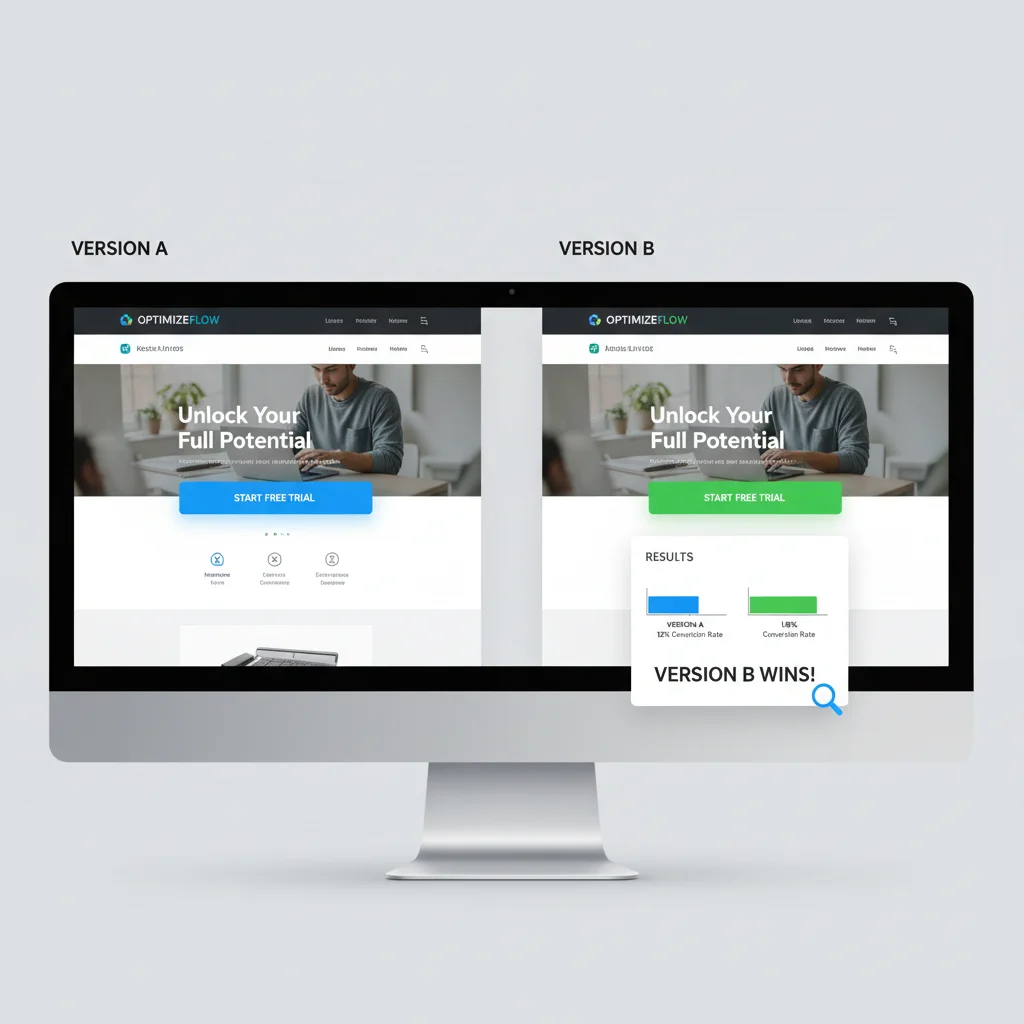
The Importance of A/B Testing and Experimentation
A/B testing is the cornerstone of B2B Growth Hacking. Every hypothesis about what might improve lead generation should be tested rigorously. This applies to:
- Website headlines and copy
- CTA buttons (text, color, placement)
- Email subject lines and content
- Ad creatives and targeting
- Landing page layouts and form fields
- Onboarding flows for trial users
Growth Hacking Action: Maintain an experimentation backlog. Prioritize experiments based on potential impact and ease of implementation. Document results thoroughly to build a knowledge base of what works and what doesn’t for your specific audience. This systematic approach to improvement is what will drive you towards and beyond your 15% qualified lead increase target.
Overcoming Challenges in B2B Growth Hacking
While the potential for B2B Growth Hacking is immense, there are common challenges that organizations face. Awareness of these challenges allows for proactive planning and mitigation.
1. Data Silos and Integration Issues
Many B2B companies struggle with disparate data sources – CRM, marketing automation, website analytics, sales tools – that don’t communicate effectively. This makes it difficult to get a holistic view of the customer journey and accurately measure the impact of growth initiatives.
Solution: Invest in robust integration platforms (e.g., Zapier, Segment) or a unified customer data platform (CDP). Ensure your CRM is the central source of truth for lead and customer data. This integration is crucial for effective lead scoring, personalization, and accurate attribution of your B2B Growth Hacking efforts.
2. Alignment Between Marketing and Sales
A perennial challenge in B2B is the disconnect between marketing and sales teams. Marketing might generate leads that sales deem unqualified, leading to friction and wasted effort.
Solution: Foster strong Smarketing (Sales + Marketing) alignment. Establish clear Service Level Agreements (SLAs) defining lead qualification criteria and sales follow-up expectations. Implement regular joint meetings to review pipeline, discuss lead quality, and share insights. This collaborative approach is vital for converting that 15% increase in qualified leads into actual revenue.
3. Resource Constraints and Skill Gaps
Growth hacking requires a diverse skill set, including data analysis, technical implementation, creative thinking, and marketing expertise. Smaller B2B companies might face resource constraints or skill gaps.
Solution: Prioritize high-impact experiments. Invest in upskilling your existing team or consider bringing in external growth hacking consultants. Leverage no-code/low-code tools to automate tasks and streamline processes, reducing the need for extensive development resources. Focus on building a growth team with a blend of analytical and creative talents.
4. Resistance to Change and Risk Aversion
The experimental nature of growth hacking can be met with resistance in more traditional B2B environments that prefer proven, less risky strategies.
Solution: Start small with low-risk, high-potential experiments to demonstrate quick wins and build momentum. Communicate the benefits of data-driven decision-making and the potential for significant ROI. Emphasize that controlled experimentation reduces overall risk by quickly identifying what works and what doesn’t before large investments are made. This cultural shift is as important as any tactic for achieving a 15% increase in qualified leads.
Conclusion: Your Path to a 15% Increase in Qualified Leads by Q2 2026
The journey to achieving a 15% increase in qualified leads by the end of Q2 2026 through B2B Growth Hacking is an exciting and rewarding one. It demands a commitment to experimentation, a relentless focus on data, and a deep understanding of your ideal customer. By systematically optimizing your foundations, strategically expanding your channels, and leveraging advanced technologies like AI, your B2B organization can unlock unprecedented growth.
Remember, B2B Growth Hacking is not about finding a magic bullet; it’s about building a sustainable, iterative process of continuous improvement. It’s about empowering your teams to think creatively, test boldly, and learn rapidly. Embrace the mindset of the growth hacker, and you will not only achieve your lead generation targets but also foster a culture of innovation that drives long-term success. Start implementing these strategies today, measure your progress diligently, and watch your qualified leads – and your business – flourish.
The future of B2B lead generation is agile, data-driven, and relentlessly optimized. By committing to the principles and practices outlined in this guide, your organization will be well-positioned to not only meet but exceed the ambitious goal of a 15% increase in qualified leads by Q2 2026, setting a new benchmark for success in your industry.