ESG for Business Growth: US Market 2026 Sustainable Practices

Leveraging ESG for Business Growth: A 2026 US Market Perspective on Sustainable Practices
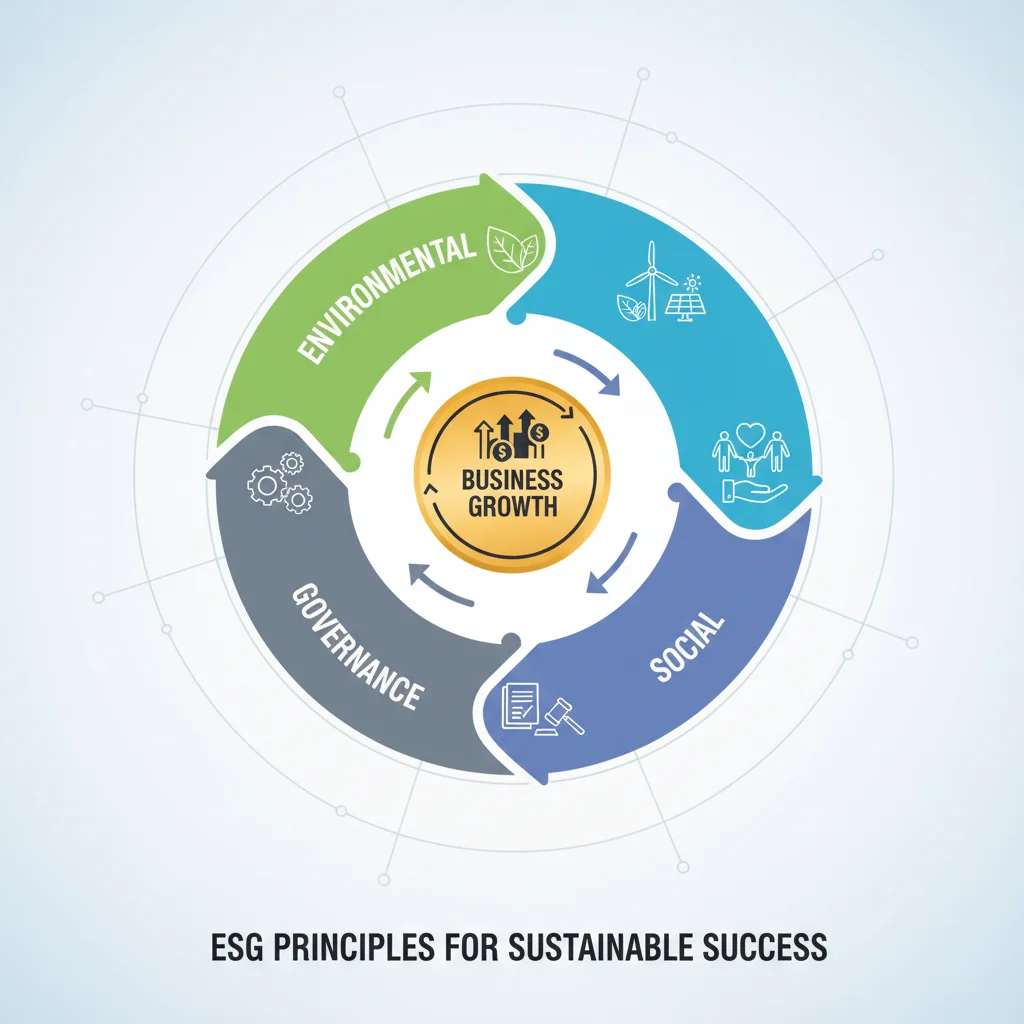
In an increasingly conscious global economy, the acronym ESG – Environmental, Social, and Governance – has transcended its initial perception as merely a compliance checklist. Today, it stands as a fundamental pillar for achieving robust ESG business growth, particularly within the dynamic US market. As we gaze towards 2026, the imperative for companies to embed sustainable practices into their core operations is not just about corporate responsibility; it’s a strategic necessity that directly impacts financial performance, brand reputation, and long-term viability.
The landscape of business in the United States is rapidly evolving, driven by shifting consumer preferences, stringent regulatory frameworks, and an investment community that increasingly prioritizes sustainability. Companies that proactively embrace ESG principles are not only mitigating risks but are also unlocking new avenues for innovation, attracting top talent, and securing competitive advantages. This comprehensive guide delves into the intricate relationship between ESG and accelerated business growth, offering insider knowledge and practical strategies for navigating the 2026 US market.
The Evolving ESG Landscape in the US: A 2026 Outlook
The journey of ESG from a niche concept to a mainstream business imperative has been swift and profound. In the US, this evolution is particularly pronounced, influenced by a confluence of factors. By 2026, we anticipate an even more sophisticated and integrated approach to ESG, where it is no longer an add-on but an intrinsic part of business strategy and operational excellence.
Regulatory Pressures and Policy Shifts
One of the primary drivers shaping the ESG landscape is the increasing regulatory scrutiny. While the US has historically taken a different approach to ESG mandates compared to Europe, there’s a clear trend towards greater transparency and accountability. The Securities and Exchange Commission (SEC) has been instrumental in proposing rules related to climate-related disclosures, signaling a significant shift. These regulations, expected to be more mature by 2026, will compel companies to meticulously track, report, and manage their environmental impact, social metrics, and governance structures. Failure to comply will not only result in legal repercussions but also tarnish a company’s reputation, directly hindering ESG business growth.
Beyond federal regulations, state-level initiatives and city ordinances are also contributing to a complex web of requirements. Companies operating across different jurisdictions will need robust ESG frameworks that can adapt to varying local expectations and mandates. This necessitates a proactive approach to understanding and anticipating policy shifts, turning potential compliance burdens into opportunities for leadership and innovation.
Investor Demand and Capital Allocation
The investment community has emerged as a powerful force in accelerating ESG adoption. Institutional investors, pension funds, and even individual investors are increasingly screening companies based on their ESG performance. The premise is simple: companies with strong ESG credentials are often considered more resilient, better managed, and less exposed to long-term risks, making them more attractive investment opportunities. This translates into a lower cost of capital and greater access to funding for businesses committed to sustainability.
By 2026, we expect ESG-integrated investing to be the norm rather than the exception. Capital will flow preferentially towards companies demonstrating genuine commitment to ESG principles, creating a virtuous cycle where strong ESG performance attracts more capital, enabling further investment in sustainable practices, and ultimately fueling further ESG business growth. Companies that lag in their ESG integration risk being overlooked by a significant portion of the investment market, potentially impacting their ability to fund expansion and innovation.
Consumer and Employee Expectations
The modern consumer is more informed and ethically driven than ever before. A growing segment of the market actively seeks out brands that align with their values, prioritizing companies with strong environmental records, fair labor practices, and ethical governance. This shift in consumer behavior means that ESG is no longer just a B2B or investor-facing concern; it’s a direct driver of sales and brand loyalty.
Similarly, the war for talent has intensified, with employees – particularly younger generations – seeking purpose beyond profit. Companies with robust ESG strategies are better positioned to attract, engage, and retain top talent. A strong corporate culture built on sustainability, diversity, and ethical leadership fosters a more motivated and productive workforce, which is a critical ingredient for sustained ESG business growth.
The Financial Impact of ESG: Beyond the Bottom Line
While ESG principles are inherently about broader societal and environmental well-being, their impact on a company’s financial health is increasingly undeniable. The notion that sustainability comes at the expense of profitability is rapidly being debunked by empirical evidence and market trends.
Enhanced Risk Management and Resilience
Integrating ESG into business strategy provides a robust framework for identifying, assessing, and mitigating various risks. Environmental risks, such as climate change impacts, resource scarcity, and pollution, can lead to operational disruptions, increased costs, and regulatory fines. Social risks, including labor disputes, human rights violations, and community opposition, can severely damage reputation and lead to boycotts. Governance risks, such as corruption, unethical practices, and lack of transparency, can erode investor confidence and invite legal challenges.
By proactively addressing these ESG factors, companies build greater resilience against unforeseen events and market volatility. This foresight not only prevents costly crises but also positions the company for more stable and predictable financial performance, contributing directly to sustainable ESG business growth.
Cost Savings and Operational Efficiencies
Many ESG initiatives, particularly those focused on environmental aspects, directly translate into significant cost savings and operational efficiencies. Investing in renewable energy, optimizing supply chains for reduced waste, improving energy efficiency in facilities, and implementing water conservation measures can substantially lower operating expenses. For example, a company that transitions to LED lighting or invests in more fuel-efficient logistics not only reduces its carbon footprint but also sees a direct positive impact on its energy and transportation costs.
These efficiencies contribute to a healthier bottom line, freeing up resources that can be reinvested into further innovation or expansion, thereby fueling further ESG business growth.
Innovation and New Market Opportunities
The pursuit of sustainability often sparks innovation. Companies committed to ESG are driven to develop new products, services, and business models that address environmental and social challenges. This can lead to the creation of entirely new revenue streams and access to burgeoning green markets. For instance, companies developing sustainable packaging solutions, renewable energy technologies, or ethical sourcing platforms are tapping into significant market demand and positioning themselves as leaders in their respective industries.
Embracing ESG can also differentiate a company from its competitors, allowing it to capture market share from consumers and businesses who prioritize sustainability. This competitive edge is a powerful catalyst for substantial ESG business growth.
Insider Knowledge: Strategies for Accelerating ESG Business Growth in the US
Translating ESG principles into tangible business growth requires more than just good intentions; it demands strategic planning and execution. Here’s some insider knowledge on how US businesses can effectively leverage ESG for accelerated growth by 2026:
1. Integrate ESG into Core Strategy, Not Just PR
The most successful companies view ESG not as a separate department or a marketing ploy, but as an integral part of their overall business strategy. This means embedding ESG considerations into every decision-making process, from product development and supply chain management to talent acquisition and financial planning. A truly integrated ESG strategy ensures that sustainability goals are aligned with financial objectives, creating a holistic approach to value creation.
Leaders must champion ESG from the top down, fostering a culture where every employee understands their role in achieving sustainability goals. This authentic commitment resonates with stakeholders and builds trust, a priceless asset for ESG business growth.
2. Focus on Materiality: What Matters Most to Your Business and Stakeholders
Not all ESG factors are equally relevant to every business. A crucial step is to conduct a materiality assessment to identify the environmental, social, and governance issues that are most significant to your company’s operations, value chain, and stakeholders. For a technology company, data privacy and ethical AI might be highly material, while for a manufacturing firm, carbon emissions and waste management would be paramount.
By focusing resources on the most material ESG issues, companies can maximize their impact and demonstrate genuine progress, avoiding the pitfalls of greenwashing and ensuring that their ESG efforts directly contribute to ESG business growth.
3. Leverage Technology for Data Collection and Reporting
Effective ESG management relies heavily on accurate data. Companies must invest in robust technological solutions for collecting, analyzing, and reporting on their ESG performance. This includes everything from IoT sensors for tracking energy consumption to AI-powered platforms for supply chain transparency and diversity metrics. Standardized reporting frameworks (e.g., SASB, GRI, TCFD) are becoming increasingly important for communicating ESG performance to investors and stakeholders.
By automating data collection and reporting, businesses can ensure accuracy, reduce manual effort, and gain valuable insights that inform strategic decisions, driving more efficient and impactful ESG business growth.
4. Embrace Circular Economy Principles
The traditional linear "take-make-dispose" model is increasingly unsustainable. Forward-thinking US businesses are embracing circular economy principles, designing products for longevity, reusability, and recyclability. This involves innovative approaches to product design, materials sourcing, manufacturing processes, and end-of-life management.
Adopting circular practices not only reduces environmental impact but also unlocks new revenue streams through repair services, resale markets, and resource recovery. This innovative approach is a powerful engine for long-term ESG business growth.
5. Build a Diverse, Equitable, and Inclusive Workforce
The ‘S’ in ESG – Social – is paramount. Companies with strong diversity, equity, and inclusion (DEI) initiatives are consistently shown to outperform their less diverse counterparts. A diverse workforce brings a wider range of perspectives, fosters innovation, and better reflects the customer base. Equitable practices ensure fair treatment and opportunities for all employees, while inclusive cultures make everyone feel valued and empowered.
Investing in DEI is not just the right thing to do; it’s a strategic imperative for attracting top talent, enhancing employee satisfaction, and ultimately driving superior ESG business growth.
6. Engage Proactively with Supply Chains
A company’s ESG footprint extends far beyond its own operations to its entire supply chain. Ensuring ethical sourcing, fair labor practices, and environmental responsibility among suppliers is critical for maintaining brand integrity and mitigating risks. This requires proactive engagement, due diligence, and often, collaborative efforts to uplift supplier standards.
By building resilient and sustainable supply chains, businesses can enhance their reputation, reduce operational risks, and assure consumers of the ethical origins of their products, reinforcing ESG business growth.

The Future is Sustainable: Preparing for 2026 and Beyond
The year 2026 is not merely a distant point on the horizon; it represents a critical juncture where ESG principles will be firmly entrenched in the fabric of the US business landscape. Companies that fail to adapt will find themselves at a significant disadvantage, struggling with higher costs, reputational damage, and limited access to capital and talent. Conversely, those that embrace ESG strategically will reap substantial rewards.
Measuring and Communicating Impact
To truly leverage ESG for business growth, companies must effectively measure and communicate their impact. This goes beyond mere compliance reporting. It involves telling a compelling story about how your company is creating shared value for shareholders, employees, customers, and the wider community. Transparent and authentic communication builds trust and solidifies your position as a responsible corporate citizen.
By showcasing quantifiable improvements in environmental metrics, social programs, and governance practices, businesses can demonstrate the tangible benefits of their ESG investments and attract further support, catalyzing continued ESG business growth.
Collaboration and Partnerships
Addressing complex environmental and social challenges often requires collective action. US businesses should actively seek out collaborations and partnerships with NGOs, industry associations, governments, and even competitors to drive systemic change. These partnerships can lead to shared best practices, innovative solutions, and a more robust ecosystem for sustainable business.
Participating in industry-wide initiatives or forming strategic alliances for sustainable development can enhance a company’s influence and amplify its positive impact, further strengthening its position for future ESG business growth.
Conclusion: ESG as a Catalyst for Enduring Success
The journey towards 2026 in the US market underscores an undeniable truth: ESG is no longer optional. It is a powerful catalyst for enduring success, driving not just ethical conduct but also significant financial returns and competitive advantages. Companies that proactively embed sustainable practices across their operations, from the boardroom to the factory floor, will be the ones that thrive in the coming years.
By understanding the evolving regulatory landscape, responding to investor and consumer demands, and strategically implementing ESG initiatives, businesses can unlock unparalleled opportunities for innovation, efficiency, and resilience. The future of ESG business growth in the US is bright for those who choose to lead with purpose and integrate sustainability at their core. Embrace this transformation, and position your organization for a future of profitability and positive impact.