Digital Twins for U.S. Infrastructure: Reducing Delays by 25% by 2026

Digital Twins for U.S. Infrastructure Planning: How to Reduce Project Delays by 25% in 2026
The landscape of U.S. infrastructure is at a pivotal moment. With aging systems, increasing demands, and persistent project delays, the need for innovative solutions has never been more urgent. Enter Digital Twins Infrastructure – a revolutionary technology poised to transform how we plan, build, and manage our nation’s vital assets. This article delves into the profound impact of digital twins, exploring their potential to significantly reduce project delays by a remarkable 25% by 2026, fostering efficiency, sustainability, and resilience across the United States.
Project delays in infrastructure are not merely inconvenient; they translate into billions of dollars in cost overruns, missed economic opportunities, and frustration for communities. From congested highways to crumbling bridges and outdated utility networks, the challenges are immense. Traditional planning and construction methodologies, often fragmented and reactive, struggle to keep pace with the complexity and scale of modern infrastructure demands. This is where the power of Digital Twins Infrastructure comes into its own, offering a holistic, data-driven approach to overcome these long-standing hurdles.
Understanding the Digital Twin Concept in Infrastructure
At its core, a digital twin is a virtual replica of a physical asset, process, or system. In the context of infrastructure, this means creating a dynamic, real-time virtual model of anything from a single bridge or road segment to an entire city’s utility grid or transportation network. This virtual model is continuously updated with data from sensors, IoT devices, historical records, and other sources, mirroring the physical twin’s lifecycle from conception through operation and maintenance.
The concept of Digital Twins Infrastructure goes far beyond simple 3D modeling. While Building Information Modeling (BIM) provides a rich, data-infused 3D representation, a digital twin adds the crucial dimension of real-time data and predictive analytics. This allows stakeholders to not only visualize an asset but also to simulate its performance under various conditions, predict potential issues, and optimize its operations before and during construction, and throughout its operational life.
Key Components of an Infrastructure Digital Twin:
- Physical Asset: The real-world infrastructure component (e.g., bridge, road, water pipeline).
- Virtual Model: A detailed, geometrically accurate and data-rich digital representation of the physical asset.
- Connectivity: IoT sensors, cameras, drones, and other devices that collect real-time data from the physical asset.
- Data Integration: Platforms and systems that aggregate and process vast amounts of data from various sources (e.g., weather, traffic, material stress, maintenance logs).
- Analytics and AI: Algorithms and machine learning models that analyze the data to derive insights, predict behavior, and identify anomalies.
- User Interface: Dashboards and visualization tools that allow engineers, planners, and operators to interact with the twin and extract actionable information.
The synergy between these components creates a powerful tool for informed decision-making, enabling proactive management rather than reactive problem-solving. This shift is fundamental to achieving significant reductions in project delays and enhancing overall infrastructure resilience.
The Current State of U.S. Infrastructure: A Call for Innovation
The American Society of Civil Engineers (ASCE) consistently grades U.S. infrastructure with D and C averages, highlighting critical deficiencies across various sectors, including roads, bridges, transit, water, and energy. Decades of underinvestment and reliance on outdated methods have led to a backlog of necessary repairs and upgrades. The Bipartisan Infrastructure Law (BIL) represents a monumental step forward, allocating billions to revitalize these systems. However, funding alone is not enough; the efficiency and effectiveness of project execution are paramount.
Project delays are a chronic issue, often stemming from:
- Inadequate Planning: Insufficient data, poor site analysis, and incomplete understanding of environmental or geological factors.
- Communication Gaps: Disconnects between designers, contractors, regulators, and other stakeholders.
- Unforeseen Site Conditions: Discovering unexpected geological formations, utility conflicts, or archaeological findings during excavation.
- Material and Labor Shortages: Supply chain disruptions and workforce availability issues.
- Regulatory Hurdles: Complex permitting processes and environmental impact assessments.
- Design Errors and Rework: Mistakes in design leading to costly modifications during construction.
- Inefficient Progress Monitoring: Difficulty in accurately tracking project progress and identifying deviations early.
These challenges collectively contribute to significant cost overruns and extended timelines. The promise of Digital Twins Infrastructure lies in its ability to address many of these root causes proactively, transforming a reactive industry into a predictive and optimized one. By leveraging digital twins, U.S. infrastructure projects can move beyond traditional limitations, embracing a future where delays are minimized and resources are maximized.
How Digital Twins Can Reduce Project Delays by 25% by 2026
Achieving a 25% reduction in project delays by 2026 is an ambitious yet attainable goal with the widespread adoption of Digital Twins Infrastructure. This technology impacts every stage of an infrastructure project lifecycle, from initial conceptualization to ongoing maintenance. Let’s explore the specific mechanisms through which digital twins drive this efficiency.
1. Enhanced Planning and Design Optimization
Before a single shovel hits the ground, digital twins allow for unparalleled planning and design optimization. Instead of relying on static blueprints or limited 2D drawings, planners can create highly detailed virtual models that incorporate geological data, environmental conditions, existing utility networks, and traffic patterns. This comprehensive view enables:
- Conflict Detection: Automatically identifying potential clashes between different infrastructure components (e.g., new pipelines intersecting with existing electrical conduits) before construction begins, saving immense rework costs and time.
- Scenario Simulation: Running simulations to test various design alternatives under different conditions (e.g., flood resistance, earthquake resilience, traffic flow optimization), allowing engineers to select the most robust and efficient design.
- Environmental Impact Assessment: More accurately predicting environmental impacts and designing mitigation strategies, streamlining the permitting process.
- Stakeholder Collaboration: Providing a common, easily understandable visual platform for all stakeholders – engineers, architects, urban planners, public officials, and even the community – to review designs, offer feedback, and make informed decisions, reducing communication bottlenecks and misunderstandings.
By front-loading the decision-making process with rich data and predictive models, the likelihood of costly design changes or unforeseen issues during construction is drastically reduced, directly cutting down on delays.
2. Streamlined Permitting and Regulatory Compliance
Navigating the complex web of permits and regulations is a significant source of delays for infrastructure projects. Digital Twins Infrastructure can significantly expedite this process:
- Automated Compliance Checks: Digital twins can be integrated with regulatory databases to automatically flag design elements that do not meet local, state, or federal codes, allowing for immediate corrections.
- Clearer Documentation: The rich, integrated data within a digital twin provides a comprehensive and auditable record of all design decisions, analyses, and compliance efforts, making it easier to demonstrate adherence to regulatory requirements.
- Visualizing Impact: Regulators and environmental agencies can use the digital twin to visualize the project’s impact in a realistic context, leading to faster reviews and approvals compared to abstract reports and drawings.
By making the compliance process more transparent and efficient, digital twins can shave off weeks or even months from project timelines.
3. Optimized Construction Management and Progress Monitoring
During the construction phase, Digital Twins Infrastructure becomes a powerful tool for real-time management and problem-solving:
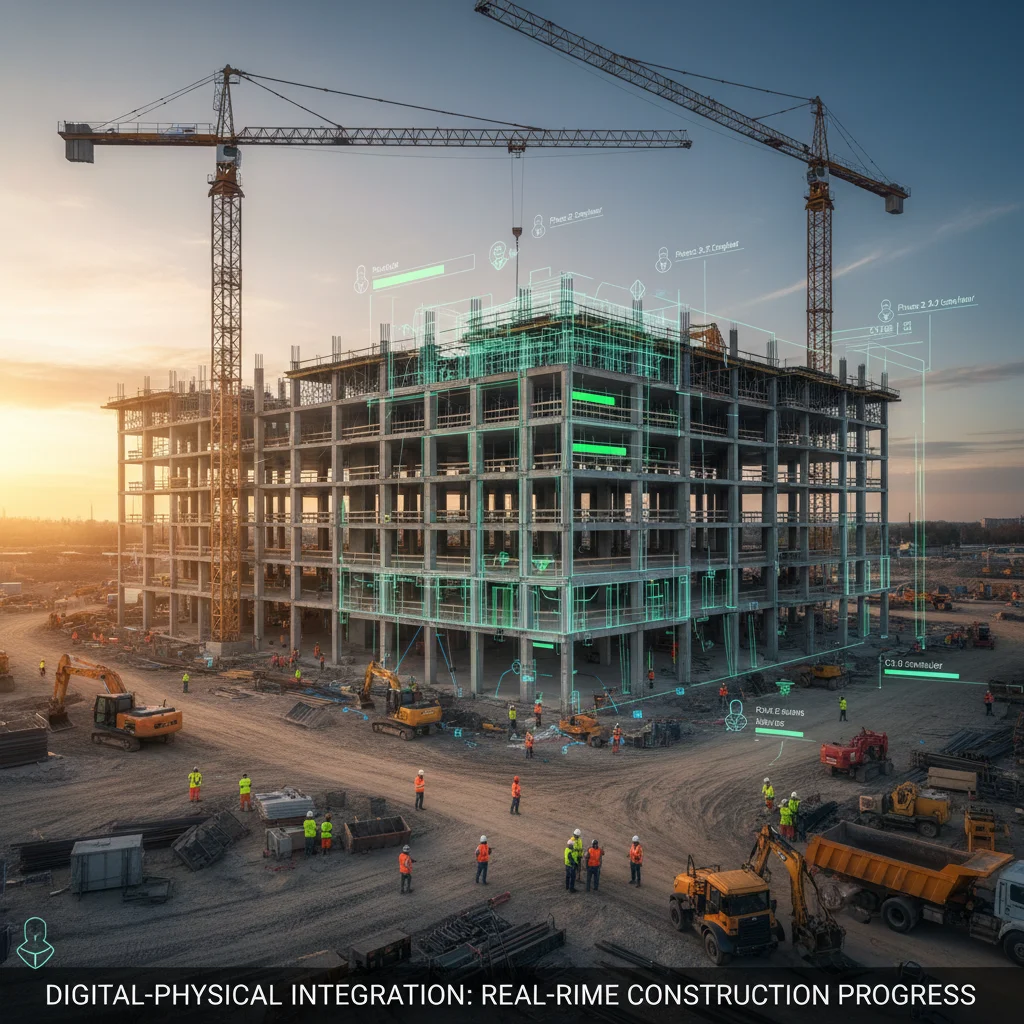
- Real-time Progress Tracking: Integrating data from drones, LIDAR scans, and on-site sensors allows project managers to compare actual progress against the planned schedule in real-time. Deviations can be identified immediately, enabling swift corrective actions.
- Resource Optimization: Digital twins can simulate the optimal deployment of labor, equipment, and materials, minimizing idle time and ensuring resources are available when and where they are needed.
- Predictive Maintenance for Equipment: Monitoring construction machinery through its digital twin can predict potential failures, allowing for proactive maintenance and preventing unexpected breakdowns that halt work.
- Supply Chain Management: Integrating supply chain data into the digital twin helps predict and mitigate potential material shortages or delivery delays by providing real-time visibility into inventory and logistics.
- Safety Enhancements: Simulating construction sequences in the digital twin can identify potential safety hazards, allowing for the implementation of preventative measures and improving overall site safety, which in turn reduces work stoppages.

These capabilities transform construction from a reactive process into a highly orchestrated and predictive operation, directly addressing many common causes of delays.
4. Proactive Risk Management and Anomaly Detection
One of the most significant advantages of Digital Twins Infrastructure is its ability to enable proactive risk management. By continuously monitoring the physical asset and comparing its real-time performance against its digital counterpart, anomalies can be detected early:
- Predictive Analytics: AI and machine learning models analyze historical and real-time data within the twin to predict potential structural weaknesses, material degradation, or performance issues before they become critical problems.
- Early Warning Systems: Sensors embedded in bridges, roads, or pipelines can detect subtle changes in stress, temperature, or flow, triggering alerts within the digital twin, allowing engineers to investigate and intervene before a minor issue escalates into a major failure requiring extensive repairs and causing significant delays.
- Impact Assessment of External Factors: Digital twins can simulate the impact of extreme weather events, seismic activity, or increased usage, allowing infrastructure owners to assess vulnerabilities and plan for resilience, preventing future delays caused by unexpected damage.
This proactive approach minimizes unforeseen disruptions and the subsequent need for emergency repairs or costly overhauls, which are major sources of delays in existing infrastructure.
Case Studies and Early Adopters: Paving the Way
While the goal of a 25% reduction in delays by 2026 is ambitious, early adopters and pilot projects are already demonstrating the tangible benefits of Digital Twins Infrastructure. For instance, cities like Singapore and Helsinki have implemented city-wide digital twins to manage urban development, transportation, and utilities, leading to more efficient planning and reduced project timelines.
- Denver International Airport: Has utilized digital twin technology to optimize terminal operations, energy consumption, and maintenance schedules, leading to significant operational efficiencies and reduced downtime. While not directly a construction delay reduction, it showcases the power of the twin for complex asset management.
- Major Bridge Projects: Several complex bridge constructions globally have leveraged digital twins to simulate construction sequences, identify potential structural issues, and optimize material delivery, resulting in smoother execution and fewer on-site problems.
- Utility Networks: Companies managing vast water or power networks are using digital twins to monitor pipeline integrity, predict outages, and optimize maintenance routes, reducing service disruptions and the associated repair delays.
These examples illustrate that the technology is mature enough and capable of delivering significant improvements in project delivery. The challenge now is scaling these successes across the diverse and expansive U.S. infrastructure landscape.
The Road Ahead: Overcoming Challenges and Fostering Adoption
While the benefits of Digital Twins Infrastructure are clear, widespread adoption in the U.S. will require overcoming several challenges:
1. Data Interoperability and Standardization
Infrastructure projects involve a multitude of stakeholders, each using different software, data formats, and systems. Achieving seamless data flow and integration – a prerequisite for effective digital twins – requires robust interoperability standards and a commitment from the industry to adopt them. Initiatives to standardize data models (e.g., IFC for BIM) are crucial.
2. Initial Investment and ROI Justification
Implementing digital twin solutions requires significant upfront investment in technology, software, sensors, and skilled personnel. Demonstrating a clear Return on Investment (ROI) to public and private stakeholders is essential for securing funding and driving adoption. The long-term savings from reduced delays, optimized operations, and extended asset life need to be effectively communicated.
3. Workforce Development and Skill Gaps
The infrastructure industry needs a workforce skilled in data analytics, IoT, AI, and digital twin platforms. Bridging this skill gap through education, training programs, and upskilling initiatives is vital for successful implementation and management of these advanced systems.
4. Cybersecurity Concerns
Connecting critical infrastructure to digital networks introduces cybersecurity risks. Robust security protocols, data encryption, and continuous monitoring are essential to protect sensitive infrastructure data from cyber threats. The integrity and reliability of the digital twin depend on the security of its data.
5. Policy and Regulatory Frameworks
Governments and regulatory bodies need to develop policies that encourage and support the adoption of Digital Twins Infrastructure. This includes providing incentives, establishing clear guidelines, and potentially mandating the use of digital twins for certain types of projects, especially those funded by public money.
The Future Impact: Beyond Delay Reduction
While reducing project delays by 25% by 2026 is a significant immediate benefit, the long-term impact of Digital Twins Infrastructure extends far beyond efficiency gains. Digital twins are foundational to building truly smart and resilient infrastructure:
- Enhanced Sustainability: By optimizing material usage, construction processes, and energy consumption throughout an asset’s lifecycle, digital twins contribute significantly to environmental sustainability goals.
- Improved Resilience: The ability to simulate various scenarios and predict potential failures allows for the design and construction of infrastructure that is more resilient to climate change, natural disasters, and other shocks.
- Better Asset Performance and Lifecycle Management: Digital twins provide a continuous feedback loop, allowing for ongoing optimization of asset performance, predictive maintenance, and informed decisions about upgrades or decommissioning, extending the useful life of infrastructure.
- Smart City Integration: At a larger scale, interconnected digital twins of various urban systems will form the backbone of smart cities, enabling intelligent traffic management, optimized public services, and improved quality of life for citizens.
- Economic Growth: More efficient infrastructure projects mean faster delivery of essential services, reduced costs for businesses, and increased economic activity, stimulating growth across regions.
The vision of a future U.S. where infrastructure projects are delivered on time and within budget, and where assets operate at peak efficiency throughout their lifespan, is within reach thanks to the transformative potential of Digital Twins Infrastructure. The 25% delay reduction target by 2026 is not just an aspiration; it is a measurable step towards a more robust, intelligent, and sustainable national infrastructure.
Conclusion: Embracing a Digital Future for U.S. Infrastructure
The challenges facing U.S. infrastructure are complex, but the solutions are increasingly within our grasp. Digital Twins Infrastructure represents a paradigm shift, moving us from reactive problem-solving to proactive, data-driven management. By creating dynamic virtual replicas of our physical assets, we gain unprecedented visibility, predictive capabilities, and control over the entire infrastructure lifecycle.
The goal of reducing project delays by 25% by 2026 is an ambitious yet achievable benchmark that underscores the immediate and tangible benefits of this technology. Achieving this will require a concerted effort from government agencies, private industry, technology providers, and academic institutions to invest in the technology, develop the necessary skills, and foster a collaborative environment. As we move forward, embracing digital twins will not only make our infrastructure projects more efficient but also lay the groundwork for a smarter, more resilient, and sustainable future for the United States. The time to build this digital future is now.