AI Cybersecurity Strategies: Protecting U.S. Enterprises from Breaches

In an era defined by rapid technological advancement and an increasingly complex threat landscape, U.S. enterprises face unprecedented challenges in safeguarding their digital assets. The advent of Artificial Intelligence (AI) has not only revolutionized business operations but has also introduced new vectors for cyberattacks, making robust cybersecurity measures more critical than ever. As cybercriminals leverage sophisticated AI-powered tools to launch more potent and evasive attacks, organizations must counter with equally advanced defenses. This article delves into crucial AI cybersecurity strategies that U.S. enterprises must implement to achieve a significant reduction in data breaches by 30% by 2026. This ambitious goal is not merely a target but a necessity for survival and sustained growth in the digital economy.
The stakes are incredibly high. Data breaches can lead to catastrophic financial losses, irreparable damage to reputation, regulatory penalties, and a significant erosion of customer trust. According to various industry reports, the average cost of a data breach continues to climb, often reaching millions of dollars for U.S. organizations. Traditional cybersecurity approaches, while still foundational, are proving insufficient against the dynamic and intelligent threats of today. This is where AI-driven solutions step in, offering a paradigm shift in how we approach security. By harnessing the power of AI, enterprises can move from reactive defense to proactive prediction and prevention, fundamentally transforming their security posture.
The integration of AI into cybersecurity is not just about automating existing processes; it’s about enabling capabilities that were previously impossible. AI can analyze vast datasets at speeds and scales far beyond human capacity, identify subtle patterns indicative of emerging threats, and even predict potential attack vectors before they are fully exploited. This proactive stance is the cornerstone of effective modern cybersecurity. For US enterprises, adopting advanced AI cybersecurity strategies is no longer optional; it is a strategic imperative for resilience and competitive advantage. Let’s explore the four proactive measures that are essential for achieving the ambitious goal of reducing breaches by 30% by 2026.
1. Implementing AI-Driven Advanced Threat Detection and Predictive Analytics
The first and arguably most critical of the AI cybersecurity strategies is the implementation of AI-driven advanced threat detection and predictive analytics. Traditional threat detection systems often rely on signature-based methods, which are effective against known threats but struggle to identify novel or zero-day attacks. AI, particularly machine learning (ML) algorithms, can move beyond signatures to analyze behavioral patterns, network anomalies, and user activities in real-time, identifying deviations that may indicate a malicious intrusion.
The Power of Behavioral Analytics
AI-powered behavioral analytics establishes a baseline of normal network and user activity. Any significant departure from this baseline, such as unusual login times, access to sensitive data by an unauthorized user, or abnormal data transfer volumes, triggers an alert. This capability is crucial for detecting insider threats, compromised accounts, and advanced persistent threats (APTs) that often mimic legitimate user behavior to evade detection. For instance, if an employee who typically accesses sales data suddenly attempts to download large volumes of customer financial records, an AI system can flag this anomaly immediately, even if the user’s credentials are valid.
Leveraging Machine Learning for Anomaly Detection
Machine learning algorithms excel at processing colossal amounts of data from various sources—network traffic logs, endpoint security data, cloud activity, and more—to identify subtle indicators of compromise that would be invisible to human analysts or rule-based systems. Supervised learning models can be trained on vast datasets of known malware and attack patterns to classify new threats. Unsupervised learning, on the other hand, can discover previously unknown attack patterns by identifying statistical outliers in network behavior. This allows enterprises to detect polymorphic malware, fileless attacks, and other sophisticated threats that constantly evolve to bypass traditional defenses.
Predictive Analytics: Anticipating Future Attacks
Beyond detection, AI enables predictive analytics. By analyzing historical attack data, global threat intelligence feeds, and an organization’s specific vulnerabilities, AI can forecast potential attack vectors and identify assets most likely to be targeted. This foresight allows security teams to proactively strengthen defenses, patch vulnerabilities, and deploy preventative controls before an attack materializes. For example, if a new vulnerability is discovered in a widely used software, AI can quickly assess which systems within the enterprise are exposed and prioritize patching efforts based on risk.
Integrating AI with SIEM and SOAR Platforms
To maximize effectiveness, AI-driven threat detection must be integrated with existing Security Information and Event Management (SIEM) and Security Orchestration, Automation, and Response (SOAR) platforms. AI enhances SIEM by reducing false positives and correlating seemingly disparate events into actionable intelligence. It empowers SOAR platforms by automating the initial stages of incident response, such as quarantining infected systems or blocking malicious IPs, thereby accelerating response times and freeing up human analysts for more complex tasks. This synergy is a cornerstone of robust AI cybersecurity strategies.
The goal of reducing breaches by 30% by 2026 hinges significantly on an enterprise’s ability to detect threats earlier and more accurately. AI-driven advanced threat detection provides the necessary precision and speed to achieve this, transforming security operations from a reactive hunt to a proactive, intelligent defense. By continuously learning and adapting, these systems offer a dynamic shield against the ever-evolving tactics of cyber adversaries.
2. Developing and Implementing Automated Incident Response with AI Orchestration
Once a threat is detected, the speed and efficiency of the response are paramount. This brings us to the second critical measure: developing and implementing automated incident response with AI orchestration. Manual incident response processes are often slow, prone to human error, and struggle to keep pace with the rapid spread of modern cyberattacks. AI-powered automation can dramatically reduce the time from detection to containment, minimizing the damage caused by a breach.
The Need for Speed in Incident Response
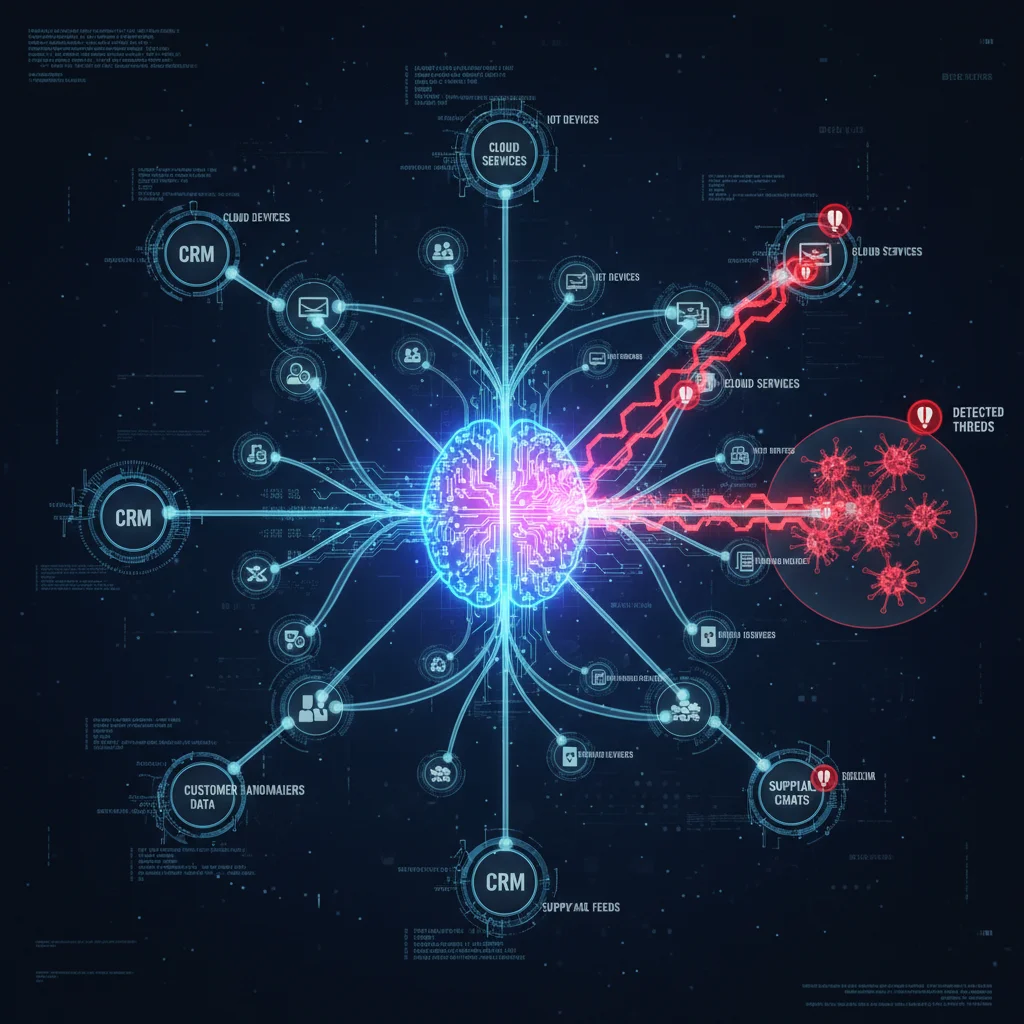
Every second counts during a cyberattack. The longer a threat actor remains undetected and uncontained, the more damage they can inflict, from data exfiltration to system disruption. Automated incident response, driven by AI, can execute predefined playbooks and take immediate action, such as isolating compromised endpoints, blocking suspicious IP addresses, revoking user credentials, or patching critical vulnerabilities, all without human intervention. This significantly reduces dwell time and limits the attacker’s ability to move laterally within the network.
AI-Powered Orchestration of Security Tools
Modern enterprises utilize a multitude of security tools, from firewalls and intrusion detection systems to endpoint protection and cloud security solutions. AI orchestration platforms integrate these disparate tools, allowing them to communicate and act in concert. When an AI system detects a threat, it can automatically trigger actions across multiple security layers. For example, an AI-driven SOAR platform can receive an alert from an endpoint detection and response (EDR) tool, then automatically query a threat intelligence platform for more context, block the malicious IP on the firewall, and initiate a forensic snapshot on the affected machine. This seamless coordination ensures a comprehensive and rapid response.
Dynamic Playbooks and Adaptive Responses
AI can also make incident response playbooks more dynamic and adaptive. Instead of rigidly following a predetermined set of steps, AI can analyze the specific characteristics of an incident—its severity, the assets involved, the threat actor’s tactics—and recommend or even execute the most appropriate response actions. Over time, AI systems can learn from past incidents, refining playbooks and optimizing response strategies to become more effective. This continuous learning aspect is what truly differentiates AI-driven automation from simple scripting.
Reducing Human Workload and Error
By automating repetitive and time-sensitive tasks, AI frees up human security analysts to focus on more complex investigations, strategic planning, and threat hunting. This not only improves efficiency but also reduces the likelihood of human error, which can be detrimental during a high-stress incident. Analysts can oversee the automated processes, intervene when necessary, and provide critical human judgment for nuanced situations, fostering a powerful human-AI collaboration model.
Implementing automated incident response with AI orchestration is a fundamental shift towards a more resilient security posture. It enables U.S. enterprises to react to threats with unparalleled speed and precision, dramatically reducing the impact of successful attacks and making the 30% breach reduction target a tangible reality. This proactive approach ensures that security teams are always one step ahead, even when facing sophisticated and fast-moving adversaries.
3. Enhancing Data Protection and Privacy with AI-Driven Data Loss Prevention (DLP)
Data is the lifeblood of any modern enterprise, and its protection is paramount. The third vital measure among AI cybersecurity strategies is enhancing data protection and privacy through AI-driven Data Loss Prevention (DLP) solutions. While threat detection focuses on preventing unauthorized access, DLP focuses on preventing sensitive data from leaving the organization’s control, whether intentionally or accidentally.
Intelligent Data Classification
A significant challenge in traditional DLP is accurately identifying and classifying sensitive data across vast and diverse datasets. AI, particularly natural language processing (NLP) and machine learning, excels at this task. AI-powered DLP can automatically discover, classify, and tag sensitive information—such as personally identifiable information (PII), financial records, intellectual property, and regulated data (e.g., HIPAA, GDPR, CCPA)—wherever it resides, whether in structured databases, unstructured documents, cloud storage, or on endpoints. This intelligent classification is the foundation for effective data protection policies.
Contextual Monitoring and Policy Enforcement
Beyond simple keyword matching, AI-driven DLP understands the context in which data is being used or transmitted. It can analyze user behavior, communication channels, and destination points to determine if a data transfer is legitimate or poses a risk. For example, an AI-powered DLP system can differentiate between an employee legitimately sharing a client report with an authorized external partner via an encrypted channel and an employee attempting to upload sensitive customer lists to a personal cloud storage service. This contextual awareness significantly reduces false positives and allows for more precise policy enforcement.
Preventing Accidental and Malicious Data Exfiltration
AI-driven DLP acts as a vigilant guardian, preventing both accidental data leaks and malicious exfiltration attempts. It can block sensitive data from being sent via unauthorized email, uploaded to unapproved cloud services, copied to USB drives, or even screen-shotted and shared. For malicious actors, AI can detect sophisticated exfiltration techniques, such as data disguised within encrypted traffic or fragmented across multiple small transfers, by identifying anomalous patterns that deviate from normal data flow. This proactive blocking capability is crucial for safeguarding valuable corporate assets and ensuring compliance.
Adaptive Risk Assessment
AI can continuously assess the risk associated with data handling activities. It learns from past incidents and policy violations, adapting its risk models and adjusting enforcement actions accordingly. For instance, if a particular department has a history of accidental data exposure, the AI-driven DLP system might temporarily impose stricter controls for users within that department, or provide additional training prompts, until the risk profile improves. This adaptive approach ensures that data protection measures remain relevant and effective against evolving threats and human factors.
Compliance and Regulatory Adherence
For U.S. enterprises navigating a complex web of data privacy regulations (e.g., CCPA, state-specific privacy laws, industry-specific regulations), AI-driven DLP is an indispensable tool. It helps automate compliance by ensuring that sensitive data is handled according to predefined rules and legal requirements. By providing detailed audit trails and reporting on data access and transfer attempts, AI-DLP simplifies the compliance burden and demonstrates due diligence to regulators. This comprehensive approach to data protection is vital for achieving the 30% breach reduction target, as data breaches often stem from improper data handling and exfiltration.
4. Implementing Continuous Security Posture Management with AI-Powered Vulnerability and Configuration Management
The fourth and equally critical measure for U.S. enterprises is implementing continuous security posture management, powered by AI-driven vulnerability and configuration management. The attack surface of modern enterprises is constantly expanding, encompassing cloud environments, remote workforces, IoT devices, and complex supply chains. Manually tracking and managing vulnerabilities and misconfigurations across this vast landscape is an impossible task. AI provides the intelligence needed to maintain a strong and adaptive security posture.

Automated Vulnerability Scanning and Prioritization
AI-powered vulnerability management platforms go beyond traditional scanners. They can continuously scan systems, applications, and networks for vulnerabilities, integrating data from various sources including threat intelligence feeds, asset inventories, and configuration management databases. Crucially, AI prioritizes vulnerabilities based on their actual risk to the organization, considering factors like exploitability, potential impact, and the criticality of the affected asset. Instead of presenting a never-ending list of vulnerabilities, AI helps security teams focus on the issues that pose the greatest threat, optimizing remediation efforts.
AI-Driven Configuration Drift Detection and Remediation
Misconfigurations are a leading cause of data breaches. As systems are deployed, updated, and managed by various teams, configurations can drift from secure baselines, creating security gaps. AI can continuously monitor system configurations across the entire IT estate, detecting any deviations from approved security policies in real-time. If a critical security setting is inadvertently changed, or a new unapproved service is exposed, AI can flag it immediately. Furthermore, AI-powered automation can even initiate remediation actions, restoring the system to its secure configuration, thereby maintaining a consistent and strong security posture.
Continuous Compliance Monitoring
For U.S. enterprises operating under various regulatory frameworks (e.g., NIST, ISO 27001, PCI DSS), continuous compliance is a significant challenge. AI-powered security posture management can continuously assess systems against compliance standards, identifying non-compliant configurations or practices. It provides real-time visibility into compliance status and generates reports, significantly streamlining audit processes and ensuring that the organization remains compliant without constant manual oversight. This proactive compliance management is an integral part of robust AI cybersecurity strategies.
Proactive Patch Management and Software Supply Chain Security
AI can enhance patch management by analyzing the criticality of patches, potential conflicts, and the overall risk reduction they offer. It can also extend to software supply chain security, by continuously monitoring third-party components and open-source libraries for known vulnerabilities. By integrating with development pipelines, AI can help identify and remediate vulnerabilities early in the software development lifecycle (SDLC), shifting security left and reducing the cost and effort of fixing issues in production.
Risk-Based Security Orchestration
Ultimately, continuous security posture management with AI creates a risk-based security orchestration framework. It ensures that security resources are allocated effectively, vulnerabilities are addressed proactively, and the overall security hygiene of the enterprise is consistently maintained. This dynamic and intelligent approach to managing the security posture is indispensable for achieving a 30% reduction in breaches by 2026, as it proactively addresses the root causes of many security incidents.
The Path Forward: Integrating AI for a Resilient Future
Achieving a 30% reduction in data breaches by 2026 for U.S. enterprises is an ambitious yet attainable goal, provided organizations commit to implementing advanced AI cybersecurity strategies. The four measures outlined here—AI-driven advanced threat detection, automated incident response with AI orchestration, enhanced data protection with AI-DLP, and continuous security posture management—are not isolated solutions but interconnected components of a holistic and intelligent security ecosystem.
The journey towards this goal requires a strategic investment in AI technologies, a commitment to upskilling security teams to work alongside AI, and a cultural shift towards proactive security. Enterprises must recognize that AI is not merely a tool but a transformative force that redefines the capabilities of cybersecurity. By embracing these AI-powered approaches, U.S. businesses can build more resilient defenses, protect their critical assets, maintain trust with their customers, and navigate the complex digital landscape with greater confidence.
The future of cybersecurity is intrinsically linked with AI. Those enterprises that proactively integrate AI into their security fabric will be the ones best positioned to withstand the onslaught of increasingly sophisticated cyber threats, ensuring their longevity and success in the digital age. The time to act is now; the imperative to adopt robust AI cybersecurity strategies has never been clearer.