Scaling Your SaaS: 3 Proven Strategies to Boost User Acquisition by 25% in 2026

In the fiercely competitive landscape of Software as a Service (SaaS), achieving significant and sustainable growth is paramount. As we look towards 2026, the imperative to boost SaaS user acquisition becomes even more critical. Companies that master the art of attracting, converting, and retaining users will be the ones that dominate their respective markets. This comprehensive guide will unveil three proven strategies designed to elevate your user base by a remarkable 25% in the coming years. We will delve into the nuances of product-led growth, the precision of data-driven marketing, and the expansive potential of strategic partnerships, providing actionable insights for your SaaS venture.
The Evolving Landscape of SaaS User Acquisition
Before diving into specific strategies, it’s essential to understand the current dynamics of SaaS user acquisition. The market is saturated, customer expectations are higher than ever, and traditional marketing channels are becoming increasingly expensive and less effective. Users are savvier, conducting extensive research before committing to a solution. This shift necessitates a more holistic, customer-centric approach that prioritizes value, experience, and trust.
The goal isn’t just to acquire users; it’s to acquire the right users – those who will truly benefit from your product, become loyal advocates, and contribute to your long-term success. This means moving beyond superficial metrics and focusing on deeper engagement and lifetime value. The strategies outlined below are designed with this philosophy in mind, aiming for quality acquisition that fuels sustainable growth for your SaaS business.
Strategy 1: Embrace Product-Led Growth (PLG) for Organic SaaS User Acquisition
Product-Led Growth (PLG) has emerged as a powerhouse strategy for SaaS user acquisition, shifting the focus from sales and marketing to the product itself as the primary driver of growth. In a PLG model, the product is designed to be inherently discoverable, usable, and valuable, allowing users to experience its core benefits firsthand, often without direct sales intervention. This approach reduces customer acquisition costs (CAC) and fosters higher conversion rates by letting the product speak for itself.
What is Product-Led Growth?
At its core, PLG is a business methodology where user acquisition, expansion, conversion, and retention are all driven primarily by the product. It’s about creating a product so intuitive and valuable that users naturally adopt it, share it, and upgrade to paid versions. This contrasts with sales-led or marketing-led approaches where external efforts are the primary drivers.
Key Pillars of a Successful PLG Strategy:
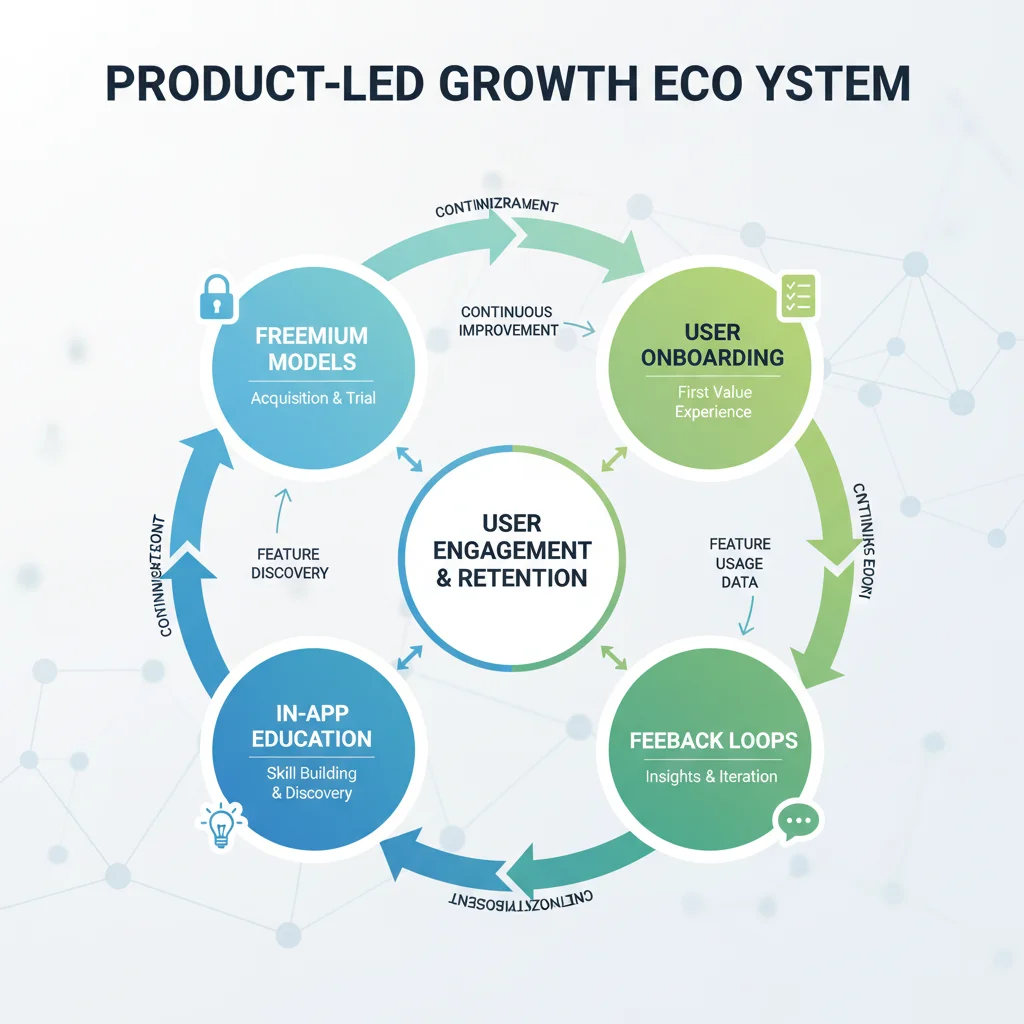
- Freemium or Free Trial Models: Offering a free version of your product (freemium) or a limited-time free trial is fundamental to PLG. This allows potential users to experience the value of your software without any upfront commitment. The key is to provide enough value in the free tier to hook users, while reserving advanced features or higher usage limits for paid plans. Think of companies like Slack, Zoom, and Dropbox – their freemium models were crucial to their initial explosive growth.
- Seamless Onboarding Experience: The first impression is critical. A well-designed onboarding process guides new users through the product’s core functionalities, helping them achieve their first ‘aha!’ moment quickly. This reduces churn and increases the likelihood of conversion. Onboarding should be intuitive, personalized, and focused on demonstrating immediate value. Use in-app tutorials, tooltips, and contextual help to make the journey smooth.
- In-App Value Demonstration: Continuously showcase the product’s value directly within the application. This includes displaying usage statistics, highlighting new features, or suggesting ways users can get more out of the product. The goal is to keep users engaged and remind them of the problems your SaaS solves.
- User Feedback Loops: Product-led companies are inherently customer-centric. Establishing robust feedback mechanisms (in-app surveys, feature request boards, direct communication channels) allows you to understand user needs, identify pain points, and continuously improve the product based on real-world usage. This iterative improvement cycle is vital for sustained SaaS user acquisition.
- Viral Loops and Shareability: Design your product with virality in mind. Can users easily invite teammates? Are there integration points that naturally spread awareness? Features like collaborative workspaces, easy sharing options, or referral programs can turn existing users into powerful acquisition channels.
Implementing PLG for a 25% Boost in Acquisition:
To achieve a 25% boost, your PLG strategy needs to be meticulously executed. Start by identifying your product’s core value proposition and how users can experience it fastest. Optimize your website and sign-up flow to minimize friction. Invest heavily in user experience (UX) and user interface (UI) design to make the product a joy to use. Continuously analyze user behavior data to pinpoint areas for improvement in the product journey. A strong PLG foundation ensures that every new user acquired has a higher chance of becoming a long-term, valuable customer.
Strategy 2: Leverage Data-Driven Marketing for Precision SaaS User Acquisition
In today’s digital age, data is gold. For SaaS user acquisition, a data-driven marketing approach is no longer a luxury but a necessity. By leveraging insights from various data sources, you can refine your targeting, personalize your messaging, optimize your campaigns, and ultimately achieve a much higher return on investment (ROI) from your marketing efforts. This precision can directly contribute to hitting that 25% acquisition growth target.
The Power of Data in SaaS Marketing:
Data allows you to move beyond guesswork and make informed decisions. It helps you understand who your ideal customer is, where they spend their time online, what their pain points are, and how they interact with your product and marketing touchpoints. This understanding is crucial for efficient and effective acquisition.
Core Components of Data-Driven Marketing:
- Comprehensive Customer Profiling (ICP): Go beyond basic demographics. Create detailed Ideal Customer Profiles (ICPs) based on firmographics (industry, company size, revenue), technographics (tech stack used), psychographics (goals, challenges, values), and behavioral data (online activities, content consumption). Tools like CRM systems, analytics platforms, and market research can help build these robust profiles.
- Advanced Analytics and Tracking: Implement robust analytics tools (e.g., Google Analytics 4, Mixpanel, Amplitude) to track every step of the user journey, from initial website visit to conversion and beyond. Monitor key metrics such as website traffic, bounce rate, conversion rates at each stage of the funnel, customer acquisition cost (CAC), and customer lifetime value (CLTV).
- Personalized Content and Messaging: Once you understand your audience, tailor your marketing messages and content to resonate with their specific needs and pain points. This applies to email campaigns, ad copy, landing pages, and even in-app messages. Dynamic content based on user segments can significantly improve engagement and conversion rates.
- A/B Testing and Optimization: Continuously test different elements of your marketing campaigns – headlines, calls to action (CTAs), landing page layouts, ad creatives, email subject lines – to identify what performs best. Data from A/B tests provides clear insights into what drives conversions and allows for iterative optimization. This scientific approach is critical for maximizing your SaaS user acquisition efforts.
- Attribution Modeling: Understand which marketing channels and touchpoints contribute most to conversions. Multi-touch attribution models can provide a more accurate picture than last-click attribution, allowing you to allocate your marketing budget more effectively to channels that truly drive results.
- Predictive Analytics: Utilize data to predict future user behavior, such as which users are likely to churn or which leads are most likely to convert. This allows for proactive interventions and more efficient resource allocation.
Executing Data-Driven Marketing for Growth:
To achieve a 25% increase, ensure your data infrastructure is solid. Centralize your data where possible, and make sure your team has the skills to analyze and act on insights. Regularly review your marketing performance against your ICPs and adjust your strategies accordingly. Focus on channels that deliver high-quality leads and optimize your conversion funnels based on real user behavior. By letting data guide your decisions, you minimize wasted effort and maximize your chances of acquiring more valuable SaaS users.
Strategy 3: Forge Strategic Partnerships for Expanded Reach and SaaS User Acquisition
While product-led growth and data-driven marketing focus on internal optimization and direct outreach, strategic partnerships offer an external pathway to significantly boost SaaS user acquisition. By collaborating with other businesses, you can tap into new audiences, leverage existing trust, and gain credibility that might take years to build independently. These partnerships can take various forms, each offering unique benefits for expanding your market reach.
The Value of Strategic Alliances:
Partnerships allow you to reach potential users who might not be exposed to your direct marketing efforts. They can provide warm leads, enhance your product’s value proposition through integrations, and position your SaaS as a comprehensive solution within a broader ecosystem. This can be a highly cost-effective way to scale your acquisition efforts.
Types of Strategic Partnerships for SaaS:
- Technology Integrations/Ecosystem Partnerships: Partner with other SaaS companies whose products complement yours. For example, if your SaaS is a project management tool, integrate with popular communication platforms (e.g., Slack, Microsoft Teams) or CRM systems (e.g., Salesforce). These integrations make your product more valuable to users of the partner’s platform, creating a seamless workflow and often leading to cross-promotion opportunities. Users of the integrated product are pre-qualified and already looking for solutions that enhance their existing tools.
- Channel Partnerships/Resellers: Work with partners who sell your product or refer customers to you in exchange for a commission. This could include value-added resellers (VARs), managed service providers (MSPs), or consultants who serve your target market. These partners have established relationships and can effectively position your SaaS to their client base, significantly extending your sales reach without incurring direct sales costs.
- Affiliate Marketing: Recruit affiliates (bloggers, influencers, review sites) who promote your SaaS to their audience and earn a commission for every sign-up or sale they generate. This performance-based marketing model can be highly scalable and cost-effective, as you only pay for results.
- Co-Marketing and Content Partnerships: Collaborate with non-competing businesses that share your target audience on joint marketing initiatives. This could involve co-hosting webinars, creating joint whitepapers or e-books, guest blogging on each other’s platforms, or running joint social media campaigns. These activities expose your brand to new, relevant audiences and leverage the credibility of your partners.
- Referral Programs: While often internal, a robust customer referral program can be considered a partnership with your existing user base. Reward current users for successfully referring new customers. This taps into the power of word-of-mouth marketing, which is often the most trusted and effective form of acquisition.

Maximizing Partnership Potential for 25% Acquisition Growth:
To achieve substantial acquisition growth through partnerships, be strategic in your selection. Identify partners whose audience aligns perfectly with your ICP and whose values resonate with yours. Clearly define the terms of the partnership, including shared goals, responsibilities, and measurement metrics. Nurture these relationships, providing partners with the resources and support they need to succeed in promoting your SaaS. A well-managed partnership ecosystem can become a powerful, continuous engine for SaaS user acquisition.
Integrating Strategies for Holistic SaaS User Acquisition
While each of these three strategies – Product-Led Growth, Data-Driven Marketing, and Strategic Partnerships – holds immense potential on its own, their true power is unleashed when integrated. Imagine a scenario where your product’s inherent value (PLG) attracts users, your data-driven campaigns (Data-Driven Marketing) efficiently convert them, and your partners (Strategic Partnerships) amplify your reach to new markets. This synergistic approach creates a robust and multifaceted acquisition engine.
Synergy in Action:
- PLG informs Data-Driven Marketing: User behavior data from your free trial or freemium product can provide invaluable insights for your marketing campaigns. Which features do users engage with most? What are their common pain points? This data can be used to refine your ICPs, personalize ad copy, and create more compelling landing pages that speak directly to the user’s experience within the product.
- Data-Driven Marketing identifies Partnership Opportunities: Analytics can reveal demographics or industries where your product has traction but where your direct marketing efforts are limited. This could signal an opportunity to seek out strategic partners who already serve those segments. Similarly, understanding the tech stacks of your ideal customers can pinpoint potential integration partners.
- Partnerships enhance PLG: A strong integration partner can expose your product to a new user base, who then experience your product’s value through its PLG model. For example, an integration with a popular CRM might lead to new users discovering your analytics tool directly within their familiar workflow, driving organic adoption.
- PLG and Partnerships fuel Data-Driven Marketing: New users acquired through partnerships or organic product discovery provide more data, which in turn refines your marketing strategies. This continuous feedback loop ensures your acquisition efforts are always improving.
The key is to view these strategies not as isolated silos but as interconnected components of a larger growth ecosystem. Regularly analyze how each strategy impacts the others and optimize for maximum synergy. This holistic view is what will truly set your SaaS apart and enable you to consistently hit ambitious growth targets like a 25% boost in SaaS user acquisition.
Overcoming Challenges in SaaS User Acquisition
Achieving a 25% increase in SaaS user acquisition is an ambitious goal that comes with its share of challenges. Recognizing and proactively addressing these hurdles is crucial for success.
Common Acquisition Challenges:
- Market Saturation: The SaaS market is crowded. Standing out requires a clear differentiator and a compelling value proposition.
- High Customer Acquisition Costs (CAC): Paid advertising can become prohibitively expensive, especially in competitive niches.
- Churn: Acquiring users is only half the battle; retaining them is equally important. High churn rates negate acquisition efforts.
- Long Sales Cycles: Enterprise SaaS often involves complex decision-making processes and extended sales cycles.
- Measuring ROI: Accurately attributing sign-ups and revenue to specific marketing efforts can be complex without robust tracking.
Strategies for Overcoming Challenges:
- Hyper-Niche Targeting: Instead of casting a wide net, focus on a very specific niche where your product offers exceptional value. This reduces competition and allows for more targeted, cost-effective marketing.
- Focus on Value, Not Just Features: Emphasize the problems your SaaS solves and the benefits it delivers, rather than just listing features. This resonates more deeply with potential users.
- Optimize for Retention from Day One: Design your product and onboarding with retention in mind. A strong retention strategy makes every acquired user more valuable.
- Leverage Customer Testimonials and Case Studies: Social proof is incredibly powerful. Showcase how your existing customers are succeeding with your product to build trust and credibility.
- Invest in SEO and Content Marketing: While not explicitly a core strategy above, strong SEO and valuable content can drive organic traffic and inbound leads, reducing reliance on paid channels and lowering CAC over time.
- Continuous Experimentation: The market is constantly changing. Be prepared to experiment with new channels, messages, and partnership models. What works today might not work tomorrow.
Measuring Success: Key Metrics for SaaS User Acquisition
To ensure you’re on track to achieve your 25% growth target, it’s vital to continuously monitor and analyze key performance indicators (KPIs) related to SaaS user acquisition. Without clear metrics, you cannot accurately assess the effectiveness of your strategies or identify areas for improvement.
Essential Metrics to Track:
- Customer Acquisition Cost (CAC): This metric measures the total cost of acquiring a new customer. Calculate it by dividing all marketing and sales expenses over a period by the number of new customers acquired in that same period. A lower CAC indicates more efficient acquisition.
- Customer Lifetime Value (CLTV): CLTV represents the total revenue a business can reasonably expect from a single customer account over the duration of their relationship. It’s crucial to ensure your CLTV is significantly higher than your CAC for sustainable growth.
- Conversion Rate: This can be measured at various stages of your funnel: website visitor to lead, lead to free trial, free trial to paid customer, etc. Optimizing conversion rates at each stage is critical for boosting overall acquisition.
- Monthly Recurring Revenue (MRR) / Annual Recurring Revenue (ARR) from New Customers: While acquisition focuses on user count, ultimately, the goal is revenue. Track the MRR or ARR generated specifically from newly acquired customers to understand the financial impact of your acquisition efforts.
- Trial-to-Paid Conversion Rate: For PLG models, this is a critical metric. It tells you how effectively your free trial or freemium users are converting into paying customers.
- Churn Rate (User and Revenue): High churn can quickly negate acquisition efforts. Monitor both user churn (loss of customers) and revenue churn (loss of revenue from existing customers) to ensure acquired users are retained.
- Time to Value (TTV): How quickly do new users experience the core benefit of your product? A shorter TTV often correlates with higher activation and retention rates.
- Referral Rate: If you have a referral program, track how many new users are coming through referrals. This is often a sign of strong product satisfaction and a powerful organic acquisition channel.
Regular Reporting and Analysis:
Establish a regular cadence for reviewing these metrics – weekly, monthly, and quarterly. Use dashboards to visualize your data and make it easily digestible for your team. Don’t just report the numbers; analyze them to understand the ‘why’ behind the trends. Are conversion rates dropping in a specific channel? Is CAC increasing? These insights will guide your optimization efforts and ensure your SaaS user acquisition strategies remain effective and efficient.
Conclusion: Paving the Way for 25% SaaS User Acquisition Growth
Achieving a 25% boost in SaaS user acquisition by 2026 is an ambitious yet entirely attainable goal for forward-thinking companies. By strategically embracing Product-Led Growth, meticulously executing Data-Driven Marketing, and intelligently forging Strategic Partnerships, your SaaS can unlock unprecedented levels of expansion. These aren’t just buzzwords; they are integrated methodologies that, when applied with precision and commitment, create a powerful flywheel for sustainable growth.
Remember, the journey to enhanced user acquisition is continuous. It requires constant iteration, a deep understanding of your customer, and an unwavering commitment to delivering exceptional value. By focusing on these three proven strategies, supported by robust data analysis and a customer-centric mindset, your SaaS will not only meet but exceed its acquisition targets, solidifying its position as a leader in the ever-evolving digital landscape. Start implementing these strategies today, and watch your user base – and your success – grow exponentially.