The business landscape is in a constant state of evolution, and for U.S. startups, staying ahead means embracing transformative technologies and organizational structures. Among these, Decentralized Autonomous Organizations (DAOs) stand out as a paradigm shift with the potential to redefine how businesses operate, govern, and grow. This comprehensive guide outlines a strategic blueprint for U.S. startups to leverage DAOs, aiming for an ambitious 15% faster growth by 2026. We will delve into the intricacies of DAO implementation, explore the benefits and challenges, and provide actionable insights for navigating this innovative frontier.
The Dawn of Decentralization: Why DAOs Matter for U.S. Startups
In an era demanding transparency, efficiency, and community-driven innovation, traditional corporate structures often fall short. This is where DAOs emerge as a compelling alternative. A Decentralized Autonomous Organization is an entity represented by rules encoded as a transparent computer program, controlled by its members, and not influenced by a central government. They operate on blockchain technology, ensuring immutability, transparency, and often, cryptographic security for all transactions and decisions.
For U.S. startups, the allure of DAOs lies in their ability to foster unprecedented levels of community engagement, streamline operational costs, and accelerate decision-making processes. Imagine a startup where every stakeholder, from early investors to active users, has a direct say in its direction, and where proposals are voted on and executed automatically by smart contracts. This is the promise of DAO Startup Growth.
The conventional startup model, while proven, often grapples with hierarchical bottlenecks, limited transparency, and the challenge of aligning diverse stakeholder interests. DAOs offer a fresh perspective. By distributing power and ownership, they can unlock a new level of collective intelligence and commitment. This isn’t just about decentralizing power; it’s about optimizing for collective success in a way that traditional models simply cannot achieve. The 2026 target of 15% faster growth isn’t arbitrary; it reflects the compounding advantages that a well-implemented DAO can bring to a lean, agile startup environment.
Unpacking the Core Mechanics of a DAO
Before diving into implementation strategies for DAO Startup Growth, it’s crucial to understand the fundamental components that make a DAO function:
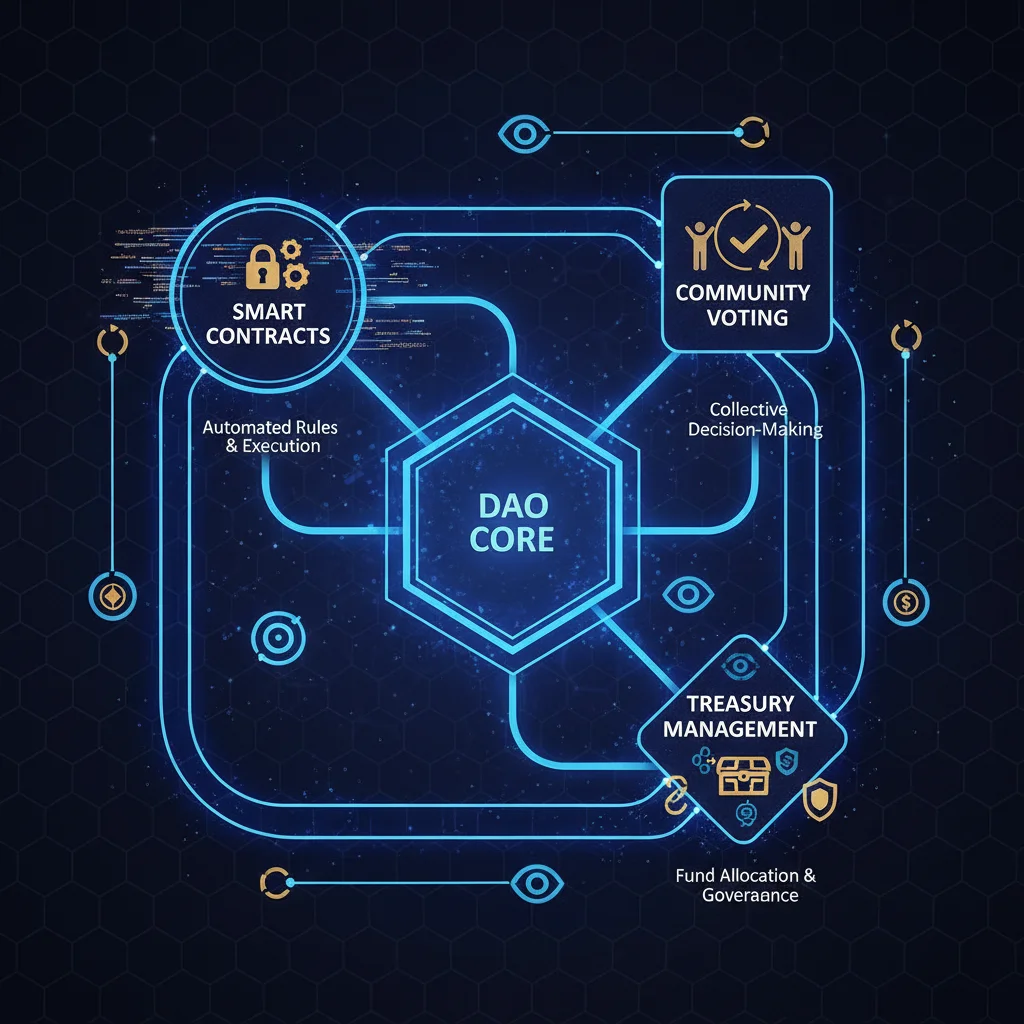
- Smart Contracts: These are the backbone of any DAO. Self-executing contracts with the terms of the agreement directly written into code. They automate processes, enforce rules, and ensure that decisions are carried out without intermediaries.
- Tokens: DAOs typically issue native tokens that represent ownership, voting rights, or access to certain features within the organization. These tokens can be used to propose changes, vote on initiatives, and often, to receive a share of the DAO’s profits or resources.
- Community Governance: Decisions in a DAO are made by its members through a voting mechanism, often proportional to the number of tokens held. This ensures that the collective will of the community guides the organization’s direction.
- Treasury Management: Funds within a DAO are held in a shared, transparent treasury, controlled by the community through voting. This eliminates the need for a central authority to manage finances and ensures that resources are allocated according to collective decisions.
Understanding these mechanics is the first step towards envisioning how a DAO can be integrated into your startup’s operations. The transparency inherent in smart contracts and blockchain technology builds trust among members, a critical ingredient for sustained DAO Startup Growth.
Strategic Advantages for U.S. Startups with DAO Implementation
The promise of 15% faster growth by 2026 isn’t just a bold claim; it’s rooted in several tangible benefits that DAOs offer to U.S. startups:
Enhanced Community Engagement and Loyalty
By giving users and early adopters a direct stake and voice in the project’s development, DAOs foster a deep sense of ownership and loyalty. This translates into more active participation, organic marketing, and a resilient user base. For startups, this community-driven approach can significantly reduce customer acquisition costs and increase retention, directly contributing to DAO Startup Growth.
Accelerated Decision-Making and Innovation
Traditional hierarchical structures can slow down decision-making. DAOs, with their transparent proposal and voting systems, can accelerate this process. Ideas can be proposed by anyone, debated publicly, and voted on efficiently. This agile decision-making framework allows startups to pivot quickly, respond to market changes, and innovate at a faster pace.
Global Talent Pool and Reduced Operational Costs
DAOs are inherently global. They allow startups to tap into a worldwide talent pool without the geographical constraints or complex legal frameworks often associated with traditional international hiring. By leveraging smart contracts for payments and governance, administrative overheads can be significantly reduced, freeing up resources for core development and scaling efforts. This global reach is a powerful driver for DAO Startup Growth.
Increased Transparency and Trust
Every transaction and decision within a DAO is recorded on a blockchain, making it immutable and publicly verifiable. This unparalleled transparency builds trust among all stakeholders – members, investors, and even regulators. For startups operating in nascent industries, establishing trust is paramount for long-term success and attracting further investment.
Decentralized Funding Mechanisms
DAOs can revolutionize fundraising. Instead of relying solely on traditional venture capital, startups can leverage token sales or community grants to fund their projects. This not only diversifies funding sources but also aligns the interests of investors with the long-term success of the DAO, directly fueling DAO Startup Growth.
Navigating the Challenges: A Realistic Outlook for U.S. DAOs
While the benefits are substantial, U.S. startups venturing into DAOs must also be aware of the inherent challenges:
Regulatory Uncertainty
The regulatory landscape for DAOs in the U.S. is still evolving. Startups need to navigate complex legal questions surrounding token classification (security vs. utility), liability, and taxation. Seeking expert legal counsel is not optional; it’s a necessity to ensure compliance and avoid future pitfalls. This is perhaps the most significant hurdle for achieving sustained DAO Startup Growth.
Governance Design and Participation
Designing an effective governance model that encourages active participation and prevents centralization of power is critical. Poorly designed governance can lead to voter apathy, slow decision-making, or even malicious actors gaining control. Startups must invest time in crafting robust governance frameworks and incentivizing meaningful engagement.
Security Risks and Smart Contract Vulnerabilities
The immutability of blockchain means that errors or vulnerabilities in smart contracts can have irreversible consequences. Auditing smart contracts by reputable third parties is essential to mitigate security risks and protect the DAO’s assets. A single breach can severely impact the trajectory of DAO Startup Growth.
Scalability and Technical Complexity
While blockchain technology is rapidly advancing, scalability can still be an issue for very large DAOs with frequent transactions or complex operations. Startups must choose their underlying blockchain infrastructure carefully and be prepared for ongoing technical development and maintenance.
Onboarding and Education
The concept of DAOs is still new to many. Educating potential members, users, and investors about how the DAO functions, its vision, and how they can participate effectively is crucial for successful adoption and sustained DAO Startup Growth. Simplified interfaces and clear documentation are key.
A 2026 Blueprint: Practical Steps for U.S. Startups to Implement DAOs
Achieving 15% faster growth by 2026 through DAO implementation requires a structured, phased approach. Here’s a blueprint for U.S. startups:
Phase 1: Foundation and Legal Strategy (Q1-Q2 2024)
- Define DAO Purpose and Scope: Clearly articulate what problems the DAO will solve and what functions it will govern. Will it manage product development, treasury, community grants, or a combination?
- Legal Counsel and Entity Formation: Engage with legal experts specializing in blockchain and DAOs. Explore legal wrappers for your DAO (e.g., Wyoming DAO LLC, or other emerging frameworks) to provide legal clarity and limit liability. This is paramount for U.S. startups.
- Choose Blockchain Infrastructure: Select a blockchain platform that aligns with your DAO’s needs regarding scalability, cost, security, and developer ecosystem (e.g., Ethereum, Polygon, Solana, Arbitrum, Optimism).
- Initial Governance Framework: Design a basic governance model. Start with a clear proposal process, voting mechanisms (e.g., token-weighted voting, quadratic voting), and dispute resolution protocols.
Phase 2: Technical Development and Smart Contract Audits (Q3-Q4 2024)
- Smart Contract Development: Develop the core smart contracts for your DAO, including governance logic, token issuance, and treasury management. Prioritize modularity and upgradability.
- Security Audits: Conduct thorough security audits of all smart contracts by independent, reputable firms. This step cannot be overstated to prevent vulnerabilities and ensure the integrity of the DAO.
- Frontend Development: Build an intuitive user interface (UI) for members to interact with the DAO, submit proposals, vote, and view treasury activity. Ease of use is critical for adoption.
- Tokenomics Design: Finalize your tokenomics model, including total supply, distribution mechanisms, utility, and incentives for participation. A well-designed tokenomics model is crucial for long-term DAO Startup Growth.
Phase 3: Community Building and Launch (Q1-Q2 2025)
- Community Building: Actively engage with your target community. Host workshops, AMAs (Ask Me Anything), and educational sessions to inform potential members about the DAO and its mission.
- Pilot Program/Testnet Launch: Launch a pilot version of your DAO on a testnet to gather feedback, identify bugs, and refine the governance process before a full mainnet launch.
- Mainnet Launch and Token Distribution: Officially launch your DAO on the chosen blockchain. Distribute tokens according to your defined tokenomics, ensuring fair and transparent allocation.
- Initial Proposals and Voting: Facilitate initial proposals and voting rounds to get the community actively involved in decision-making from day one.
Phase 4: Optimization and Scaling for 15% Growth (Q3 2025 – 2026)
- Continuous Governance Iteration: Continuously monitor and iterate on your governance model based on community feedback and participation rates. Adapt to evolving needs.
- Treasury Management and Ecosystem Development: Implement strategies for sustainable treasury management. Use DAO funds to incentivize ecosystem development, grants, and strategic partnerships.
- Regulatory Monitoring: Stay abreast of evolving U.S. regulations related to DAOs and blockchain. Be prepared to adapt your legal and operational frameworks as needed.
- Performance Metrics: Track key performance indicators (KPIs) related to DAO activity, community engagement, and project milestones. Measure the impact on your startup’s growth metrics to ensure you’re on track for that 15% faster growth.
- Decentralized Operations Expansion: Gradually decentralize more aspects of your startup’s operations, where appropriate, to further leverage the benefits of DAO governance. This could include marketing, product features, or research initiatives.

Case Studies and Emerging Trends in DAO Startup Growth
While the DAO space is still nascent, several examples highlight its potential. Projects like MakerDAO, Compound, and Uniswap have demonstrated the power of decentralized governance in managing vast treasuries and evolving complex protocols. These pioneers offer valuable lessons for U.S. startups.
Emerging trends suggest that DAOs will become increasingly specialized. We’re seeing the rise of:
- Service DAOs: Communities that pool talent to offer services (e.g., design, development, legal) to other projects.
- Investment DAOs: Groups that collectively invest in promising Web3 projects.
- Social DAOs: Focused on community building and shared experiences.
U.S. startups can learn from these models and even consider forming sub-DAOs within their larger organizational structure to manage specific functions or projects, further optimizing for DAO Startup Growth.
The Future is Decentralized: Positioning Your Startup for Success
The journey towards full decentralization for a U.S. startup is not without its complexities, but the rewards are substantial. The ability to harness collective intelligence, build deeply engaged communities, and operate with unprecedented transparency can be a game-changer. By 2026, those U.S. startups that strategically embrace the DAO model will likely differentiate themselves significantly, achieving faster growth and building more resilient, future-proof organizations.
The 15% faster growth target is ambitious but achievable for those willing to commit to the principles of decentralization, invest in robust legal and technical frameworks, and foster genuine community participation. As the Web3 ecosystem matures, so too will the tools and best practices for DAO implementation, making it an increasingly viable and attractive option for forward-thinking U.S. startups.
The time to explore and integrate DAOs is now. Don’t be left behind in the decentralized revolution; position your startup at the forefront of innovation and unlock its full potential for unparalleled DAO Startup Growth.
Conclusion: Embracing the DAO Advantage
The landscape of business is shifting, and Decentralized Autonomous Organizations represent a powerful current in this evolution. For U.S. startups looking to not just survive but thrive and achieve significant DAO Startup Growth, integrating DAO principles and structures by 2026 is a strategic imperative. This blueprint offers a roadmap, highlighting both the immense opportunities and the critical challenges that lie ahead. By focusing on robust governance, legal clarity, community engagement, and technological excellence, startups can harness the collective power of their stakeholders, accelerate innovation, and build resilient, transparent, and highly successful organizations for the future. The path to 15% faster growth is paved with decentralization.