Strategic Partnerships 2026: Identifying High-Value Collaborations for Growth

In an increasingly interconnected and rapidly evolving global economy, the concept of "go it alone" is fast becoming a relic of the past. For businesses aiming not just to survive but to thrive and lead in the coming years, strategic partnerships 2026 will be the bedrock of sustained growth, innovation, and competitive advantage. The landscape of business is shifting, driven by technological advancements, changing consumer behaviors, and geopolitical dynamics. Navigating this complexity requires foresight, agility, and, crucially, the ability to forge powerful alliances.
This comprehensive guide delves into the essence of strategic partnerships in 2026, offering a robust framework for identifying, securing, and maximizing high-value collaborations. We will explore the critical factors that underpin successful alliances, the methodologies for evaluating potential partners, the intricacies of negotiation, and the vital importance of measuring financial and strategic impact. This isn’t merely about signing agreements; it’s about building symbiotic relationships that unlock exponential value and propel organizations toward their most ambitious goals.
The Evolving Landscape of Strategic Partnerships 2026
The definition of a strategic partnership has broadened significantly. No longer confined to traditional joint ventures or distribution agreements, modern collaborations encompass a vast spectrum, from co-development projects and technology licensing to shared market access and ecosystem building. By 2026, several key trends will redefine how businesses approach these alliances:
Digital Transformation and AI Integration
The pervasive influence of digital transformation and artificial intelligence will be paramount. Strategic partnerships 2026 will increasingly focus on combining complementary AI capabilities, leveraging data insights, and co-creating digital solutions that drive efficiency, personalization, and new revenue streams. Companies that can effectively integrate AI into their partnership strategies will gain a significant edge.
Sustainability and ESG Imperatives
Environmental, Social, and Governance (ESG) factors are no longer just buzzwords; they are core business drivers. Future strategic partnerships will often be evaluated through an ESG lens, with companies seeking partners who share similar values and can collectively contribute to sustainable practices, ethical supply chains, and positive societal impact. Collaborations around renewable energy, circular economy models, and social responsibility initiatives will proliferate.
Global Market Fragmentation and Localization
While globalization continues, there’s a growing need for localized strategies. Strategic partnerships 2026 will involve navigating fragmented markets, understanding diverse regulatory environments, and adapting offerings to specific regional needs. Local partners with deep market knowledge and established networks will be invaluable for market entry and expansion.
Ecosystem Building and Platform Dominance
The shift towards ecosystem-based competition means that individual products or services are often part of a larger interconnected network. Companies will seek to build or join powerful ecosystems through strategic partnerships, offering comprehensive solutions that lock in customers and create network effects. Platform-based collaborations, where multiple partners contribute to a shared digital infrastructure, will be particularly prevalent.
Agility and Dynamic Alliances
The pace of change demands agility. Strategic partnerships in 2026 will be more dynamic, often characterized by shorter lifecycles, clearer objectives, and a greater emphasis on rapid iteration and adaptation. The ability to quickly form, scale, and even dissolve alliances based on evolving market conditions will be a critical competency.
A Framework for Identifying High-Value Collaborations
Identifying the right partner is akin to finding the perfect puzzle piece. It requires a systematic approach, clear criteria, and a deep understanding of your own organizational strengths and weaknesses. Here’s a framework to guide your search for strategic partnerships 2026:
1. Define Your Strategic Objectives
Before looking outwards, look inwards. What are your core strategic goals for the next 3-5 years? Are you aiming for market expansion, technological innovation, cost reduction, access to new customer segments, or enhanced brand reputation? Each objective will dictate different types of partners. Be specific and quantifiable.
2. Conduct a Gap Analysis
Once objectives are clear, identify the internal gaps that prevent you from achieving those goals independently. Do you lack specific technologies, market access, regulatory expertise, talent, or capital? These gaps represent opportunities for strategic partnerships. A thorough SWOT analysis (Strengths, Weaknesses, Opportunities, Threats) can be highly effective here.
3. Establish Partnership Criteria
Based on your objectives and gap analysis, develop clear criteria for potential partners. These should cover:
- Strategic Alignment: Do their goals complement yours? Is there a shared vision for the future?
- Complementary Strengths: Do they bring capabilities, resources, or market access that you lack, and vice-versa?
- Cultural Fit: Are their organizational values, communication styles, and work ethics compatible with yours? A mismatch here can doom an alliance.
- Financial Stability: Are they financially sound? Can they commit resources to the partnership?
- Reputation and Trust: Do they have a strong market reputation? Is there a basis for mutual trust and transparency?
- Competitive Overlap: Is there too much direct competition that could lead to conflicts of interest?
- Scalability: Can the partnership scale with your growth ambitions?
4. Market Scanning and Prospect Identification
With your criteria in hand, begin a systematic search. This involves:
- Industry Research: Identify key players, emerging startups, and disruptors in relevant sectors.
- Competitor Analysis: Observe who your competitors are partnering with and why.
- Networking: Leverage industry events, conferences, and professional networks.
- Digital Tools: Utilize market intelligence platforms, AI-powered partner matching tools, and social listening for insights.
- Internal Referrals: Your own employees might have valuable connections.
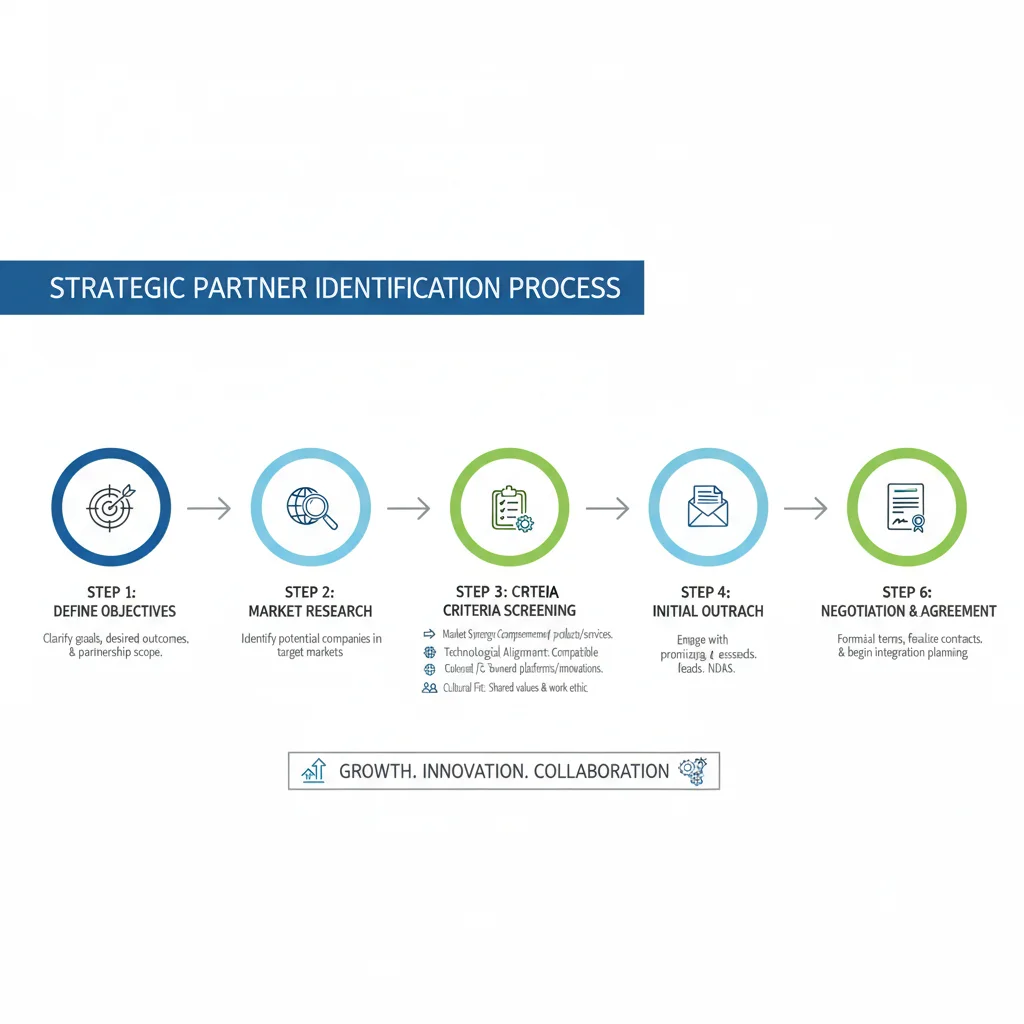
5. Due Diligence and Vetting
Once a shortlist of potential strategic partnerships 2026 candidates emerges, rigorous due diligence is critical. This goes beyond financial checks and includes:
- Operational Due Diligence: Assess their operational capabilities, technological infrastructure, and processes.
- Legal Due Diligence: Review contracts, intellectual property, and compliance records.
- Cultural Due Diligence: Conduct interviews with various levels of their organization, speak to former partners, and assess their leadership style.
- Market Validation: Talk to their customers, suppliers, and industry analysts to get an external perspective.
Securing High-Value Collaborations: Negotiation and Agreement
Identifying the right partner is half the battle; securing the agreement is the other. This phase requires skillful negotiation, clear communication, and a focus on mutual benefit.
1. Crafting a Compelling Value Proposition
Articulate clearly what your organization brings to the table. What unique assets, market access, technology, or expertise can you offer that will genuinely benefit the potential partner? This isn’t just about what you want; it’s about what you can give.
2. Negotiation Strategies for Strategic Partnerships 2026
- Win-Win Mindset: Approach negotiations with a collaborative spirit, aiming for outcomes where both parties feel they have gained significant value.
- Transparency and Trust: Be open about your objectives, limitations, and expectations. Foster an environment of trust from the outset.
- Flexibility: Be prepared to compromise on non-core issues while holding firm on your strategic priorities.
- Anticipate Challenges: Discuss potential roadblocks and how you would jointly address them. Building contingency plans into the agreement can prevent future disputes.
- Clear Roles and Responsibilities: Define who is responsible for what, decision-making processes, and escalation paths.
3. The Partnership Agreement
The legal agreement is the blueprint for your collaboration. It should be comprehensive, unambiguous, and cover:
- Scope and Objectives: Clearly define the purpose, goals, and boundaries of the partnership.
- Roles and Responsibilities: Detailed description of each party’s contributions and obligations.
- Governance Structure: How will decisions be made? Who forms the joint steering committee? How often will they meet?
- Intellectual Property: Ownership, usage, and licensing of IP created or brought into the partnership. This is critical, especially in technology-driven strategic partnerships 2026.
- Financial Terms: Revenue sharing, cost allocation, investment contributions, and payment schedules.
- Performance Metrics: How will success be measured? Key Performance Indicators (KPIs) and reporting mechanisms.
- Confidentiality: Non-disclosure agreements and data protection clauses.
- Dispute Resolution: Mechanisms for resolving conflicts.
- Exit Strategy: Conditions for termination, responsibilities upon exit, and intellectual property implications.
Maximizing Financial Impact: Measuring and Managing Alliances
A strategic partnership is not a one-time transaction; it’s an ongoing relationship that requires continuous management and measurement to ensure it delivers on its financial and strategic promise. The financial impact of strategic partnerships 2026 can be profound, but only if diligently managed.
1. Establishing Clear KPIs and Metrics
Before the ink is dry on the agreement, define how success will be measured. KPIs should be SMART (Specific, Measurable, Achievable, Relevant, Time-bound) and directly linked to the partnership’s objectives. Examples include:
- Revenue Growth: New sales generated, market share increase.
- Cost Savings: Reduced operational expenses, procurement efficiencies.
- Innovation Metrics: Number of new products/services launched, patents filed, R&D cost sharing.
- Customer Acquisition/Retention: New customer segments reached, churn reduction.
- Brand Value: Enhanced brand perception, increased brand awareness.
- Operational Efficiency: Streamlined processes, faster time-to-market.
2. Robust Governance and Communication
Effective governance is the backbone of any successful partnership. This includes:
- Joint Steering Committees: Regular meetings at the executive level to review progress, address strategic issues, and maintain alignment.
- Dedicated Partnership Managers: A single point of contact from each organization to oversee day-to-day operations and communication.
- Regular Reporting: Consistent sharing of performance data, challenges, and opportunities.
- Open Feedback Loops: Encouraging honest and constructive feedback to continually improve the partnership dynamics.
3. Continuous Value Creation and Innovation
The most successful strategic partnerships 2026 don’t just execute the initial plan; they evolve and find new avenues for collaboration. This means:
- Exploring New Opportunities: Regularly brainstorm new initiatives, products, or markets that can be jointly pursued.
- Knowledge Sharing: Foster an environment where both parties can learn from each other’s expertise and best practices.
- Adapting to Change: Be prepared to adjust the partnership’s scope or focus in response to market shifts or new technologies.

4. Risk Management and Conflict Resolution
No partnership is without its challenges. Proactive risk management and clear conflict resolution mechanisms are essential:
- Identify Potential Risks: Regularly assess operational, financial, reputational, and strategic risks associated with the partnership.
- Mitigation Strategies: Develop plans to address identified risks.
- Escalation Procedures: Clearly defined steps for resolving disagreements, starting from operational teams up to executive leadership or even third-party mediation if necessary.
5. Measuring ROI and Financial Impact
Quantifying the return on investment (ROI) from strategic partnerships 2026 is crucial for demonstrating value and justifying continued investment. This involves:
- Direct Financial Gains: Revenue generated directly from the partnership, cost savings achieved, increased profitability.
- Indirect Financial Benefits: Enhanced brand value, improved market position, access to new technologies that reduce future R&D costs, risk diversification.
- Opportunity Cost Analysis: Comparing the partnership’s performance against alternative investments or strategies.
- Long-Term Value Creation: Assessing how the partnership contributes to the company’s overall strategic objectives and long-term shareholder value.
Insider Knowledge: Unlocking Hidden Value in Strategic Partnerships 2026
Beyond the formal frameworks, there are "insider tips" that can significantly enhance the success and financial impact of your strategic partnerships in 2026.
1. Championing the Partnership Internally
A partnership is only as strong as its internal advocates. Ensure that key stakeholders within both organizations are fully bought into the alliance. This means:
- Executive Sponsorship: High-level executives who actively promote and support the partnership.
- Cross-Functional Teams: Engage relevant departments (sales, marketing, R&D, legal) from both sides early and often.
- Internal Communication: Regularly communicate the partnership’s value and progress to employees to foster enthusiasm and collaboration.
2. The Power of "Soft" Factors
While contracts and KPIs are vital, the human element often determines success. Focus on:
- Building Personal Relationships: Encourage informal interactions and trust-building activities between individuals from both organizations.
- Shared Learning and Development: Create opportunities for joint training, workshops, or knowledge exchange programs.
- Celebrating Milestones: Acknowledge and celebrate joint achievements to reinforce positive momentum.
3. Proactive Conflict Prevention
Anticipate potential areas of conflict before they arise. This might include:
- Scenario Planning: Discuss "what-if" scenarios and agree on how to handle them.
- Clear Communication Channels: Establish preferred methods and frequency of communication to avoid misunderstandings.
- Regular Health Checks: Periodically review the partnership’s health, not just its performance, to catch simmering issues early.
4. Leveraging Technology for Partnership Management
In 2026, technology will play an even greater role in managing strategic partnerships:
- Partnership Relationship Management (PRM) Software: Tools specifically designed to manage partner ecosystems, track performance, and streamline communication.
- Shared Dashboards: Collaborative platforms for real-time visibility into KPIs and project progress.
- AI-Powered Analytics: Using AI to identify trends, predict potential issues, and suggest optimization strategies for partnerships.
5. Knowing When to Evolve or Exit
Not all strategic partnerships 2026 will last forever, and some may not deliver the expected value. It’s crucial to:
- Regularly Re-evaluate: Periodically assess whether the partnership still aligns with your strategic objectives and is delivering sufficient ROI.
- Be Prepared to Pivot: If market conditions change, be open to adjusting the partnership’s scope or even transitioning to a different type of collaboration.
- Execute a Graceful Exit: If termination is necessary, ensure it’s handled professionally and according to the agreed-upon exit strategy to preserve relationships and reputation.
The Future is Collaborative: Embracing Strategic Partnerships 2026
As we look towards 2026 and beyond, the imperative for strategic partnerships will only intensify. The complexities of global markets, the pace of technological change, and the demand for sustainable and ethically sound business practices make collaboration not just an option, but a necessity. Companies that master the art and science of identifying, securing, and nurturing high-value strategic partnerships will be those that lead their industries, innovate relentlessly, and achieve unparalleled financial and market success.
By adopting a systematic framework, fostering a culture of collaboration, and leveraging both quantitative and qualitative insights, organizations can transform their approach to alliances. The insights shared here provide a roadmap for navigating this exciting and challenging landscape, ensuring that your strategic partnerships in 2026 become powerful engines for sustainable growth and a formidable source of competitive advantage. Embrace the collaborative future, and unlock the exponential potential that truly strategic alliances offer.