Boosting Employee Retention: 3 Innovative Strategies for the US Workforce in 2026
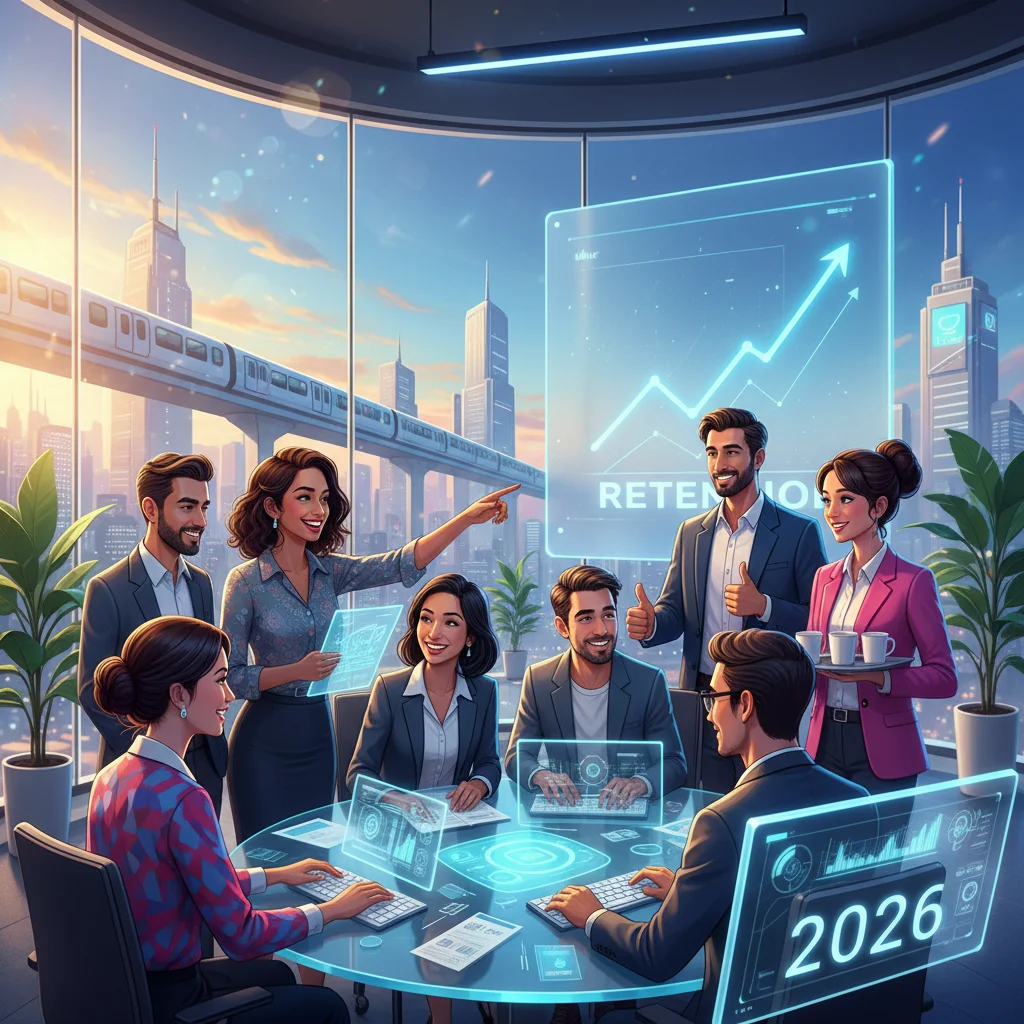
Boosting Employee Retention: 3 Innovative Strategies for the US Workforce in 2026
In the dynamic landscape of the modern US workforce, employee retention has emerged as a paramount concern for organizations striving for sustained success. As we look ahead to 2026, the challenges of attracting and, more importantly, retaining top talent are set to intensify. The Great Resignation and subsequent shifts in employee expectations have fundamentally altered the employer-employee contract, demanding a proactive and innovative approach to talent management. Companies that fail to adapt risk not only increased recruitment costs but also a significant loss of institutional knowledge, productivity, and competitive edge. Therefore, understanding and implementing effective employee retention strategies are no longer merely beneficial but absolutely critical for survival and growth in the coming years.
The traditional models of compensation and benefits, while still important, are no longer sufficient on their own to foster long-term loyalty. Today’s workforce, particularly younger generations, values purpose, growth opportunities, work-life integration, and a culture of well-being above many other factors. This comprehensive article delves into three innovative employee retention strategies that US organizations should consider implementing by 2026 to not only keep their valuable employees but also to cultivate a thriving and resilient workforce. We will explore how personalized career development, AI-driven engagement, and holistic well-being programs can revolutionize your approach to talent retention, offering practical solutions and insider knowledge to navigate the complexities of the future workplace.
The Evolving Landscape of Employee Retention in the US
Before diving into specific strategies, it’s crucial to grasp the underlying forces reshaping employee retention in the US. The pandemic accelerated several trends, including the widespread adoption of remote and hybrid work models, a heightened awareness of mental health, and a re-evaluation of career priorities. Employees are no longer content with merely a job; they seek careers that offer meaning, flexibility, and opportunities for continuous learning and advancement. The competitive talent market means that employees have more options than ever before, making it imperative for employers to differentiate themselves through superior workplace experiences.
Furthermore, demographic shifts are playing a significant role. The increasing diversity of the workforce brings with it a broader range of expectations and needs, requiring more inclusive and adaptable retention programs. Generational differences also contribute to this complexity, with Gen Z and Millennials often prioritizing different aspects of employment compared to older generations. Companies must move beyond a one-size-fits-all approach and instead embrace strategies that are tailored, empathetic, and forward-thinking. Effective employee retention strategies must address these multifaceted demands to secure a stable and engaged workforce.
The Cost of High Turnover: Why Retention Matters More Than Ever
The financial implications of high employee turnover are staggering. Beyond the direct costs of recruitment, onboarding, and training new hires, there are significant indirect costs, including decreased productivity, reduced morale among remaining employees, loss of institutional knowledge, and potential damage to brand reputation. Studies consistently show that the cost of replacing an employee can range from half to double their annual salary, depending on the role and industry. For highly specialized or leadership positions, these costs can be even higher. Therefore, investing in robust employee retention strategies is not an expense but a strategic investment that yields substantial returns in the long run.
Moreover, frequent turnover disrupts team cohesion and can negatively impact client relationships. A stable workforce fosters a stronger organizational culture, promotes better collaboration, and enhances overall business performance. In an increasingly competitive global economy, companies that can consistently retain their top talent will possess a distinct advantage, allowing them to innovate faster, deliver higher quality services, and build stronger customer loyalty. This makes a compelling case for prioritizing and continually refining employee retention strategies.
Strategy 1: Personalized Career Development and Growth Paths
One of the most powerful employee retention strategies for 2026 will be the implementation of highly personalized career development and growth paths. In an era where skills are rapidly evolving, employees are eager to learn new competencies and advance within their organizations. Generic training programs and static career ladders are no longer sufficient. Modern employees expect their employers to invest in their individual growth, providing bespoke opportunities that align with their aspirations and the company’s strategic needs.
Personalized career development goes beyond annual performance reviews. It involves continuous dialogue, robust mentorship programs, and access to a wide array of learning resources tailored to individual learning styles and goals. This could include micro-learning modules, certifications, project-based learning, cross-functional assignments, and even external educational opportunities. The key is to empower employees to take ownership of their career trajectory while providing them with the necessary tools and support to succeed. This fosters a sense of commitment and demonstrates that the company values their long-term contribution.

Leveraging Technology for Individualized Growth
Technology will play a pivotal role in delivering personalized career development at scale. AI-powered platforms can analyze an employee’s skills, performance data, career aspirations, and even personality traits to recommend relevant learning pathways and growth opportunities. These platforms can identify skill gaps, suggest mentors, and connect employees with internal projects that will help them acquire new experiences. By making career progression transparent and accessible, organizations can demystify the advancement process and motivate employees to invest in their own development.
Furthermore, virtual reality (VR) and augmented reality (AR) can provide immersive training experiences, allowing employees to practice new skills in a safe and engaging environment. Imagine a sales professional honing their negotiation tactics in a simulated client meeting, or an engineer troubleshooting complex machinery in a virtual lab. These technological advancements make learning more effective and appealing, directly contributing to stronger employee retention strategies by making growth tangible and exciting.
The Role of Mentorship and Sponsorship
While technology facilitates access to learning, human connection remains indispensable. Robust mentorship and sponsorship programs are critical components of personalized career development. Mentors can offer guidance, share experiences, and help employees navigate their professional journeys. Sponsors, on the other hand, actively advocate for their proteges, opening doors to new opportunities and promoting their visibility within the organization. These relationships build strong bonds between employees and the company, fostering a sense of belonging and loyalty.
Implementing formal mentorship programs, facilitated by AI matching algorithms, can ensure that every employee has access to a mentor who can genuinely support their growth. Regular check-ins, structured goals, and feedback mechanisms are essential to the success of these programs. When employees feel seen, heard, and supported in their professional aspirations, their likelihood of seeking opportunities elsewhere significantly diminishes. This human-centric approach, combined with technological enablement, forms a powerful component of effective employee retention strategies.
Strategy 2: AI-Driven Employee Engagement and Experience
The second innovative strategy revolves around leveraging Artificial Intelligence (AI) to enhance employee engagement and overall employee experience. Traditional engagement surveys, while useful, often provide retrospective data and lack the real-time insights needed to address issues proactively. AI, however, can analyze vast amounts of data – from communication patterns to sentiment analysis in internal platforms – to provide predictive insights into employee morale, potential burnout risks, and areas requiring immediate attention. This proactive approach is a game-changer for employee retention strategies.
AI-driven platforms can monitor employee sentiment through anonymous feedback channels, identify trends in team dynamics, and even predict which employees might be at risk of leaving. This allows HR and management to intervene with targeted support, resources, or communication strategies before problems escalate. For example, if an AI system detects a sudden drop in engagement or an increase in workload for a particular team, managers can be alerted to check in, offer support, or reallocate tasks. This level of personalized and timely intervention was previously impossible at scale.
Personalized Communication and Feedback Loops
AI can also revolutionize internal communication and feedback processes. Chatbots powered by AI can act as virtual HR assistants, providing instant answers to common employee queries about benefits, policies, or internal processes, freeing up HR staff for more strategic tasks. These chatbots can also collect anonymous feedback, allowing employees to voice concerns or suggestions without fear of reprisal. This continuous feedback loop ensures that employee sentiment is constantly monitored and addressed.
Furthermore, AI can help tailor internal communications to individual employees, ensuring they receive relevant information at the right time. This could include personalized learning recommendations, updates on projects they are interested in, or recognition for their contributions. When employees feel that communication is both efficient and relevant to them, their sense of belonging and value increases, directly impacting their decision to stay. Integrating AI into these core functions significantly strengthens employee retention strategies.
Fostering a Culture of Recognition and Appreciation
Recognition is a powerful motivator, and AI can help organizations build more robust and equitable recognition programs. AI algorithms can identify employees who have gone above and beyond, contributed significantly to projects, or consistently demonstrated company values, even if their work isn’t always visible to direct managers. This ensures that recognition is fair, frequent, and data-driven, rather than relying solely on subjective observation.
Automated recognition alerts, peer-to-peer recognition platforms integrated with AI, and personalized rewards based on employee preferences are all ways AI can enhance appreciation. When employees feel genuinely appreciated for their hard work and contributions, their loyalty and commitment to the organization grow. This fosters a positive work environment where individuals feel valued, a cornerstone of effective employee retention strategies.
Strategy 3: Holistic Well-being and Work-Life Integration
The third innovative strategy for employee retention strategies in 2026 focuses on holistic well-being and genuine work-life integration. The pandemic brought mental health to the forefront, and employees now expect their employers to actively support their physical, mental, emotional, and financial well-being. A truly holistic approach recognizes that an employee’s life outside of work significantly impacts their performance and satisfaction within the workplace.
This strategy moves beyond basic employee assistance programs (EAPs) to offer comprehensive support systems. This includes access to mental health professionals, mindfulness resources, financial planning advice, physical fitness programs, and flexible work arrangements that truly allow for personal commitments. Companies that prioritize employee well-being demonstrate a deep care for their people, building trust and loyalty that are invaluable for retention.

Flexible Work Models and Autonomy
Work-life integration is fundamentally about flexibility and autonomy. By 2026, the expectation for flexible work arrangements – whether remote, hybrid, or compressed workweeks – will be standard. Companies that resist these models will struggle significantly with employee retention. Providing employees with control over where and when they work, within reasonable operational constraints, empowers them and demonstrates trust. This autonomy fosters a sense of ownership and responsibility, leading to higher job satisfaction.
Beyond location and hours, autonomy extends to how work is done. Empowering teams to define their processes, choose their tools, and manage their projects fosters a sense of psychological safety and innovation. When employees feel trusted and respected, they are more likely to be engaged and committed to their roles, making flexible work models a critical component of modern employee retention strategies.
Comprehensive Mental and Physical Health Support
Investing in mental health support is no longer optional. Organizations must provide easy access to therapy, counseling, and mental health resources. This could include partnerships with telehealth providers, on-site wellness coaches, or dedicated mental health days. Crucially, companies need to foster a culture where discussing mental health is normalized and destigmatized, encouraging employees to seek help without fear of professional repercussions.
Physical well-being programs can range from subsidized gym memberships and fitness challenges to ergonomic assessments for remote workers. Nutritional guidance, stress management workshops, and even sleep improvement programs can contribute to a healthier, more productive workforce. When employees feel physically and mentally supported, they are better equipped to handle stress, perform at their best, and remain loyal to an organization that genuinely cares for their overall health. These comprehensive programs are essential for effective employee retention strategies.
Financial Wellness Programs
Financial stress is a major contributor to employee disengagement and turnover. By 2026, forward-thinking companies will offer comprehensive financial wellness programs that go beyond basic retirement planning. This could include financial literacy workshops, access to financial advisors, tools for budgeting and debt management, and even emergency savings funds. Helping employees achieve financial stability reduces their stress levels, allowing them to focus more effectively on their work.
Moreover, transparent compensation structures and clear pathways for salary progression are vital. Employees want to understand how their pay is determined and what they need to do to earn more. Companies that are open and fair about compensation, coupled with robust financial wellness support, will significantly enhance their appeal and improve their employee retention strategies.
Integrating the Strategies for Maximum Impact
While each of these three strategies – personalized career development, AI-driven engagement, and holistic well-being – is powerful on its own, their true impact is realized when they are integrated into a cohesive talent management framework. Imagine a scenario where an AI platform identifies an employee at risk of burnout (AI-driven engagement), then recommends a personalized development plan that includes stress management training and a flexible work arrangement (holistic well-being), combined with a new project opportunity that aligns with their career aspirations (personalized career development).
This synergistic approach creates a workplace ecosystem where employees feel valued, supported, and continuously challenged to grow. It fosters a culture of trust, transparency, and innovation, making the organization an employer of choice. The future of employee retention strategies lies not in isolated programs but in a holistic, interconnected system that addresses the multifaceted needs of the modern workforce.
The Role of Leadership in Driving Retention
No matter how innovative the strategies, effective leadership is paramount to their success. Leaders at all levels must be trained to champion these initiatives, foster open communication, and model the desired behaviors. They need to be equipped with the skills to have empathetic conversations, provide constructive feedback, and genuinely support their team members’ growth and well-being. A disconnect between organizational strategy and leadership execution can undermine even the best-laid plans.
Leaders must also be role models for work-life integration, demonstrating that it’s acceptable and encouraged to prioritize personal well-being. Their commitment to these employee retention strategies will inspire trust and encourage employees to fully engage with the programs offered. Ultimately, retention is a shared responsibility, with leadership playing a critical role in setting the tone and driving the culture.
Measuring Success and Continuous Improvement
Implementing these innovative employee retention strategies is an ongoing process that requires continuous measurement and adaptation. Organizations must establish clear KPIs (Key Performance Indicators) to track the effectiveness of their initiatives. These could include:
- Overall turnover rates (voluntary and involuntary)
- Retention rates for high-potential employees
- Employee satisfaction and engagement scores (e.g., eNPS)
- Participation rates in development and wellness programs
- Time to fill open positions
- Cost per hire
- Absenteeism rates
Regularly collecting and analyzing data, combined with qualitative feedback through surveys, focus groups, and one-on-one discussions, will provide valuable insights into what’s working and what needs adjustment. The market, technology, and employee expectations are constantly evolving, so retention strategies must also evolve. A commitment to continuous improvement ensures that your organization remains agile and responsive to the needs of its workforce, solidifying its position as a preferred employer.
Conclusion: A Future-Proof Approach to Talent Retention
As the US workforce navigates the complexities of 2026 and beyond, organizations that prioritize and strategically invest in cutting-edge employee retention strategies will be the ones that thrive. The three innovative approaches discussed – personalized career development and growth paths, AI-driven employee engagement and experience, and holistic well-being and work-life integration – offer a comprehensive framework for building a resilient, engaged, and loyal workforce.
Moving forward, success will depend on an organization’s ability to create a workplace where employees feel empowered to grow, genuinely connected to their work and colleagues, and fully supported in their overall well-being. By embracing technology, fostering a culture of empathy, and committing to continuous improvement, companies can transform their approach to talent management, securing their most valuable asset: their people. The investment in these forward-thinking employee retention strategies is not just about reducing turnover; it’s about building a sustainable future for your business and a fulfilling experience for your employees.