
Unlocking New Markets: A 3-Month Growth Plan to Expand Your Reach by 50% in 2026
In today’s dynamic global economy, business growth is not merely an aspiration but a necessity for long-term sustainability and competitive advantage. For many companies, achieving significant expansion often hinges on the ability to successfully penetrate and capitalize on new market opportunities. The prospect of expanding your reach by a remarkable 50% within a relatively short timeframe, such as by 2026, might seem ambitious, but with a meticulously crafted strategy and disciplined execution, it is entirely achievable. This comprehensive guide will walk you through a detailed new market expansion plan, designed to be implemented over three months, setting the stage for substantial growth and increased profitability.
The journey to unlocking new markets is multifaceted, requiring a blend of thorough research, strategic planning, agile implementation, and continuous evaluation. It’s not about blindly venturing into unknown territories; rather, it’s about making informed decisions that minimize risk and maximize potential returns. Our 3-month blueprint focuses on breaking down this complex process into manageable, actionable steps, ensuring that by the end of the quarter, your business is well-positioned to achieve its ambitious growth targets.
Whether you’re a burgeoning startup looking to scale rapidly or an established enterprise seeking fresh avenues for revenue, understanding the nuances of new market expansion is paramount. This article delves deep into the critical phases: from initial market identification and rigorous analysis to developing a tailored market entry strategy, and finally, to the crucial stages of implementation and performance measurement. By adhering to this structured approach, you can systematically dismantle barriers to entry, identify lucrative customer segments, and build a robust foundation for enduring success in your chosen new markets.
Let’s embark on this strategic journey together, transforming the aspiration of 50% expansion into a tangible reality by 2026. The next three months will be pivotal, demanding dedication, innovation, and a clear vision. Prepare to redefine your business’s boundaries and unlock unprecedented opportunities for growth.
Month 1: Foundation and Discovery – Identifying and Analyzing New Markets
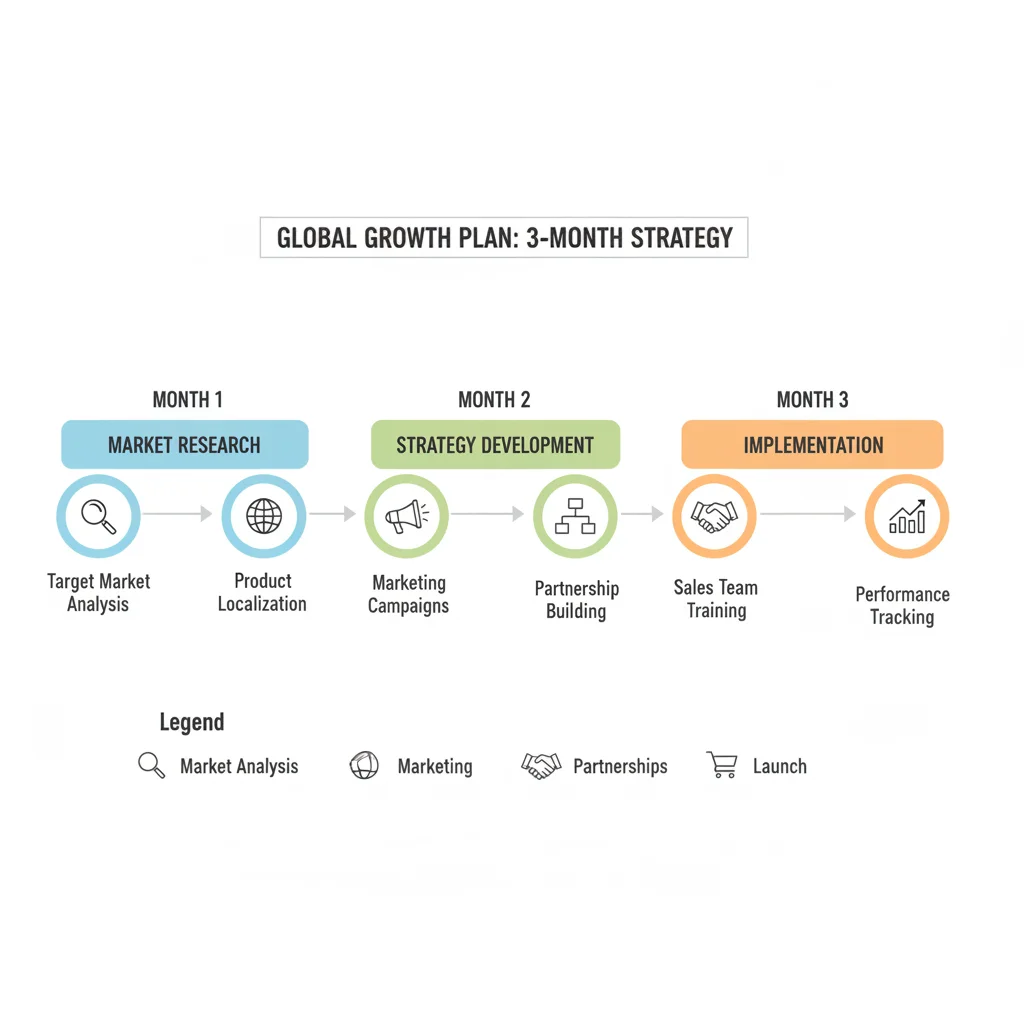
The first month of your new market expansion plan is dedicated to laying a solid foundation through intensive research and strategic discovery. This phase is critical for identifying the most promising markets and understanding their unique landscapes. Rushing this stage can lead to costly mistakes and missed opportunities. Therefore, a meticulous approach to market identification and analysis is non-negotiable.
Week 1: Defining Your Expansion Objectives and Criteria
Before diving into market research, it’s essential to clearly define what success looks like for your new market expansion. What are your specific goals beyond the 50% growth target? Are you aiming for increased brand recognition, diversification of revenue streams, access to new talent pools, or a combination of these? Establish measurable objectives (e.g., X% market share in Y market, Z revenue from new market by 2026). Simultaneously, define your criteria for market selection. This might include:
- Market Size and Growth Potential: Is the market large enough to justify the investment, and is it projected to grow?
- Competitive Landscape: How saturated is the market? Are there dominant players, and what are their strengths and weaknesses?
- Regulatory Environment: Are there significant legal, political, or trade barriers?
- Cultural Fit: Does your product/service resonate with the local culture and consumer preferences?
- Economic Stability: Is the market economically stable, with sufficient purchasing power?
- Logistical Feasibility: Can you efficiently deliver your product/service to this market?
- Resource Alignment: Do you have the internal resources (financial, human, technological) to enter and sustain operations in this market?
Documenting these objectives and criteria will serve as a guiding framework throughout your research, ensuring that your efforts are focused and aligned with your broader business strategy for new market expansion.
Week 2-3: Comprehensive Market Research and Data Collection
With your criteria in hand, the next step is to embark on comprehensive market research. This involves gathering both primary and secondary data to build a holistic picture of potential markets. Focus on identifying 3-5 promising markets that align with your criteria. Key areas of investigation include:
- Demographic and Psychographic Analysis: Who are the potential customers in these markets? What are their age groups, income levels, lifestyles, values, and buying behaviors?
- Industry Trends and Forecasts: What are the prevailing trends in your industry within these markets? What are the growth projections, technological advancements, and emerging consumer needs?
- Competitive Intelligence: Conduct in-depth analysis of existing competitors. What are their offerings, pricing strategies, marketing tactics, distribution channels, and customer service approaches? Identify their unique selling propositions (USPs) and any gaps they leave in the market.
- Regulatory and Legal Framework: Research import/export regulations, intellectual property laws, labor laws, consumer protection laws, and any industry-specific regulations that might impact your operations.
- Economic Indicators: Examine GDP growth, inflation rates, exchange rates, disposable income, and unemployment rates to assess the economic health and purchasing power of the market.
- Infrastructure Assessment: Evaluate the availability and quality of transportation, communication networks, and technological infrastructure necessary for your business operations.
Utilize a variety of sources, including government reports, industry publications, market research firms, trade associations, academic studies, and publicly available company data. Consider conducting preliminary surveys or interviews with potential customers or local experts to gather primary insights.
Week 4: SWOT Analysis and Market Prioritization
By the end of the first month, you should have a wealth of data on several potential markets. Week 4 is dedicated to synthesizing this information through a rigorous SWOT (Strengths, Weaknesses, Opportunities, Threats) analysis for each identified market. This will help you understand the internal and external factors influencing your potential success in each market.
- Strengths: What advantages does your company possess that would be beneficial in this new market (e.g., unique product, strong brand, efficient processes)?
- Weaknesses: What internal limitations might hinder your success (e.g., lack of local expertise, limited resources, brand unfamiliarity)?
- Opportunities: What external factors in the market could you leverage for growth (e.g., unmet demand, favorable regulations, emerging technologies)?
- Threats: What external challenges could impede your entry or success (e.g., strong competition, political instability, economic downturns, cultural resistance)?
Based on your SWOT analyses and alignment with your initial expansion criteria, prioritize the top 1-2 markets that offer the highest potential for achieving your 50% growth target by 2026, while presenting manageable risks. This prioritization marks the successful completion of Month 1, setting a clear direction for your new market expansion efforts.
Month 2: Strategy Development – Crafting Your Market Entry Blueprint
Month 2 shifts from discovery to strategy. Having identified your target markets, this phase focuses on developing a detailed blueprint for how you will enter, operate, and thrive within these new environments. This involves tailoring your offerings, defining your go-to-market strategy, and outlining the operational requirements for successful new market expansion.

Week 5-6: Product/Service Adaptation and Value Proposition Refinement
Your existing product or service might not be a perfect fit for a new market. Cultural nuances, regulatory requirements, and competitive offerings often necessitate adaptations. During these weeks, focus on:
- Localization: This goes beyond simple translation. Consider adapting product names, packaging, user interfaces, and marketing messages to resonate with local language and cultural sensitivities.
- Feature Adjustments: Based on your market research, are there specific features that need to be added, modified, or removed to meet local demand or comply with regulations?
- Pricing Strategy: Develop a competitive and profitable pricing strategy. Consider local income levels, competitor pricing, perceived value, and any import duties or taxes. Will you use penetration pricing, premium pricing, or a value-based approach?
- Unique Value Proposition (UVP): Clearly articulate why your product/service is superior or different from existing options in the new market. What unique problem do you solve, or what unique benefit do you offer? This UVP will be central to your marketing and sales efforts for new market expansion.
- Regulatory Compliance: Ensure all necessary certifications, licenses, and legal approvals are identified and plans are in place to obtain them.
Engage with local experts or focus groups if possible to validate your proposed adaptations and UVP. This iterative process is crucial for ensuring market acceptance.
Week 7-8: Go-to-Market Strategy and Distribution Channels
The next critical step is to define how you will reach and serve your new customers. This involves selecting appropriate distribution channels and crafting a targeted marketing and sales strategy.
- Distribution Channels: Determine the most effective ways to deliver your product or service. Options include direct sales, e-commerce, local distributors, partnerships, franchises, or establishing a physical presence. The choice will depend on your product, target market behavior, and logistical capabilities. For example, a software company might focus on digital distribution, while a consumer goods company might need a robust retail partnership network for its new market expansion.
- Marketing and Communication Strategy: Develop a localized marketing plan. What channels will you use (digital advertising, social media, traditional media, PR)? What message will resonate most effectively? Consider local holidays, events, and influencers. Allocate a budget for initial market entry campaigns.
- Sales Strategy: Outline your sales approach. Will you hire a local sales team, manage sales remotely, or leverage partners? Define sales targets and training requirements.
- Customer Support: Plan for localized customer support, including language capabilities, time zone considerations, and preferred communication channels (e.g., chat, phone, email).
- Partnerships: Identify potential strategic partners who can help you navigate the local landscape, provide distribution, or offer complementary services.
A well-defined go-to-market strategy is the backbone of successful new market expansion, ensuring your efforts are coordinated and impactful.
By the end of Month 2, you will have a clear, actionable strategy detailing your adapted offerings, pricing, distribution, and marketing approach for your chosen new markets. This strategic blueprint will serve as your roadmap for the implementation phase.
Month 3: Implementation and Launch – Executing Your Expansion Plan
The final month is all about bringing your meticulously crafted plans to life. This is the execution phase, where strategy transforms into tangible action, culminating in your official launch into the new market. Agility and responsiveness are key during this period of new market expansion.
Week 9-10: Operational Setup and Resource Allocation
These weeks are dedicated to establishing the necessary operational infrastructure and allocating resources to support your market entry.
- Legal and Administrative Setup: Finalize all legal registrations, permits, and licenses required to operate in the new market. This might involve setting up a local entity, registering for taxes, and ensuring compliance with labor laws if you’re hiring locally.
- Team Building and Training: If you’re establishing a local team, initiate recruitment and provide comprehensive training on your products/services, company culture, and sales processes. If you’re leveraging existing teams, ensure they are adequately trained on new market specifics.
- Technology and Infrastructure: Set up any necessary IT infrastructure, localized websites, e-commerce platforms, or CRM systems. Ensure your supply chain and logistics are ready to handle increased demand and new delivery routes for new market expansion.
- Partnership Activation: Formalize agreements with any chosen distributors, resellers, or strategic partners. Establish clear communication channels and performance expectations.
- Pilot Programs/Soft Launch (Optional but Recommended): Consider a smaller-scale pilot program or a soft launch in a specific region or with a select group of customers. This allows you to test your assumptions, identify unforeseen challenges, and refine your approach before a full-scale rollout.
This phase requires meticulous attention to detail and strong project management to ensure all moving parts are coordinated effectively.
Week 11-12: Marketing Launch, Sales Activation, and Performance Monitoring
With operations in place, these final weeks focus on aggressively launching your presence and closely monitoring initial performance.
- Execute Marketing Campaigns: Launch your planned marketing and advertising campaigns. Monitor their performance closely, tracking key metrics like reach, engagement, lead generation, and conversion rates. Be prepared to make real-time adjustments based on initial data.
- Sales Activation: Initiate sales activities, whether through your direct sales team, partners, or e-commerce channels. Focus on building initial customer relationships and securing early sales.
- Customer Feedback Loop: Establish mechanisms for collecting customer feedback from day one. This could include surveys, social media monitoring, customer service interactions, and direct outreach. This feedback is invaluable for continuous improvement and adaptation in your new market expansion efforts.
- Key Performance Indicator (KPI) Tracking: Continuously monitor predefined KPIs related to your expansion objectives. These might include sales volume, customer acquisition costs, market share, brand awareness, website traffic from the new market, and customer satisfaction scores.
- Regular Review Meetings: Hold weekly review meetings with your core expansion team to discuss progress, address challenges, and make necessary strategic or operational adjustments.
The end of Month 3 marks the official launch and initial operational period in your new market. While the planning is complete, the journey of refinement and growth has just begun.
Beyond the 3-Month Mark: Sustaining and Scaling Your Growth to 50% by 2026
Achieving a 50% expansion by 2026 is a significant undertaking that extends well beyond the initial three months of market entry. The first quarter establishes the foothold; the subsequent period is about consolidating, optimizing, and scaling your presence to hit that ambitious growth target. Here’s what comes next:
Continuous Market Adaptation and Optimization
Market dynamics are rarely static. Consumer preferences evolve, competitors react, and regulatory environments can change. Your new market expansion strategy must remain fluid and adaptable. Regularly revisit your market research, analyze performance data, and solicit customer feedback to identify areas for improvement. This might involve:
- Product/Service Iteration: Based on feedback and market trends, continue to refine and enhance your offerings.
- Marketing Campaign Optimization: Analyze which marketing channels and messages are most effective and adjust your budget and tactics accordingly. A/B testing different approaches can yield significant insights.
- Pricing Adjustments: Monitor competitive pricing and market demand to ensure your pricing remains optimal for profitability and market share.
- Distribution Channel Enhancement: Seek opportunities to broaden your distribution network or optimize existing channels for greater efficiency.
An agile approach, characterized by continuous learning and adaptation, is crucial for long-term success in your new market expansion.
Scaling Operations and Resources
As your presence in the new market grows, so will the demands on your operations and resources. Plan for scalable infrastructure, which includes:
- Talent Acquisition: Recruit and train more local talent as your business expands. Invest in developing local leadership to ensure sustainable growth.
- Supply Chain Management: Optimize your supply chain to handle increased volumes efficiently and cost-effectively. This might involve local sourcing or establishing regional distribution centers.
- Technological Infrastructure: Ensure your systems can handle increased user loads and data volumes. Invest in robust, scalable technology solutions.
- Financial Management: Closely monitor cash flow and profitability in the new market. Reinvest profits strategically to fuel further growth.
Proactive scaling ensures that operational bottlenecks do not hinder your growth trajectory towards the 50% expansion goal.
Building Brand Equity and Community
Beyond initial sales, fostering brand loyalty and building a strong community around your brand are vital for sustained growth. This involves:
- Consistent Brand Messaging: Ensure your brand message is consistent across all touchpoints, reinforcing your unique value proposition.
- Customer Relationship Management (CRM): Implement effective CRM strategies to nurture customer relationships, encourage repeat business, and generate positive word-of-mouth.
- Community Engagement: Engage with the local community through events, social responsibility initiatives, and local partnerships. This can significantly enhance brand perception and loyalty.
- Thought Leadership: Position your company as a thought leader in the new market by sharing valuable insights and contributing to industry discussions.
Strong brand equity and a loyal customer base will act as powerful accelerators for your new market expansion.
Risk Management and Contingency Planning
Even with the best planning, unforeseen challenges can arise. Maintain a proactive approach to risk management:
- Regular Risk Assessments: Periodically review potential political, economic, social, technological, legal, and environmental (PESTLE) risks in your new markets.
- Contingency Plans: Develop contingency plans for various scenarios, such as economic downturns, supply chain disruptions, or new competitive threats.
- Legal and Compliance Monitoring: Stay abreast of any changes in local regulations that might impact your business operations.
Being prepared for potential setbacks allows you to respond effectively and minimize their impact on your growth objectives for new market expansion.
Conclusion: Your Path to 50% Expansion by 2026 is Clear
The journey to unlocking new markets and achieving a significant 50% expansion by 2026 is undeniably challenging, but with this detailed 3-month growth plan, your path is clearer than ever. By dedicating the first month to thorough foundation and discovery, the second to meticulous strategy development, and the third to agile implementation and launch, you establish a powerful momentum for sustained growth.
Remember, new market expansion is not a one-time event but an ongoing process of learning, adaptation, and optimization. The initial three months are crucial for gaining a foothold, but the real growth comes from consistent effort, strategic adjustments, and a relentless focus on delivering value to your new customer base. Embrace the challenges, celebrate the successes, and continuously refine your approach.
With a clear vision, a data-driven strategy, and a committed team, your ambition of expanding your reach by 50% by 2026 is not just a dream, but a well-defined and achievable goal. Begin your new market expansion journey today, and position your business for unprecedented success in the years to come.