Mastering US Market Entry: 5 Essential Steps for International Businesses in 2026

The United States, with its vast consumer base, robust economy, and innovative spirit, remains an irresistible magnet for international businesses seeking global expansion. However, the allure of the American dream can quickly turn into a complex nightmare without a well-defined and meticulously executed US market entry strategy. For international businesses eyeing the US market in 2026, understanding the nuances and preparing for the challenges is paramount to success. This comprehensive guide will walk you through five essential steps, offering practical solutions and insights to navigate this dynamic landscape.
Entering the US market is not merely about launching a product or service; it’s about understanding a diverse culture, a complex legal framework, competitive landscapes, and evolving consumer behaviors. The stakes are high, but so are the potential rewards. By following these steps, businesses can significantly increase their chances of establishing a strong, sustainable foothold in one of the world’s most lucrative markets.
Step 1: Comprehensive Market Research and Feasibility Analysis
Before any significant investment or operational commitment, a deep dive into market research is non-negotiable. This foundational step is the bedrock of any successful US market entry strategy. It involves understanding the market size, growth potential, competitive landscape, and most importantly, identifying your target audience within the vast American demographic.
Identifying Your Niche and Target Audience
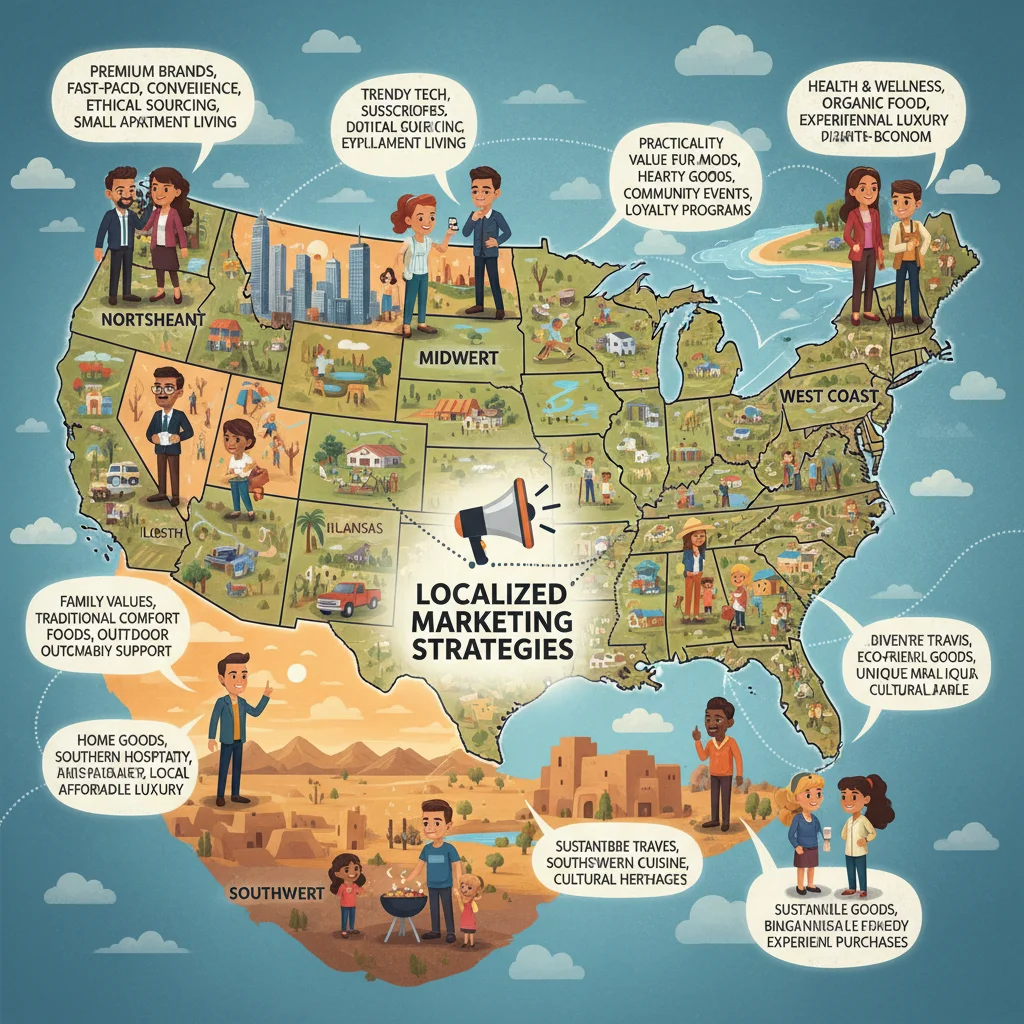
The US is not a monolithic market; it’s a mosaic of diverse regions, cultures, and consumer segments. What works in California might not resonate in Texas, and a product popular in New York could fall flat in the Midwest. Therefore, pinpointing your specific niche and understanding your ideal customer is crucial. Consider:
- Demographics: Age, income, education, occupation, family size.
- Psychographics: Lifestyles, values, attitudes, interests.
- Geographics: Urban vs. rural, specific states or regions with higher demand.
- Behavioral Patterns: Purchasing habits, brand loyalty, consumption frequency.
Tools like demographic data, consumer surveys, focus groups, and even social media analytics can provide invaluable insights. Don’t assume your existing international customer base will directly translate to the US; conduct fresh, localized research.
Competitive Landscape Analysis
Who are your direct and indirect competitors? What are their strengths and weaknesses? What pricing strategies do they employ? What are their distribution channels? A thorough competitive analysis will help you identify gaps in the market, differentiate your offering, and formulate a unique value proposition. Look beyond direct product competition; consider substitutes and alternative solutions that consumers might use.
SWOT Analysis for US Market Entry
A SWOT (Strengths, Weaknesses, Opportunities, Threats) analysis specifically tailored to the US market context is vital. This will help you leverage your internal strengths, address weaknesses, capitalize on market opportunities, and mitigate potential threats. For instance, a strength might be an innovative product, while a weakness could be a lack of brand recognition in the US. An opportunity could be an underserved niche, and a threat, a new regulatory hurdle.
Feasibility Study and Risk Assessment
Beyond market appeal, can your business realistically operate in the US? This involves assessing financial viability, operational capacity, and potential legal or logistical hurdles. Consider:
- Financial Projections: Startup costs, operational expenses, revenue forecasts, profitability.
- Supply Chain and Logistics: Can you efficiently produce, ship, and distribute your product across the US?
- Human Resources: Availability of skilled labor, hiring costs, labor laws.
- Regulatory Environment: Are there specific licenses, permits, or certifications required for your industry?
A comprehensive risk assessment should identify potential pitfalls, from economic downturns to unforeseen legal challenges, and develop contingency plans. This proactive approach is a cornerstone of a robust US market entry strategy.
Step 2: Navigating the Legal and Regulatory Landscape
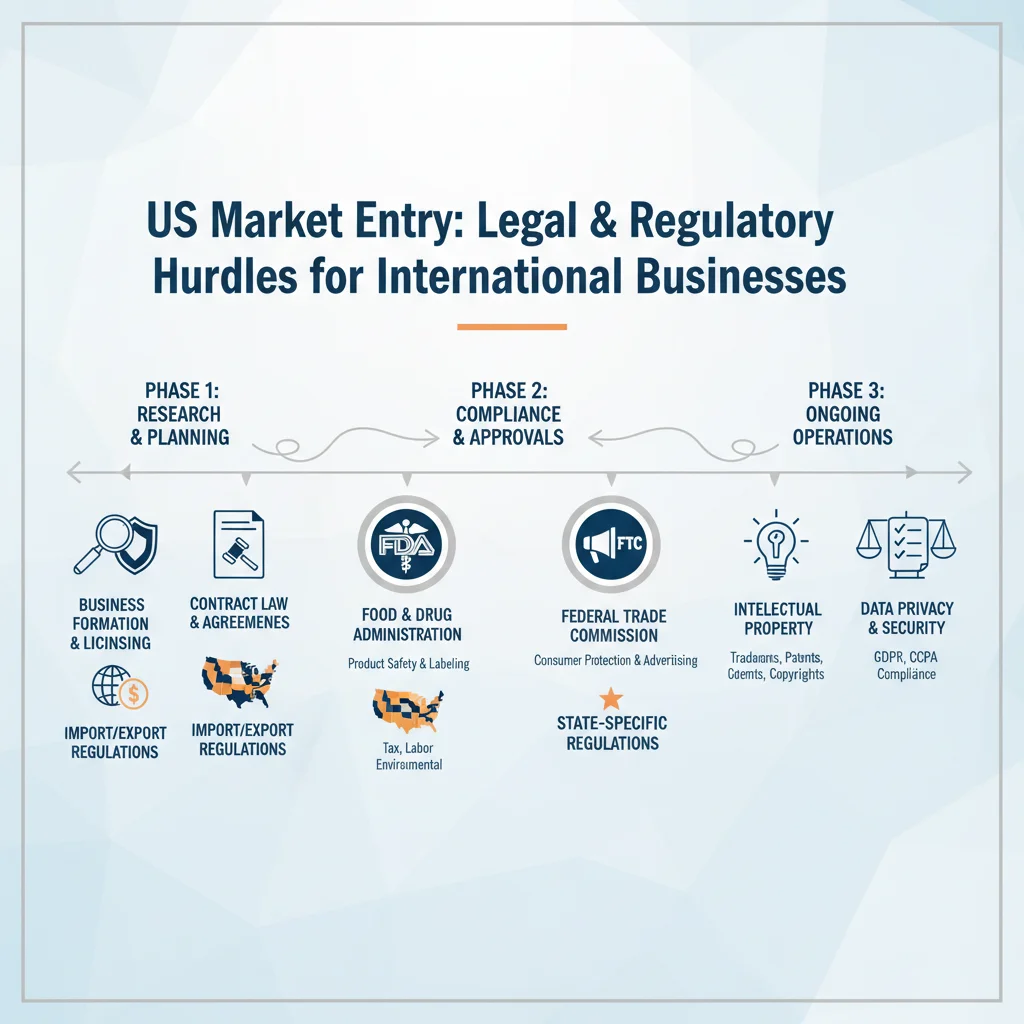
The US legal and regulatory environment is notoriously complex, varying not only at the federal level but also significantly from state to state and even city to city. Ignoring this aspect can lead to severe penalties, reputational damage, and even forced market exit. This step is critical for any international business aiming for a smooth US market entry strategy.
Understanding Federal Regulations
Several federal agencies govern various aspects of business operations. Depending on your industry, you might need to comply with regulations from:
- FDA (Food and Drug Administration): For food, drugs, medical devices, cosmetics.
- FTC (Federal Trade Commission): For consumer protection, advertising, antitrust laws.
- EPA (Environmental Protection Agency): For environmental standards and waste management.
- OSHA (Occupational Safety and Health Administration): For workplace safety.
- Department of Commerce: For trade and export regulations.
It’s essential to identify all relevant federal bodies and ensure your product, marketing, and operations comply with their guidelines.
State and Local Compliance
This is where complexity often escalates. Each state has its own set of business laws, tax regulations, employment laws, licensing requirements, and consumer protection statutes. For example, sales tax rates and regulations differ significantly across states. Some states have specific industry-specific regulations that are more stringent than federal ones.
Before establishing a presence, research the specific requirements of your chosen state(s) and city(ies). This might involve:
- Business registration and licensing.
- Labor laws (minimum wage, worker classification, leave policies).
- Environmental permits.
- Zoning laws for physical locations.
Engaging local legal counsel specializing in business law and regulatory compliance is highly recommended to navigate this labyrinth effectively. A misstep here can be costly and delay your US market entry strategy significantly.
Intellectual Property Protection
Protecting your intellectual property (IP) is paramount in a competitive market like the US. This includes trademarks, patents, copyrights, and trade secrets. Registering your IP with the appropriate US authorities (e.g., USPTO for patents and trademarks) before market entry is crucial to prevent infringement and secure your innovative assets. Failure to do so can lead to costly legal battles and loss of competitive advantage.
Data Privacy and Cybersecurity
With increasing concerns about data privacy, understanding regulations like the California Consumer Privacy Act (CCPA) and other state-specific data protection laws is vital, especially if you handle customer data. Implementing robust cybersecurity measures is also critical to protect your business and customer information from breaches, building trust with your new consumer base.
Step 3: Developing a Localized Marketing and Sales Strategy
A one-size-fits-all approach to marketing rarely works in the US. Successful US market entry strategy demands a highly localized marketing and sales approach that resonates with the target audience and acknowledges cultural nuances.
Cultural Adaptation and Branding
What appeals to consumers in your home country might not translate well in the US. Consider:
- Language and Tone: While English is widely spoken, regional dialects, slang, and cultural references can vary. Ensure your messaging is clear, concise, and culturally appropriate.
- Visuals and Imagery: Marketing visuals should reflect the diversity of the American population and avoid stereotypes.
- Brand Name and Slogans: Ensure your brand name and slogans don’t have unintended negative connotations in English or other prevalent languages in your target region.
- Values and Storytelling: Americans often respond well to authentic brand stories that align with values like innovation, community, and personal freedom.
Brand localization goes beyond translation; it’s about cultural adaptation to build genuine connections with consumers.
Multi-Channel Sales and Distribution
The US offers a vast array of sales and distribution channels, from e-commerce giants like Amazon, Walmart, and Target, to brick-and-mortar retail chains, specialty stores, and direct-to-consumer (DTC) models. Your choice depends on your product, target audience, and resources. Key considerations include:
- E-commerce Dominance: A strong online presence is almost always essential. This includes your own website, marketplace listings, and social commerce.
- Retail Partnerships: Forming alliances with established retailers can provide immediate access to a wide customer base.
- Distributors and Wholesalers: These partners can manage logistics and reach a broader network of smaller retailers.
- Direct Sales Force: For complex or high-value products, a dedicated sales team might be necessary.
An omnichannel approach, integrating online and offline channels, often yields the best results for a robust US market entry strategy.
Digital Marketing and SEO Localization
Digital marketing is crucial for reaching US consumers. This includes:
- Search Engine Optimization (SEO): Optimizing your website and content for US search engines (primarily Google) using localized keywords and content.
- Social Media Marketing: Leveraging platforms like Facebook, Instagram, TikTok, LinkedIn, and X (formerly Twitter), understanding their user demographics and content preferences.
- Paid Advertising (PPC): Running targeted campaigns on Google Ads, social media, and programmatic advertising platforms.
- Content Marketing: Creating valuable, localized content (blog posts, videos, infographics) that addresses US consumer pain points and interests.
- Influencer Marketing: Collaborating with US-based influencers who resonate with your target audience.
Remember that the competitive landscape for digital visibility in the US is intense, requiring a sophisticated and sustained effort.
Pricing Strategy for the US Market
Pricing in the US market requires careful consideration. Factors include:
- Competitive Pricing: How do your prices compare to similar products in the US?
- Cost Structure: Including production, shipping, duties, taxes, marketing, and distribution costs.
- Perceived Value: How much are US consumers willing to pay for your product, considering its quality, brand, and features?
- Psychological Pricing: Strategies like odd-even pricing ($9.99 instead of $10.00).
- Promotional Pricing: Discounts, bundles, and loyalty programs.
A well-researched and flexible pricing strategy is essential for profitability and market acceptance.
Step 4: Building a Robust Operational Infrastructure and Team
Successful US market entry strategy is not just about sales; it’s about having the operational backbone to support growth. This includes everything from supply chain management to staffing and customer service.
Supply Chain and Logistics Management
The US is a huge country, and efficient logistics are critical. Consider:
- Warehousing and Fulfillment: Will you use third-party logistics (3PL) providers, or establish your own warehouses? Proximity to major transportation hubs and your customer base is key.
- Transportation: Understanding freight options (truck, rail, air, sea) and their associated costs and transit times.
- Customs and Duties: Navigating import regulations, tariffs, and customs clearances can be complex. Working with experienced customs brokers is often advisable.
- Inventory Management: Balancing inventory levels to meet demand without incurring excessive holding costs.
A streamlined and resilient supply chain is crucial for timely delivery and customer satisfaction.
Recruitment and Human Resources
Building a local team is often essential for understanding and responding to the US market effectively. Key considerations include:
- Hiring Local Talent: Americans with local market knowledge, industry connections, and cultural understanding can be invaluable.
- Compliance with Labor Laws: US labor laws are complex and vary by state. This includes aspects like employment contracts, benefits, non-discrimination, and termination procedures.
- Compensation and Benefits: Understanding competitive salary ranges and standard benefits packages (health insurance, retirement plans) is crucial for attracting and retaining talent.
- Work Culture: American work culture can differ significantly from other countries. Be prepared to adapt management styles and communication practices.
Investing in a strong HR function or partnering with an Employer of Record (EOR) can mitigate risks and ensure compliance.
Customer Service and Support
Exceptional customer service is a hallmark of successful businesses in the US. Consumers expect prompt, efficient, and personalized support. Establish:
- Local Support Channels: Toll-free phone numbers, email support, live chat, and social media presence.
- Response Times: Set clear service level agreements (SLAs) for response and resolution times.
- Training: Ensure your customer service team is well-trained on your products, company policies, and US customer expectations.
- Feedback Mechanisms: Implement systems to gather customer feedback and continuously improve your service.
Positive customer experiences build brand loyalty and drive repeat business, making it a vital component of your US market entry strategy.
Step 5: Securing Funding and Financial Planning
Entering the US market is a significant financial undertaking. A robust financial plan and secure funding are critical for sustaining operations and achieving growth. This final step is often the make-or-break factor for many international businesses.
Initial Investment and Operating Costs
Develop a detailed financial model that projects all initial investment costs and ongoing operating expenses. These typically include:
- Market Research Costs: Surveys, consulting fees.
- Legal and Regulatory Fees: Business registration, IP protection, compliance.
- Marketing and Sales Expenses: Advertising, digital campaigns, sales force salaries.
- Operational Costs: Rent, utilities, logistics, inventory.
- Human Resources: Salaries, benefits, recruitment.
- Technology and Infrastructure: IT systems, software, equipment.
- Contingency Fund: Always allocate a significant buffer for unforeseen expenses.
Underestimating costs is a common pitfall; be conservative in your revenue projections and generous in your expense estimates.
Funding Sources for US Market Entry
International businesses have several options for securing the necessary capital:
- Self-Funding/Bootstrapping: Using existing company resources, suitable for smaller-scale entries.
- Debt Financing: Loans from US banks or international banks with US operations. Requires a solid business plan and collateral.
- Equity Financing: Attracting venture capital (VC) firms, angel investors, or private equity funds in the US. This often involves giving up a stake in your company but can provide significant capital and strategic guidance.
- Government Grants and Programs: Some federal and state programs offer incentives for foreign direct investment, especially in specific industries or regions.
- Joint Ventures or Strategic Partnerships: Collaborating with a US company can provide not only capital but also local market expertise and established networks.
Each funding source has its pros and cons; choosing the right one depends on your business model, growth objectives, and risk tolerance.
Financial Management and Banking Relationships
Establishing proper financial management systems from the outset is crucial. This includes:
- Opening US Bank Accounts: Essential for local transactions, payroll, and receiving payments.
- Tax Planning: Understanding US corporate taxes, state taxes, and international tax treaties to optimize your tax structure. Engaging a US tax advisor is highly recommended.
- Currency Exchange Management: If operating with multiple currencies, implement strategies to mitigate foreign exchange risks.
- Financial Reporting: Adhering to US accounting standards and reporting requirements.
Building relationships with US financial institutions and advisors early on can provide valuable guidance and support for your US market entry strategy.
Conclusion: Charting Your Course for US Market Success in 2026
Entering the US market is an ambitious undertaking for any international business, but with meticulous planning and strategic execution, it can lead to unparalleled growth and global recognition. The five essential steps outlined above—comprehensive market research, navigating legal complexities, localized marketing, robust operational infrastructure, and sound financial planning—form a clear roadmap to success in 2026 and beyond.
Remember, the US market is dynamic and highly competitive. Flexibility, adaptability, and a willingness to learn and adjust your strategy based on real-time feedback are just as important as initial planning. Seek expert advice from local consultants, legal professionals, and financial advisors who possess deep insights into the American business landscape. By embracing these principles, international businesses can confidently embark on their journey to master the US market, transforming challenges into extraordinary opportunities.