2026 US Data Protection: Navigating New Consumer Privacy Laws
The digital age has ushered in an unprecedented era of data collection and utilization. While this fosters innovation and personalized experiences, it also raises critical concerns about consumer privacy. As we approach 2026, the landscape of US data protection 2026 is undergoing significant transformation, with new laws and amendments poised to reshape how businesses handle personal information. For any organization operating within or serving the United States, understanding and preparing for these changes is not merely a legal obligation but a strategic imperative.
The fragmented nature of US privacy laws, a patchwork of state-specific regulations, continues to evolve. However, a clear trend towards more robust consumer rights and stricter corporate accountability is undeniable. This comprehensive guide will delve into the recent updates, highlight key compliance challenges, and offer practical solutions to ensure your business is not just compliant but also builds trust with its customers in the lead-up to and beyond 2026.
The Evolving Landscape of US Data Protection 2026: A Look at Recent Updates
Unlike the European Union’s comprehensive General Data Protection Regulation (GDPR), the United States has historically adopted a sector-specific and state-by-state approach to data privacy. However, this model is rapidly changing. Recent years have seen a surge in new state-level consumer privacy laws, each with its unique nuances, creating a complex web for businesses to navigate. The year 2026 is anticipated to be a pivotal point, with several key pieces of legislation either fully effective or undergoing significant amendments.
Key State Privacy Laws Driving the 2026 Shift
While a federal privacy law remains a topic of ongoing debate, states have taken the lead in establishing comprehensive frameworks. Understanding these state-specific regulations is crucial for US data protection 2026 compliance:
- California Consumer Privacy Act (CCPA) and California Privacy Rights Act (CPRA): The CPRA, effective January 1, 2023 (with enforcement beginning July 1, 2023), significantly expanded the CCPA, introducing new rights for consumers, establishing the California Privacy Protection Agency (CPPA), and imposing stricter obligations on businesses. Its influence extends far beyond California, often setting a de facto standard for national privacy practices.
- Virginia Consumer Data Protection Act (VCDPA): Effective January 1, 2023, the VCDPA grants consumers rights to access, delete, and opt-out of the sale of their personal data. It also imposes specific requirements on data controllers and processors regarding data protection assessments and reasonable security practices.
- Colorado Privacy Act (CPA): Also effective July 1, 2023, the CPA is similar to the VCDPA but includes additional provisions, such as the right to opt-out of targeted advertising and profiling. It emphasizes a universal opt-out mechanism, a feature gaining traction in other states.
- Utah Consumer Privacy Act (UCPA): Effective December 31, 2023, the UCPA is considered more business-friendly than its California, Virginia, and Colorado counterparts, with higher thresholds for applicability and fewer explicit rights for consumers, though still significant.
- Connecticut Data Privacy Act (CTDPA): Effective July 1, 2023, the CTDPA closely mirrors the VCDPA and CPA, incorporating similar consumer rights and business obligations, including the right to opt-out of targeted advertising and profiling.
- Iowa Consumer Data Protection Act (ICDPA): Effective January 1, 2025, the ICDPA represents a more recent addition, aligning with some aspects of other state laws but with its own specific definitions and requirements.
- Delaware Personal Data Privacy Act (DPDPA): Effective January 1, 2025, the DPDPA is notable for its broad scope, covering entities doing business in Delaware or targeting services to Delaware residents, regardless of physical presence.
- Montana Consumer Data Privacy Act (MCDPA): Effective October 1, 2024, the MCDPA brings Montana into the fold, granting consumers rights similar to those found in other comprehensive state privacy laws.
- Tennessee Information Protection Act (TIPA): Effective July 1, 2024, TIPA offers a different approach, introducing an affirmative defense for businesses that create and maintain a written privacy program adhering to specific national frameworks.
- Indiana Consumer Data Protection Act (ICDPA): Effective January 1, 2026, this law will be a significant factor in US data protection 2026, bringing yet another state into the comprehensive privacy regulation landscape. Businesses need to start preparing for its requirements now.
- Texas Data Privacy and Security Act (TDPSA): Effective July 1, 2024, the TDPSA is unique in that it applies to any business conducting business in Texas or producing products or services consumed by Texas residents, not just those exceeding certain revenue or data processing thresholds. This broad applicability makes it particularly impactful.
This growing list underscores the urgent need for a robust and adaptable privacy program. The challenge for businesses is to implement solutions that can accommodate these varying requirements without creating an unmanageable compliance burden.
Understanding the Core Principles of US Data Protection 2026
Despite their differences, most of these emerging state laws share common underlying principles, which form the bedrock of US data protection 2026. Recognizing these commonalities can help businesses develop a more unified compliance strategy:
1. Consumer Rights and Control
A central theme across all new privacy laws is empowering consumers with greater control over their personal data. Key rights include:
- Right to Know/Access: Consumers can request information about what personal data a business collects, uses, shares, or sells.
- Right to Delete: Consumers can request the deletion of their personal data held by a business.
- Right to Correct/Rectify: Consumers can request corrections to inaccurate personal data.
- Right to Opt-Out: Consumers can opt-out of the sale of their personal data, targeted advertising, and certain types of profiling.
- Right to Data Portability: Consumers can obtain their personal data in a portable, readily usable format.
Businesses must establish clear, accessible mechanisms for consumers to exercise these rights, typically through a dedicated section on their website or a toll-free number. The response times for these requests are often legally mandated, usually within 45 days, with a possible extension.
2. Data Minimization and Purpose Limitation
Many laws implicitly or explicitly encourage data minimization – collecting only the personal data that is necessary for a specific, stated purpose. This principle helps reduce the risk associated with data breaches and simplifies compliance efforts. Businesses should clearly define the purpose for collecting data and avoid collecting extraneous information.
3. Transparency and Notice
Transparency is paramount. Businesses are required to provide clear and conspicuous privacy notices that inform consumers about their data collection practices, including:
- Categories of personal data collected.
- Purposes for which the data is collected and used.
- Categories of third parties with whom the data is shared or sold.
- Consumer rights and how to exercise them.
These notices should be easily understandable and regularly updated to reflect any changes in data handling practices.
4. Data Security
While not always explicitly detailing technical security measures, most laws require businesses to implement reasonable security safeguards to protect personal data from unauthorized access, use, disclosure, alteration, or destruction. This often means adhering to industry best practices and conducting regular security assessments.
5. Data Protection Assessments (DPAs)
For certain high-risk processing activities, such as targeted advertising, selling personal data, or processing sensitive personal data, many laws mandate conducting Data Protection Assessments (DPAs) or similar impact assessments. These assessments help identify and mitigate privacy risks before new processing activities are implemented.
Practical Solutions for 2026 US Data Protection Compliance
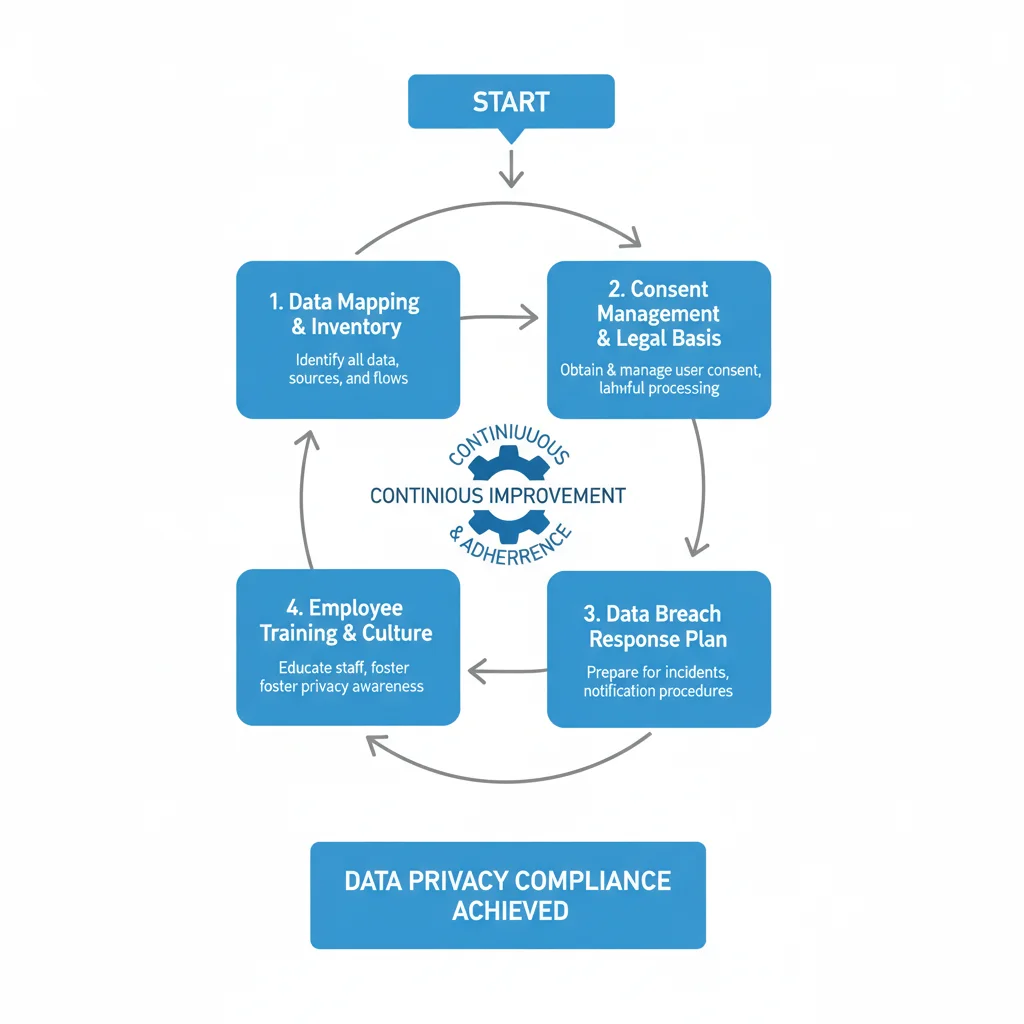
Navigating the complexity of US data protection 2026 requires a proactive and strategic approach. Here are practical solutions businesses can implement to ensure ongoing compliance:
1. Conduct a Comprehensive Data Inventory and Mapping
You can’t protect what you don’t know you have. The first step is to conduct a thorough data inventory to identify all personal data collected, where it’s stored, how it’s used, who has access to it, and with whom it’s shared. Data mapping tools can visualize data flows across your organization, highlighting potential compliance gaps.
2. Update Privacy Policies and Notices
Review and revise all consumer-facing privacy policies and internal data handling policies to reflect the requirements of all applicable state laws. Ensure notices are clear, concise, and easily accessible. Consider a layered approach to privacy notices, providing a brief overview with links to more detailed information.
3. Implement Robust Consent Management Systems
For activities requiring consent (e.g., processing sensitive data, targeted advertising in some states), implement a reliable consent management platform (CMP). This system should allow consumers to easily grant, withdraw, or modify their consent and record these preferences for auditing purposes. For opt-out rights, ensure clear ‘Do Not Sell or Share My Personal Information’ links are prominently displayed.
4. Establish a Data Subject Request (DSR) Fulfillment Process
Develop a streamlined process for receiving, verifying, and responding to Data Subject Requests (DSRs) within the stipulated timeframes. This includes:
- Identity Verification: Implement secure methods to verify the identity of individuals making requests to prevent unauthorized access to personal data.
- Data Retrieval and Deletion: Develop procedures and tools to efficiently locate, retrieve, correct, and delete personal data across all systems.
- Communication: Ensure clear and timely communication with consumers throughout the DSR process.
Automated DSR platforms can significantly ease this burden, especially for larger organizations.
5. Strengthen Data Security Measures
Revisit and enhance your organization’s data security framework. This includes:
- Encryption: Encrypt personal data both in transit and at rest.
- Access Controls: Implement strict access controls based on the principle of least privilege.
- Regular Audits and Penetration Testing: Conduct periodic security audits and penetration tests to identify and address vulnerabilities.
- Employee Training: Train all employees on data security best practices and privacy awareness.
6. Conduct Data Protection Assessments (DPAs)
Proactively identify and assess privacy risks associated with new projects, technologies, or data processing activities. Integrate DPAs into your project lifecycle, especially for initiatives involving sensitive personal data, targeted advertising, or significant data sharing with third parties.
7. Review Third-Party Vendor Contracts
Many privacy laws hold businesses accountable for the data handling practices of their third-party vendors. Review all contracts with service providers, data processors, and other third parties to ensure they include robust data protection clauses, commit to compliance with applicable laws, and outline responsibilities in the event of a data breach.
8. Appoint a Privacy Officer or Designate Responsibility
Assign clear responsibility for privacy compliance within your organization. For larger entities, appointing a dedicated Data Privacy Officer (DPO) or similar role can be beneficial. For smaller businesses, a designated individual should oversee privacy efforts, staying abreast of legal changes and coordinating compliance activities.
9. Employee Training and Awareness
Human error is a significant cause of data breaches. Regular and comprehensive training for all employees on privacy principles, data handling policies, and their role in protecting personal data is essential. This training should be ongoing and adapted to address new threats and regulatory changes.
10. Develop a Data Breach Response Plan
Despite best efforts, data breaches can occur. Having a well-defined and regularly tested data breach response plan is critical. This plan should outline steps for identification, containment, assessment, notification (to affected individuals and regulators), and post-breach analysis. Timely notification is a legal requirement in many jurisdictions.
Challenges and Opportunities in US Data Protection 2026
The journey towards full US data protection 2026 compliance is not without its challenges, but it also presents significant opportunities.
Challenges:
- Fragmented Landscape: The lack of a single federal law means businesses must contend with a myriad of state-specific requirements, leading to increased complexity and compliance costs, particularly for those operating nationally.
- Evolving Definitions: Definitions of ‘personal data,’ ‘sale,’ ‘sensitive data,’ and ‘targeted advertising’ can vary significantly between states, creating ambiguity.
- Enforcement Risks: State Attorneys General and newly formed privacy agencies (like the CPPA) are actively enforcing these laws, with substantial fines for non-compliance.
- Resource Allocation: Small and medium-sized businesses (SMBs) may struggle to allocate sufficient resources to build and maintain comprehensive privacy programs.
- Technological Integration: Integrating privacy-by-design principles into existing systems and developing new privacy-enhancing technologies can be complex and costly.
Opportunities:
- Enhanced Trust and Reputation: Demonstrating a strong commitment to consumer privacy can differentiate a business, build trust, and enhance brand reputation. Consumers are increasingly valuing privacy when choosing products and services.
- Competitive Advantage: Businesses that proactively embrace privacy compliance can gain a competitive edge over those that lag, especially as consumers become more privacy-aware.
- Improved Data Governance: The process of achieving compliance often leads to better data governance practices, resulting in more accurate, secure, and useful data assets.
- Innovation in Privacy-Enhancing Technologies: The demand for compliance drives innovation in privacy-enhancing technologies (PETs), offering new solutions for secure data handling and analytics.
- Future-Proofing: Building a robust privacy framework now positions businesses well for future regulatory changes, whether at the state or federal level.

Preparing for the Future: Beyond 2026
While US data protection 2026 marks a significant milestone, the privacy landscape will continue to evolve. Businesses should adopt a mindset of continuous improvement and adaptation. Staying informed about legislative developments, investing in ongoing training, and regularly auditing privacy practices will be crucial for long-term success.
The push for a federal privacy law in the US is likely to continue. Should such legislation pass, it could either simplify the compliance landscape by preempting state laws or add another layer of complexity. Businesses with adaptable and comprehensive privacy programs will be best positioned to navigate either scenario.
Furthermore, global privacy trends, such as increasing focus on AI ethics and data localization, may also influence future US regulations. Businesses that operate internationally will need to consider how US laws intersect with regulations like the GDPR, Brazil’s LGPD, or Canada’s PIPEDA, aiming for a harmonized approach where possible.
Conclusion: Embracing the Privacy Imperative
The imperative for robust consumer privacy protection is undeniable, and the year 2026 will be a critical juncture in the evolution of US data protection 2026. The growing number of state-level privacy laws signifies a fundamental shift towards greater consumer control and corporate accountability. For businesses, this is not merely about avoiding penalties; it’s about building and maintaining trust with customers in an increasingly data-driven world.
By proactively conducting data inventories, updating policies, implementing strong consent and DSR mechanisms, enhancing security, and fostering a culture of privacy, organizations can transform compliance challenges into opportunities for growth and differentiation. The future of business success in the digital economy is inextricably linked to a steadfast commitment to protecting consumer privacy. Start your preparation today to ensure your business thrives in the privacy-first era of 2026 and beyond.